TL;DR
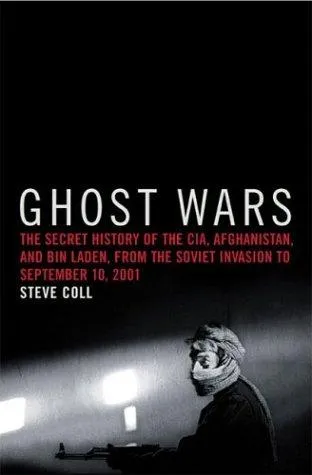
10/10. Twenty-two years of covert operations in Afghanistan, from the Soviet invasion to 10 September 2001. Coll won the Pulitzer for it and deserved to. The end date is the whole argument: everything that happened the next morning had been assembled over the preceding two decades.
Steve Coll covered Afghanistan as the Washington Post’s South Asia bureau chief between 1989 and 1992, later ran the paper as managing editor, and went back to the subject with declassified files and hundreds of interviews with intelligence officers, Afghan commanders, Saudi officials, and Pakistani spymasters.
What he assembled is seven hundred pages of how a covert program designed to bleed the Soviet Union produced, over twenty years, the network that flew the aircraft. It won the 2005 Pulitzer Prize for General Nonfiction and it remains the standard account.
Ghost Wars frightened me more than any thriller I can name, and nothing in it is invented. Coll takes a program everybody involved thought was clever and walks it, year by year, toward a morning we all know about. The dread builds because you can see every mistake coming and nobody inside the story can.
Why does Ghost Wars stop on 10 September?
The choice of end date is the book’s argument compressed into a single decision.
There’s no chapter on the attacks. The story closes the evening before, with everything in place, every warning either given and ignored or not given at all, and nobody in a position to stop what happens next.
That does something a book covering the attacks couldn’t.
It forces you to read twenty-two years of decisions without the comfort of knowing which ones mattered. That’s exactly how the people making them experienced it. A reader keeps looking for the moment where it could have been stopped, and Coll keeps declining to identify one.
The cumulative effect is a kind of dread that a conventional structure can’t produce. You know what’s coming. The book refuses to arrive there. I think it’s the boldest structural decision I’ve seen in investigative history. It turns seven hundred pages of briefings, budgets, and cables into suspense, and it never once cheats to get there.
Watch: Ghost Wars by Steve Coll | Geopolitics | Full Book Summary, The Illiterate's Guide
Who are the people in Ghost Wars?
Bill Casey, Reagan’s director of central intelligence, an ideological Cold Warrior who saw Afghanistan as the place to make the Soviets bleed and who was largely uninterested in what came after. Prince Turki al Faisal, head of Saudi intelligence for twenty-four years, matching American funding dollar for dollar and pursuing Saudi religious objectives with the same money.
Zia ul Haq and the ISI, who insisted that all American support flow through Pakistani hands and who directed it toward the most radical of the Afghan commanders, because Pakistan wanted a client state in Kabul and not a stable neighbor. And the mid-level CIA officers, especially the ones running the bin Laden unit in the late nineties, who saw what was forming and couldn’t get anybody senior to act. Those chapters are the most frustrating in the book and the most important.
I feel terrible for those mid-level officers. They saw what was forming and couldn’t get anyone senior to act, and Coll makes you sit in that frustration with them. The officer who’s right and ignored lives in a special kind of hell, and every large organization produces a few of them.
Did the CIA create bin Laden?
No, and Coll is careful about this in a way that people citing the book often aren’t. The easy version, that America funded and armed bin Laden and then he turned on them, isn’t what this book says. The reality is worse and considerably more useful. Saudi Arabia and Pakistan were independent actors pursuing their own ends with American money, and nobody was fully in control of what the program was producing.
The cartoon version of this story is wrong, and Coll’s patience with the real one is reason enough to read him.
The money went to Pakistani intelligence. That distributed it according to Pakistani interests. Saudi money went alongside it according to Saudi interests. American officials frequently didn’t know which commanders were receiving what, and by design didn’t want to know, because deniability was the point of running it covertly.
A system with three principals, no shared objective, and deliberate ignorance at the top produces outcomes nobody chose. That’s a more uncomfortable finding than blame, because blame implies somebody could have decided differently.
What does Ghost Wars say about the counterfactual?
Coll doesn’t argue that a single different decision would have prevented anything, and the impression that builds over seven hundred pages is that there were too many actors and too many incentives pointing the same way. Even removing bin Laden, which was attempted and which the book covers in detail including the missed opportunities, might not have changed the outcome, since the operational planning ran through others. That’s a bleaker conclusion than blame and it’s the real one. Systems produce outcomes. The people inside them are making locally sensible decisions with the information and incentives they have, and the result is something none of them wanted.
That conclusion is harder to live with than blame, and I respect Coll enormously for refusing the easier ending that blame would have handed him.
Why it sits behind my own book
Stuck in the Middle is about the position countries occupy between larger powers and what that costs them. Afghanistan is the case study nobody can improve on.
Coll shows a country used as a board by four or five outside powers across two decades: the Soviet Union, the United States, Pakistan, Saudi Arabia, and Iran, none of whom were thinking about what would be left when they finished playing.
The mechanism is the same one I was writing about. A place becomes valuable to other people for reasons that have nothing to do with the people who live there, and everything that follows is downstream of that. The Afghans in this book are rarely the subject of the sentence.
Verdict
The best single book on how 9/11 became possible, and among the best works of investigative history I’ve read. Seven hundred pages and worth every one.
If you read one book about the background to that day, this is it, and the September 10 ending is the reason. Read it before the accounts of the day itself and those books change shape.
A ten, without a moment’s hesitation. It’s long and dense and I’d still put it at the top of any reading list about that day, because it’s the book that makes the day make sense.
Explore further
Stuck in the Middle: what it costs a country to sit between larger powers.
Frequently Asked Questions
Other Books From – History