TL;DR
Larry Winget’s money book. It treats debt as a behavior problem: you spend more than you earn because you choose to, and the fix starts with feeling bad about it and facing the real number. Winget grew up poor, lost a fortune and rebuilt it, and he hosted A&E’s Big Spender.
You’re Broke Because You Want to Be is Larry Winget’s personal finance book, and it applies his usual premise to money: your financial situation is the result of your own choices. Gotham Books published it in hardcover in 2008, the Penguin paperback followed under the Avery imprint at 224 pages, and Winget reads the unabridged audiobook himself. It was a New York Times and Wall Street Journal bestseller.
In his note to readers, Winget says who it is for: “I wrote this book for the average person who has a job, makes a living and still can’t seem to get ahead.” The publisher’s description frames the problem with a statistic, more than 40 percent of families feeling financial pressure, spending more than they earn and worried about ending up dependent on the government, family or charity in retirement.
Where the book comes from
Two things sit behind it. The first is Winget’s own money story as the publisher tells it: he grew up poor, made a fortune, lost it when a business he had invested in went bankrupt, and worked his way back to become a multimillionaire. The second is Big Spender, the A&E reality series he hosted. It premiered in 2006 and ran for one season, with Winget coaching people who had jobs, some of them well paid, and were still in debt or living paycheck to paycheck. Participants signed a contract listing the changes they had to make, and he came back later to check on them. The book expands on the ideas from the show.
What the eight chapters cover
The chapters, as library catalogs list them, run in the order a reader would work through the problem:
- Money Matters
- Your Real Problem
- Know Where You Are
- How to Get Out of Debt
- How to Cut Your Expenses and Increase Your Income
- The Stuff Most People Overlook
- Now It’s Time for Your New Budget!
- Interviews with Larry’s Rich Buddies
The early chapters are about attitude, and the later ones about arithmetic. The last chapter profiles friends of Winget’s who came from modest backgrounds and got rich by different routes, so the book ends on examples instead of theory.
The program inside the book
The publisher calls it a boot-camp regimen steeped in personal accountability, and it starts with emotion. “Feel bad. Have remorse. You need to feel deep emotion to take action.” Winget wants readers to feel the weight of what they have done before they try to fix it.
Then comes the number. Readers list who they owe and how much, however frightening the total. Winget asks whether they care more about looking cool and being cute or about a financially secure future for their family, and points out that their spending already answers the question.
From there the book turns practical: getting out of debt, cutting expenses, raising income, catching the costs people overlook, and building a new budget. A 2012 newspaper review of the book describes Winget telling readers to find the contradictions in their own spending, such as paying for premium cable while carrying debt, to cut up the credit cards, and to stop hiding behind excuses like “I grew up poor” or blaming the credit card companies.
The same review notes his answer to The Secret: thinking about money is only half the instruction manual. His version is that what you think about, talk about and then get up and do something about is what comes about.
Keep reading
Money is one of the ten self-inflicted problems in People Are Idiots and I Can Prove It!
Who should read You’re Broke Because You Want to Be?
It suits people with steady paychecks and nothing to show for them, people carrying credit card balances they keep meaning to deal with, and anyone who has read gentler money books without changing a habit. The title is the filter: readers who bristle at it are the ones Winget is talking to. Readers looking for investment strategy or portfolio advice won’t find much here; the book is about behavior.
Where this book fits in Winget’s work
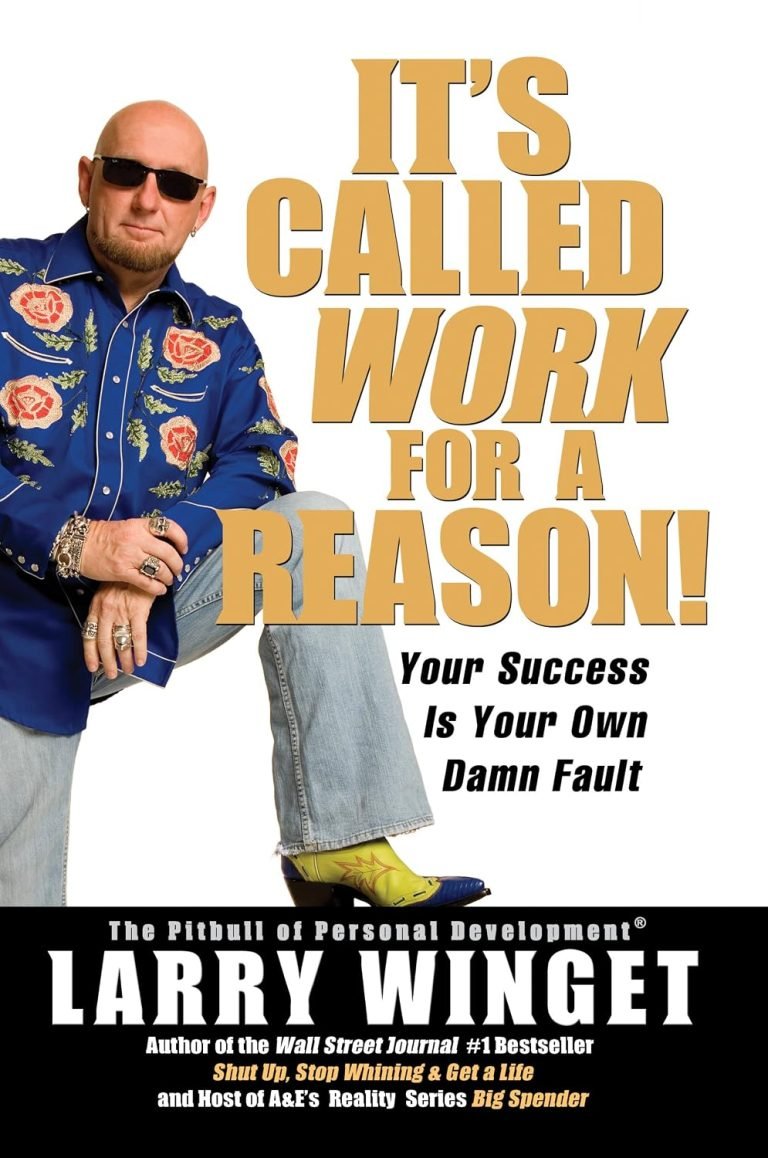
It is the money volume in his run of responsibility books, after Shut Up, Stop Whining, and Get a Life on life in general and It’s Called Work for a Reason! on the job. Money comes up in all of his books, and this is the one devoted to it.
Explore the hub
The Psychology of Writing Hub: motivation, accountability, and the mental side of the work, gathered in one place.
Frequently Asked Questions
Other Books From – Business and Economics