TL;DR
Larry Winget on parenting. In his words it is not a fix-your-kid book but a fix-the-way-you-parent book. Decide what kind of adult you want to raise, then parent with a plan and work backward from it. The money, work and goal-setting lessons from his other books, taught at a child’s level.
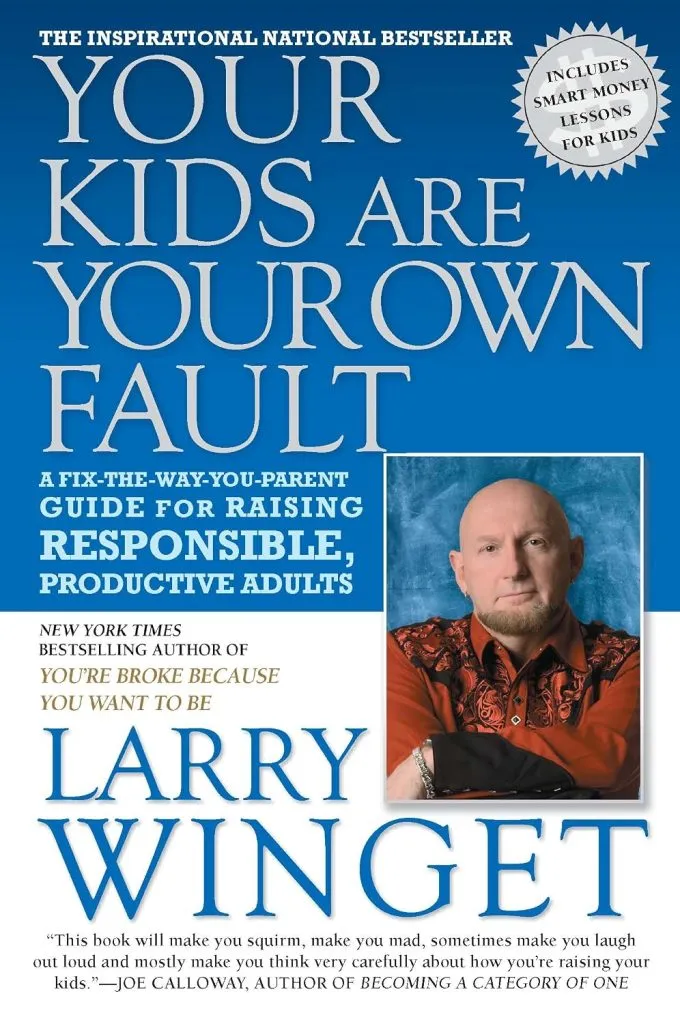
Your Kids Are Your Own Fault brings Larry Winget’s responsibility argument home. He states the premise himself: “This is not a fix your kid book. It’s a fix the way you parent book.” Gotham Books published it around the end of 2009 and the start of 2010, and the paperback followed in 2011 at 272 pages.
Winget wrote it after six books on personal and financial responsibility, and in a 2010 interview with Raising Arizona Kids he explained why he turned to parenting: “I went back to the root cause of all of our problems, which in my opinion is bad parenting.” He traced the money trouble and dishonesty he had been writing about back to how people were raised. He has two grown sons, whom he described in the same interview as a police officer and a fashion designer.
What the book argues
Winget says families are in a crisis. Kids today, in the publisher’s words, are over-indulged, over-entertained, under-achieving and under-disciplined, with a sense of entitlement that cripples society, and well-behaved, respectful kids are the exception. One of his lines sums up where he puts the blame: “Kids are OUT of control because their parents are not IN control.”
His remedy is to begin with the end in mind. Most parents never stop to consider what kind of adult they want to raise. Winget asks them to design that adult and work backward, teaching the lessons that get there, including the money, work and goal-setting lessons from his other books.
What the chapters cover
The book opens with “How Did We Get into This Mess?” and then covers the fundamentals of parenting:
- Communication
- Involvement
- Education
- Discipline
- Punishment
A chapter on the most important lessons for parents to teach their kids, and the most important things they don’t, leads into a long run of specific subjects:
- Money
- Sex
- Relationships: yours and theirs
- Height, weight, food and exercise
- Appearance
- School
- Technology
- Cars
- Honesty, integrity, and lying
- Religion
- Finding their purpose
- Teaching your kids to plan for success
The breadth is the point. Winget’s point is that parents dodge the uncomfortable subjects, such as sex, money, weight and honesty, and kids end up learning them somewhere else.
Money, time and attention
In the interview, Winget pulled out two themes that run through the book. On money, he wants kids taught to earn, save, invest, give and enjoy it, and he ties adult credit card debt to parents who never had that conversation. On attention, he argues that love is shown through time and action: “Don’t tell me you love your kid when you don’t love them enough to talk to them.”
Keep reading
The adult version of the same lesson: People Are Idiots and I Can Prove It!
Who should read Your Kids Are Your Own Fault?
It suits parents who want a plan for raising responsible, productive adults and can take being told the problem might be their own parenting. The subject list makes it useful for parents of teenagers in particular, since it goes straight at money, sex, cars, technology and school. Parents looking for reassurance or a quick fix for a child’s behavior will find it confrontational, which is how Winget intends it.
Where this book fits in Winget’s work
It is the parenting volume in his run of responsibility books, after Shut Up, Stop Whining, and Get a Life on life, It’s Called Work for a Reason! on work and You’re Broke Because You Want to Be on money.
Explore the hub
The Psychology of Writing Hub: motivation, accountability, and the mental side of the work, gathered in one place.
Frequently Asked Questions
Other Books From – Self-Help