Memoir Ghostwriter: Your Story, In Your Voice, Built to Last


Professional memoir ghostwriting from structured interviews. Your voice, your stories, your family’s record, finished in three to six months.

Book Your Private Consultation

Writing a memoir with a professional ghostwriter

A Memoir is the Version of Your Life That Outlives You

A memoir does specific work. It puts your version of events on the record, in your voice, so the people who weren’t there understand what happened and why. Your children, grandchildren, and great-grandchildren will read your own words rather than guess at them from photographs and half-remembered family stories. The book becomes the record that lasts after everyone who knew you firsthand is gone.

Some clients write the book for their family and never publish it. Others publish for a wider audience because their experience is one other people will recognize and learn from. Some write because their parents never got their own story down and they don’t want to make the same omission. The process is the same regardless of which path you choose. The book gets built from structured interviews by a professional memoir ghostwriter, written in your voice, finished in three to six months.

Book Your Private Consultation

See the 6-Phase Process →

What Goes Into a Ghostwritten Memoir That Reads Like You Wrote It

The work moves in phases. First the interviews, where you talk through the events, the people, and the decisions that shaped your life. The recordings get transcribed and structured into a chapter outline that you approve before any writing starts. The chapters then get drafted one at a time, sent to you for review, revised based on your notes. Voice gets calibrated in the first two or three chapters until you read a draft and recognize yourself on the page. After that, the rest of the book gets written in the voice you’ve confirmed. The full method is documented step by step in 10 Riveting Steps to Ghostwriting Memoirs

What Memoir Clients Actually Get Out of the Process

A Record That Holds Up

The memoir becomes the version of your life that survives in writing. Your descendants will read your own words, your own framing, your own explanation of why things happened the way they did. The book outlasts you because writing outlasts memory.

Make Sense of What Happened

Telling your story to someone whose job is to listen, ask the right follow-up questions, and structure what you say forces a kind of clarity that doesn’t happen in conversation with family or friends. Clients often discover patterns in their own life they hadn’t articulated before.

Reach the People Who Need It

If you publish the memoir for a wider audience, readers who have lived through similar territory will find it. The specific experience that was hard to navigate for you was likely hard to navigate for many others, and a memoir is often the resource they wish had existed when they needed it.

Something Real to Pass Down

Family heirlooms get lost, photographs get scattered, and oral history fades within two generations. A published book persists. Your great-grandchildren will be able to read it as easily as your children can. That’s a different kind of inheritance than jewelry or furniture.

What You’re Actually Hiring When You Hire a Memoir Ghostwriter

You’re hiring someone who has written 113+ books and ghostwritten 54+, including dozens of memoirs and personal histories. The work is interview-driven and structured. The voice on the page becomes yours through deliberate calibration in the early chapters, not through a vague claim about authentic capture.

Clients arrive at different starting points. Some bring decades of journal entries. Some have written and rewritten a draft they’re not satisfied with. Some have nothing on paper but a clear sense of the story they want told. The interview process accommodates all of these starting points and develops the material into a structured manuscript regardless of what you bring on day one.

The 113+ books written and ghostwritten include dozens of memoirs across professional, family, military, immigrant, and recovery contexts, delivered under the standards in my Ghostwriter Code of Conduct. Pricing works the same way as any professional engagement; the complete guide to ghostwriting costs covers what to expect.

You don’t need to be a writer. You need to be ready to talk about your life. The writing is my job.

Book Your Private Consultation

A Sample of My Published Work

These are examples from the 113+ books I’ve written or ghostwritten across fiction, leadership, business, faith, children’s books, and other categories. The memoir work itself stays private. Memoir clients hire a memoir ghostwriter specifically so their book reads as theirs alone, which means the strongest evidence of memoir competence isn’t a cover gallery.. It’s the range of voices and subjects on display in the work that does get publicly credited.

Gators in the SoupLet in but left out

Book Your Private Consultation

What Changes Once the Book Exists

Before the book exists, your story lives in your head and in the heads of the people who know you. When you die or your memory fades, that version of your life starts disappearing too. The finished book is the version that survives intact, in your words, available to anyone who reads it.

Clients frequently report that the interview process itself changed how they think about their own past. Talking through events out loud to someone whose job is to structure them surfaces connections that weren’t visible from the inside. Most clients finish the project with a clearer understanding of why their life went the way it did. Seniors in particular often describe the process as overdue; the guide to writing a memoir for seniors covers why.

When the manuscript is finished and the book is in hand, the practical effect is different from what most clients expect. The book becomes a reference for family members who want to understand. It answers questions descendants will have. It settles arguments about what actually happened. The book does work that conversation alone can’t do.

A quiet life is worth recording. A dramatic life is worth recording. The book exists either way, and either way it’s the version that lasts.

Get Your Story On The Record

📚Get Your Story on the Record

The events that shaped you, the people who mattered, the decisions you made and why you made them. The book captures all of it in your own words before time or memory makes that impossible.

→ Read the case study

Make Sense Of What Youve Lived

🧠Make Sense of What You’ve Lived

The interview process forces a kind of structured reflection that doesn’t happen on its own. Clients often discover patterns and meaning in their own past they hadn’t articulated before the work started.

→ Read the case study

Leave Something That Lasts

❤️ Leave Something That Lasts

A finished book reaches further than oral history, scattered photographs, or family stories that fade across generations. Your descendants will read your own words, as easily as your children read them, for as long as books exist.

→ Read the case study

Book Your Private Consultation

The Memoir You’ve Been Meaning to Write

Most memoir clients have been thinking about this book for years. Sometimes decades. The idea comes back at family gatherings, on long flights, after a parent dies, when a grandchild asks a question nobody else can answer. What keeps the book unwritten is rarely lack of material. It’s lack of time, lack of writing skill, or no clear idea of where to start.

You don’t have to write a single word yourself. The work is structured around interviews. You talk through your life across a series of recorded sessions. I write the chapters from the recordings. You read each chapter as it’s drafted and direct revisions. The voice on the page gets calibrated in the early chapters until it sounds like you, and the rest of the book follows from there.

Most projects finish in three to six months. The discovery call is where we put a realistic timeline against your specific project.

Discovery & Listening

Story Development

Crafting the Manuscript

Final Touches & Delivery

Book Your Private Consultation

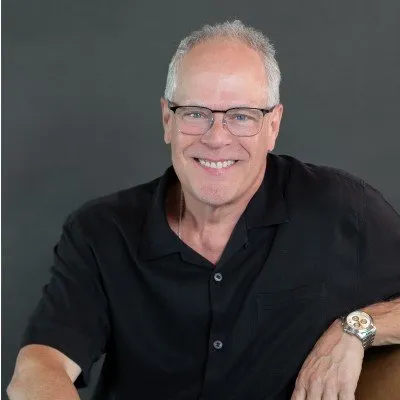
Richard Lowe, professional ghostwriter

About Richard Lowe

Richard Lowe is a professional ghostwriter and bestselling author. He has authored 113+ books and ghostwritten 54+ more for executives, founders, coaches, and public figures. His clients have used their books to raise over $30 million in venture capital, land a TEDx invitation, and secure deals with traditional publishers. His own book How to Manage a Consulting Project was used as required reading in a course at Purdue University's Krannert School of Management.

His current lead book, The Ghostwriting Advantage, is the comprehensive guide to hiring a ghostwriter. He also authored the bestselling Focus on LinkedIn and the publishing-journey trilogy: Make a Living as a Self-Published Author, Publish Your Book, and Sell Your Books. He served as Technical Editor and Contributing Author on Cyberheist, the cybersecurity book by KnowBe4 founder Stu Sjouwerman. His ongoing series include Enemies of You (nonfiction cultural commentary) and the Victorian fiction series, contemporary reimaginings of classic Victorian science fiction by Jules Verne and H.G. Wells.

Before becoming a full-time ghostwriter, Richard spent 33 years in enterprise technology, including 20 years as Director of Computer Operations at Trader Joe's, where he managed infrastructure across 474+ stores. He hosts three interview podcasts: Leaders and Their Stories, Author Talks, and Conversations With Influencers, totaling 98 episodes, and has appeared as a guest on 100+ podcasts including The Chris Voss Show.

Want to explore all my ghostwriting insights? Visit the Ultimate Ghostwriting hub.

Based in Clearwater, Florida, serving Tampa, St. Petersburg, Palm Harbor, Largo, Safety Harbor, Pinellas and Polk counties, all of Florida, and authors everywhere remotely.

Straight Answers to Real Hesitations

Every memoir client arrives with hesitations, usually these.

“My life isn’t interesting enough for a book.”

Nobody who says this is right about it. The people who lived through the Depression, immigration, war, building a business, raising a family through hard years, they all say the same sentence, and their grandchildren all disagree. A memoir is not competing with celebrity autobiographies for shelf space; it is preserving a specific life for the specific people who came from it. The interviews find the stories you stopped noticing decades ago. That is my job, not yours. Read the full answer: Is My Story Actually Worth a Book? »

“I’m too old to start this now.”

The opposite is true: the memoir has a deadline, and it is not a publishing deadline. The people who can verify the stories, the names, the details, they are aging too. Every year waited is stories lost. The process asks nothing of you but conversation; I have written memoirs with clients in their nineties, working entirely from recorded talks. Starting now is precisely the point. Read more: Why Your Memoir Can’t Wait »

“Some of the family won’t like what I have to say.”

That is a real consideration, and you control it completely. You decide what goes in, what stays private, and what gets softened. Some clients write the honest version and restrict who receives it; some write two versions; some find the interviews themselves settle what they actually want to say. My job includes helping you think through those choices, not making them for you. Read more: The Revenge Memoir: Who Shouldn’t Write One »

“It won’t sound like me.”

This is the most common fear and the most fixable. The book is built from recorded interviews, your stories, your phrasing, your judgment, and you review every chapter as it is written, correcting anything that misses your thinking. Early samples get tuned until the voice is right, before the bulk of the writing happens. By the end, readers who know you recognize you on the page. That is the entire craft of this work, and after 54+ ghostwritten books, it is the part I am best at. Read more: How a Ghostwriter Captures Your Voice »

“That’s a lot of money for a book.”

It is. A professionally ghostwritten book runs $15,000 to $60,000 here, with budget options starting at $7,597, and I will not pretend that is casual spending. Here is the honest frame: the 2024 Business Book ROI study found most business books return their investment through clients, speaking, and authority pricing, and my clients have used their books to raise venture capital, land TEDx stages, and fill coaching programs. If a book is a vanity purchase for you, do not buy one. If it is a business asset, price it like one. And if you want certainty before committing: the Book Discovery Intensive is $4,000 for ten hours of strategy, a full book plan, and a sample chapter in your voice, credited in full toward the engagement if you proceed within sixty days. Read more: What Ghostwriting Costs and Why »

“I don’t have time for this.”

Your time commitment is the interviews, typically an hour or two at a stretch, scheduled around your calendar, plus reading chapters as they arrive. Most clients spend 20 to 40 hours total across the whole project while I spend hundreds. If you cannot find that, you are right that now is not the moment. If you can, the book that has been waiting for years gets done in months. Read more: “I Don’t Have Time” and Other Lies We Tell Ourselves »

Go Deeper on Any of These

Is my story actually worth a book?

Underneath the price and time objections sits the quiet one almost nobody voices: who am I to take up two hundred pages? The full article gives the honest evaluation criteria, none of which involve fame, explains why the people who ask this question overwhelmingly have book-worthy stories while the ones who never ask often do not, and covers the rare cases where the honest answer really is not yet, and what that diagnosis means. Read the full answer »

What are the memoir interviews actually like?

Nobody says this fear out loud on a discovery call, but it is underneath most delayed memoirs: the project only works if you open the real files, and you are supposed to open them for someone you met last month. The full article describes what the sessions are like from the other chair, why the stranger turns out to be the easiest person to tell, how you control the pacing and can decline any topic permanently, and what happens to the hard stories after you share them, because telling me something does not put it in the book. Read the full answer »

I have started my book three times. Why would this work?

Three attempts feels like a verdict about you. It is not, and the evidence says the opposite: abandoned manuscripts are the debris of motivated people hitting structural obstacles, almost never discipline failures. The full article names the four mechanical reasons books stall, why attempt four run the same way would land in the same drawer, and the two professional routes from stalled to finished, along with what your existing drafts are actually worth to the process. Read the full answer »

Will I lose control of my own book?

Some prospects arrive with this exact bruise from a previous writer who treated the outline as their territory. The full article maps every control point of a professional engagement: work-for-hire copyright that makes the book yours outright, the five approval gates from strategy through final sign-off, and the working rule that keeps candid professional pushback from ever becoming a grab for the wheel, because every disagreement resolves in your favor. Read the full answer »

How do I vet a ghostwriter when NDAs hide everything?

The better a ghostwriter is at the job, the less evidence they can show you, and the scam operations exploit that gap deliberately, with fake writer profiles claiming the same unverifiable bestsellers real writers cannot prove. So you vet around the NDA wall instead of through it. The full article walks through what cannot be faked, the writer’s own published books, years of public history, named case studies, the questions only working writers can answer, and the red flags that should end a conversation on the spot. Read the full answer »

What will people think if they find out?

This is a different question from whether ghostwriting is ethical, and it survives after the ethics are settled: what happens at the conference when a colleague finds out. The full article covers who actually finds out and how, what the observed reactions are among professionals, the numbers behind professionally assisted nonfiction, the Agassi precedent, and the consistency test worth running against everything else you already delegate under your own name. Read the full answer »

Frequently Asked Questions

Do I need to be a writer to publish a memoir?

No. Most memoir clients are not writers. They are doctors, executives, parents, grandparents, veterans, people who lived something worth recording. The writing is my job. Your job is to talk through your life in interviews and read the chapters as they come back. The book gets built from your spoken words and your edits, not from any writing you do directly.

What if I’m not sure my life is interesting enough for a memoir?

This is the most common worry memoir clients arrive with. The answer is that interestingness is not what makes a memoir work. Specificity is. The right level of detail about an ordinary experience reads more compellingly than a vague account of a dramatic one. Your descendants will not be reading the book because your life was remarkable. They will be reading it because it was yours, and because they want to know who you were beyond the surface. For a wider readership, the experiences that feel ordinary to you are often the ones that resonate with readers who lived through similar territory.

Can you help me organize years of memories and events?

Yes. Most clients arrive with memories that are not in chronological order, do not connect cleanly, and are missing context. The interview process is where structure happens. The recordings get transcribed and then organized into a chapter outline that maps the chronology, identifies the key turning points, and groups related events. You approve the outline before any drafting starts. If you arrive with journals, photographs, letters, or old recordings, those get incorporated as source material. You do not need to organize anything before we start.

What does the ghostwriting process look like for a memoir?

The process moves in four phases. First, structured interviews where you talk through your life across recorded sessions, usually weekly or biweekly. Second, transcription and outline development, where the recordings become a chapter-by-chapter plan you review and approve. Third, drafting, where chapters get written from the recordings and sent to you one at a time for review. Fourth, final editing and delivery, where the manuscript gets a clean editorial pass and is delivered in the formats you need for your publishing path. Most memoir projects finish in three to six months depending on length and complexity.

Will the memoir sound like me?

Yes. The voice gets calibrated in the first two or three chapters. The early interviews capture not just your content but how you actually talk, the phrases you use, the way you build to a point. The first chapters come back written in what I read as your voice. If something is off, you tell me what is wrong and the next pass corrects it. We iterate on the early chapters until you read a draft and recognize yourself on the page. The rest of the book follows from there.

Can I include old letters, journals, or voice recordings?

Yes, and most clients do. Old letters often contain language and details that memory has lost. Journals capture how you thought about events at the time, which is different from how you think about them now. Voice recordings of family members who have died can be invaluable for sections about people you want to remember accurately. All of these get used as source material during interviews and drafting. The interviews still happen alongside the documents, since the documents tell part of the story but rarely the whole story.

How long does it take to finish a memoir?

Most memoir projects run three to six months from first interview to final manuscript. Shorter memoirs aimed at family-only readership finish faster. Longer memoirs intended for wider publication, especially those covering many decades or complex family histories, run longer. Your availability is a factor. Weekly interviews and quick chapter reviews keep the project moving. Limited interview time or slow review cycles extend the timeline. The discovery call is where we put a realistic estimate against your specific project.

Who owns the rights to the finished memoir?

You do. The arrangement is work-for-hire, which means you are the sole copyright holder the moment the manuscript is delivered. You decide whether to publish or keep the book private. You decide whether to sell it, license it, or pass it down to family without commercial distribution. The ghostwriter has no claim on royalties, no claim on derivative rights, no claim on future earnings. The contract spells this out in writing before any work begins, so there is no ambiguity later about ownership, credit, or future income.

More questions? See the full Memoir FAQ.

Book Your Private Consultation

Client Testimonials for Richard Lowe

Book Your Private Consultation

Talk With Richard About Your Memoir

Ready to get your story down while it’s still yours to tell? Book a discovery call. We’ll spend 30 minutes on the life you want on the page, what you’ve already gathered, and whether this is the right fit. No pitch. No pressure.

Booking requires JavaScript. Please use the contact form instead.

Loading availability…