TL;DR
A page-a-day book: one thought from Larry Winget for every day of the year. Winget calls it a true “Best of Larry,” drawn from all of his earlier books, which makes it the quickest way to sample his voice. Some days are one line, some are a short rant.
No Time for Tact collects 365 daily readings from Larry Winget, one per calendar date. Gotham Books published the hardcover in August 2009, and the 384-page paperback followed in September 2010. It has also appeared in Bulgarian and in German, where it is titled Immer frei Schnauze.
The publisher pitched it as a boot-camp version of the thought-of-the-day calendar, a daily wake-up call for anyone looking for a lifeline in uncertain times. Each day mixes Winget’s signature one-liners with longer observations.
Winget on why he made it
In his note at the front, Winget says this is his favorite kind of book. He owns dozens like it: one thought per page, a variety of topics, sometimes a single great line and sometimes a longer observation, some days solid content and some days just a laugh. What he wants most is the kind of line that makes you call a friend and say you have to hear this.
He also calls it a true “Best of Larry.” The entries come from ideas, quotations and passages across his other books, so new readers get a feel for who he is and longtime readers get his philosophy distilled. He predicts every reader will turn first to their own birthday to see what he said on their day, and says that is exactly how he wants the book used: read the entry, then work out how it applies to your own life. If one day doesn’t fit, there are 364 others.
What the daily entries cover
The topics move around the way his other books do: success, money, work, friendship, parenting, honesty and gratitude. The sample pages show the range across a single week:
- start each morning with a short “I am thankful” exercise, glad you lived through the night;
- at the end of the day, not much matters beyond smiling, laughing and telling the people you love that you love them;
- be authentic, because maintaining a facade will exhaust you;
- a few friends you can count on beat a crowd of fair-weather ones;
- be a good listener, the way his bulldog Ralph listens to him;
- people who say success is hard want it to be hard, because it gives them an excuse;
- get past your own fears and prejudices so you don’t hand them to your kids.
The publisher’s description quotes some of the shorter lines, among them “Stress comes from knowing what is right and doing what is wrong” and “Training is expensive. Books are expensive. Going to seminars is expensive. Being stupid is even more expensive.”
Keep reading
For the full argument behind these one-liners, start with People Are Idiots and I Can Prove It!, Winget’s ten ways people sabotage their own success.
Who should read No Time for Tact?
It suits readers who want a daily dose of blunt motivation without committing to a full book, and readers new to Winget who want to find out whether his style works for them before picking up one of his longer books. Winget makes the pitch himself: if one idea in the book changes something for you, it was worth the read.
Where this book fits in Winget’s work
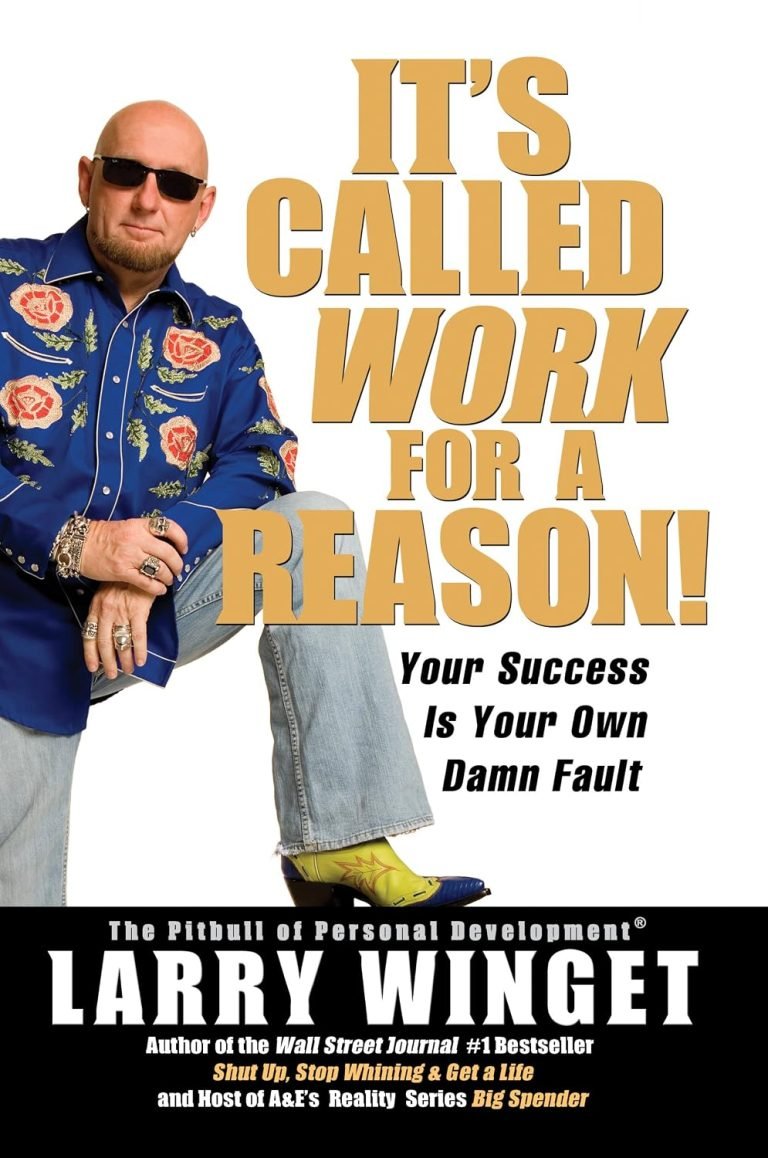
It distills his earlier books and makes no new argument. Readers who already know Shut Up, Stop Whining, and Get a Life or It’s Called Work for a Reason! will recognize much of it, which is the point. Winget’s own early book, The Little Red Book of Stuff That Works! from 1995, used a similar short-item format years before.
Explore the hub
The Psychology of Writing Hub: motivation, accountability, and the mental side of the work, gathered in one place.
Frequently Asked Questions
Other Books From – Self-Help