
The Ghostwriting Advantage
How to Get Your Book Written for You
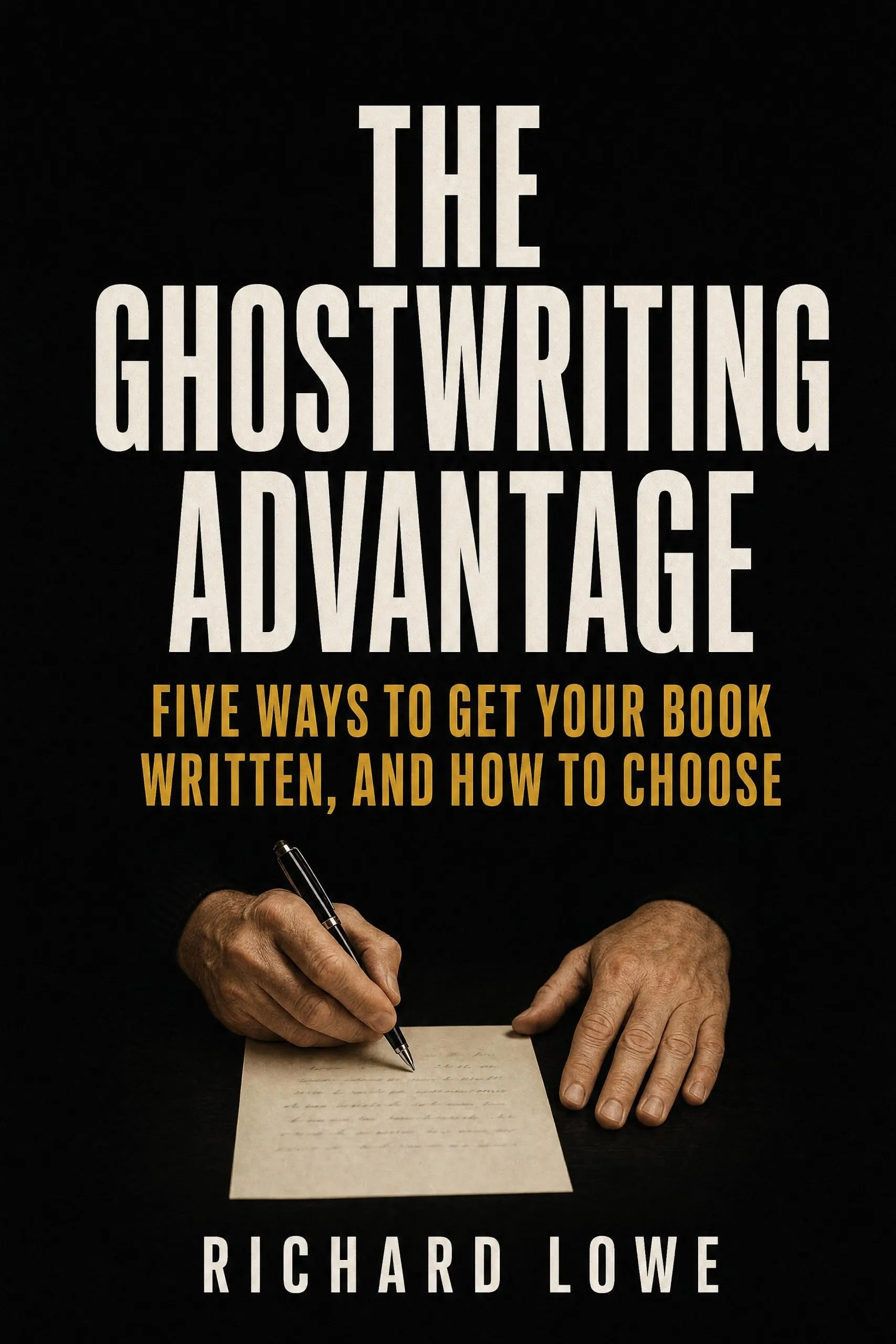 |
Before I wrote a word professionally, I photographed dancers BUY FROM INGRAMSPARKAMAZONKOBOREAD A CHAPTERTABLE OF CONTENTS 254 pages · Paperback ISBN 978-1-946458-56-8 · ebook ISBN 978-1-946458-80-3 |
| 254Pages | 48Chapters | 54+Books ghostwritten | 260Dancers at one party |
Before I wrote a word professionally, I photographed dancers
For nearly a decade I immersed myself in movement, color and performance. Every frame told a story, and it taught me to look past the surface. I wasn’t photographing dancers. I was documenting passion, culture and identity.
That work led to annual birthday parties where a hundred to two hundred and sixty dancers gathered. One year I rented a pirate shop. Another I booked a town hall and brought in live performers and ethnic catering. They were immersive storytelling, and each one taught me something about the narrative arcs I’d later build for clients.
One of my closest subjects was Marjhani, a bold and wildly creative dancer with a bone through her nose and tattoos that once made my conservative side flinch. We became friends, and through her I learned to take other people’s expression on its own terms.
Which turns out to be the entire job. Ghostwriting isn’t writing somebody else’s book. It’s looking past the surface at what they’re really saying, and then getting it down without leaving your fingerprints on it.
What is inside The Ghostwriting Advantage?
|
Deciding
|
Choosing
|
|
Working together
|
Afterward
|
What do readers say about The Ghostwriting Advantage?
Amazon reviews of the previous edition. 2 of them, averaging 5.00 out of 5.
I didn’t pick this up expecting much. Figured it’d be another “write a book and change your life” pitch. But it was better than that. Way more grounded, way more real. The book lays everything out without trying to sell you on anything. It’s just a simple walk-through of how ghostwriting works, what to expect, and how to think about it if you’re sitting on a story or process you’ve been meaning to share. It helped me get clear on how the relationship works with a writer, what’s required from me, and how the end result still sounds like me.
That was the part I was most unsure about, and this book made it make sense. The section on tradeoffs was one of the most useful parts. You can move fast. You can keep it cheap. You can get something top-tier. But you don’t get all three. That kind of honesty is rare in books like this.
If you have ever thought to yourself, “I should write a book, but I just don’t have the time,” this book is for you. The Ghostwriting Advantage takes something that can feel confusing and makes it easy to understand. Richard Lowe explains how ghostwriting works, why it’s a smart option, and how your ideas can become a real book even if you never write a word yourself. I really appreciated how clear and down to earth this book is.
It avoids jargon and gets right to the point. The real stories from other authors helped me see what’s possible, and the step by step process gave me confidence. If you’re a business owner, coach, or leader with something important to share, don’t let writing stop you. This book shows you how to turn your message into something lasting and valuable.
Who should read The Ghostwriting Advantage?
|
Read it if
|
Not for you if
|
Why did I write The Ghostwriting Advantage?
Richard Lowe, the Writing King
I have ghostwritten 54+ books and written 113+ under my own name. This is written from your side of the table instead of mine, because a book about hiring a ghostwriter written as a sales pitch would be worth nothing to you.
► Behind the Book: The Ghostwriting Advantage
How this one got written, what went wrong, and what got cut.
► A Dancer With a Bone Through Her Nose Taught Me How to Ghostwrite
One story from behind this book.
What do people ask about The Ghostwriting Advantage?
Also in The Publishing Series
|
Optimizing for AI Search |
The Complete Self-Publishing Guide |
|
Marketing Without the Hype |
Make a Living as a Self-Published Author Build the Business Behind the Books |
Five ways this goes. One of them is yours.
Working out which is most of the decision.
BUY FROM INGRAMSPARKAMAZONKOBOREAD A CHAPTERTABLE OF CONTENTS
Paperback and ebook.
A chapter
The Ghostwriting Advantage
Every book project faces a familiar balancing act: time, quality, and cost. This dynamic is often referred to as the Project Management Triangle. You can’t have all three. If you prioritize one, you’ll almost certainly compromise on at least one of the others. That’s just the reality of any creative or professional project.
Every writer or client starting a book project is facing a time constraint. Whether you have a tight deadline for publication, a launch date tied to a business event, or simply an impatience to hold your finished book, time pressure shapes every decision that follows.
Writing a book isn’t quick or easy. It takes real effort and patience. It takes time to research, time to write, time to revise, and time to polish. I once worked with a client who needed his book done in three months. It was a complex project, filled with his personal experiences and industry insights. We delivered on time, but the compromises we had to make along the way showed in the final product. When you’re working with a ghostwriter, time becomes especially critical. Rushing them often means cutting corners on depth, nuance, and the kind of careful revision that separates a good book from a great one.
Quality is the standard of excellence that any serious writer or client wants for their book, the polished product that reflects your expertise, your voice, and your authority. However, achieving high quality takes time and investment. Good writing isn’t accidental. It’s a craft that demands editing, revision, and refinement.
If you’re short on time, quality is the first thing to suffer. A rushed ghostwriting process may lead to a book that feels formulaic, surface-level, or simply not like you. That’s a reputation problem you can’t easily undo once the book is published.
Cost is often the most sensitive of the three factors. If you have a limited budget, you may find yourself cutting back on time allocated for editing or the depth of research included. This might result in a faster or cheaper book, but quality will take the hit.
Balancing cost, time, and quality means knowing your priorities. If you want the best possible book, you’ll need to invest in the right resources and allow sufficient time. If you’re on a tight budget, something has to give. That usually means cutting corners on quality.
Fast and Cheap: You’re rushing to publish because you have a business launch coming up. You hire a ghostwriter, but to keep costs down, you prioritize speed over quality. Want it fast and cheap? That’s like expecting a five-star meal from a gas station. Sure, you’ll get something, but it won’t be what you hoped for. You get your book fast, but the quality suffers, and you risk publishing something that won’t engage readers the way you hope.
Table of contents
The Ghostwriting Advantage
- Introduction
- Chapter 1: Your Book Is More Than a Book: It’s Your Brand, Business, and Legacy
- Chapter 2: You Already Have a Brand
- Chapter 3: The Business Case for Writing a Book (And Why Hiring a Ghostwriter Pays Off)
- Chapter 4: Real Results from Real Books
- Chapter 5: Creating a Book That Builds Credibility
- Chapter 6: Ghostwriting as an Investment in Your Brand
- Chapter 7: The Barriers to Writing a Book
- Chapter 8: Overcoming Your Hesitations
- Chapter 9: What’s This Book For?
- Chapter 10: Five Ways to Get a Book Written
- Chapter 11: Do It Yourself
- Chapter 12: Writing Coaching
- Chapter 13: Book Coaching
- Chapter 14: Ghostwriting
- Chapter 15: What a Model Cannot Do
- Chapter 16: Speed, Cost, or Quality: Choose Two
- Chapter 17: Understanding the Cost of Ghostwriting: What You’re Really Paying For
- Chapter 18: Flexible Payment Options: Making Ghostwriting Work for You
- Chapter 19: Cheap, Professional, or Celebrity: Choosing a Ghostwriter
- Chapter 20: The Hybrid Shop: Where the Money Hides
- Chapter 21: The Relationship Is the Product
- Chapter 22: How to Find the Right Ghostwriter
- Chapter 23: The Ghostwriting Agreement: What to Get in Writing
- Chapter 24: How Ghostwriting Projects Actually Fail
- Chapter 25: Beyond the Book: Other Creative Paths for Your Story
- Chapter 26: Ghostwriting Fiction: Why It’s Harder Than You Think (and Why It’s Worth It)
- Chapter 27: Ghostwriting Memoir: Telling Your Story Without Losing Your Voice
- Chapter 28: Who Runs the Project
- Chapter 29: What Kind of Client Will You Be?
- Chapter 30: What a Ghostwriter Actually Does
- Chapter 31: The Book I Refused to Write
- Chapter 32: Same Facts, Different Book
- Chapter 33: The Guide: How Ghostwriters Make You the Star
- Chapter 34: How the Ghostwriting Process Works
- Chapter 35: The Ghostwriting Interview: How Your Book Takes Shape
- Chapter 36: What It’s Like to Work with a Ghostwriter
- Chapter 37: Building a Strong Ghostwriter Relationship
- Chapter 38: Overcoming Challenges in the Ghostwriting Process
- Chapter 39: Polish, Don’t Perish: The Final Mile of Writing
- Chapter 40: The End of the Writing: Wrapping It Up the Right Way
- Chapter 41: What You Owe the Ghostwriter
- Chapter 42: The Book Is Finished and Nothing Happens
- Chapter 43: Why Editing Matters, and Why Your Ghostwriter Shouldn’t Do It
- Chapter 44: Understanding Your Publishing Options
- Chapter 45: Getting Your Book Published: Self, Traditional, Hybrid, and Audio
- Chapter 46: Beta Readers, Reviews, and Launch Teams That Work
- Chapter 47: Marketing Your Book: Turning Words into Business
- Chapter 48: Getting Your Book into Libraries and Bookstores
- Conclusion: What’s Your Next Step?
- Acknowledgements
- Index