
Steve Coll is an American journalist, author, and academic, and one of the small number of reporters whose books are treated as primary references by specialists in the fields they cover.
He spent more than twenty years at the Washington Post, serving as South Asia bureau chief in New Delhi from 1989 to 1992, as managing editor from 1998 to 2004, and winning a Pulitzer Prize for explanatory journalism in 1990 for a series on the Securities and Exchange Commission. He later became a staff writer at the New Yorker.
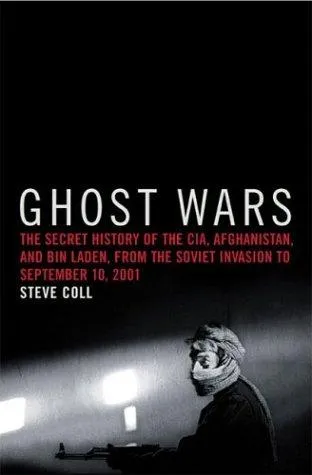
Ghost Wars, published in 2004, won the Pulitzer Prize for General Nonfiction the following year. It covers CIA covert operations in Afghanistan from the Soviet invasion in 1979 to 10 September 2001, and its most consequential decision is that end date. The book closes the evening before the attacks, which forces a reader through twenty-two years of decisions without knowing which of them mattered.
The research behind it is the reason it holds. He worked from declassified files and from hundreds of interviews with intelligence officers, Afghan commanders, Saudi officials, and Pakistani spymasters, and he is careful about what the material supports, declining to endorse the simple version in which the CIA created bin Laden.
Directorate S, published in 2018, continues the account from 2001 forward. His other books include The Bin Ladens, Private Empire on ExxonMobil, On the Grand Trunk Road, The Taking of Getty Oil, and The Achilles Trap on Saddam Hussein.
He served as president of the New America Foundation from 2007 to 2013 and as dean of the Columbia Journalism School from 2013 to 2022, where he is now dean emeritus.
Steve Coll
Professional ghostwriting for executives, founders, coaches, and authors who want to get the book done right. 113+ books authored. 54+ ghostwritten for clients.
Ready to discuss your book?
BOOK YOUR PRIVATE CONSULTATIONNo pitch. No pressure.
© 2026 Richard Lowe. The Writing King. All rights reserved.