The Body Is the First Technology
Featuring Victoria Chemko on Leaders and Their Stories with Richard Lowe
Chapters
- 0:02 Meet Victoria Chemko
- 1:47 From Canadian Politics to Business
- 2:38 What Umami Journeys Does
- 4:16 The 4S Framework
- 4:54 Shiny Object Syndrome
- 5:42 Somatic Work and Embodied Intelligence
- 6:35 People, Processes, Technology
- 8:06 Cybersecurity Belongs on the Board
- 10:14 Growing the Founder With the Business
- 12:10 Mergers on Top of Mergers
- 13:32 Dogpiled for Using AI
- 15:10 Digital Employees
- 16:40 Why AI Writing Is Average
- 17:59 Anubis and the Feather
- 18:54 AI for Interview Grunt Work
- 19:51 Why AI Change Feels Scary
- 21:16 Three Books About Work
- 21:42 Financial Independence
- 24:19 Defeating Shyness With a Camera
- 25:57 The World Mermaid Beauty Pageant
- 26:39 A Remote Lifestyle Business
- 27:51 Play to Your Strengths
- 30:11 Claude, Stop Mansplaining
- 31:17 AI Is an Echo Chamber
- 32:25 Listen to Yourself First
How do leaders make clear decisions about AI before adopting it?
TL;DR: What This Conversation Establishes
- Victoria Chemko runs Umami Journeys, a management consultancy that helps startups and Fortune 500 companies with AI integration, digital transformation and embodied intelligence
- She uses her 4S framework and somatic work to help leaders hear the real signal in their business instead of chasing shiny objects
- Richard Lowe argues digital transformation has to run people, processes, technology, in that order, and that cybersecurity belongs at board level, not under IT
- Both see AI as a tool that amplifies whatever you put into it, and both warn that it makes a poor therapist because it echoes back what you want to hear
- Both are introverts who found a way around it: Richard with a camera at Renaissance fairs and belly dance shows, Victoria with a remote-first business that let her travel the world
What You’ll Learn
- Why companies that start a digital transformation from the technology end up with systems nobody uses
- How a founder has to change once the company grows past 50, 100 or 200 people
- Why Richard thinks AI writing lands in the middle, and why he uses AI for interview grunt work anyway
- How to stop being afraid of losing your job, from savings to retraining yourself
- How Richard used a camera to beat shyness after his wife died, all the way to the first World Mermaid Beauty Pageant
Referenced in this episode
Umami Journeys, Victoria Chemko’s AI transformation and somatic leadership practice, built around her Four S framework: Signal, State, Structure and Support.
My Boss is Insane, one of the three books on work that Richard mentions.
The Digital Transformation Hub, Richard Lowe’s articles on running a transformation people, processes and technology first.
Dogpile, Richard’s series on online pile-ons, including the attacks on people who use AI.
Richard Lowe: Hello, this is Richard Lowe with the Leaders and Their Stories podcast. I’m here with Victoria Chemko of Umami Journeys, and she’s going to talk to us about all kinds of interesting things. So buckle up and let’s have a great time. Victoria, how are you today?
Victoria Chemko: I’m doing great. It’s been a little bit of a weird week, but I’m doing well so far.
Richard Lowe: How so?
Victoria Chemko: I don’t know, I just haven’t been sleeping well. There’s been a lot of funny stuff happening in the air. There are a lot of things just about to start. I think you mentioned earlier, there are holidays coming up, there are elections, all sorts of things. So we’ll see.
But I’ve had an interesting week.
Richard Lowe: Yeah. El Niño is making things weird. The weather’s bizarre.
Victoria Chemko: Yeah. We have the pouring rain here in L.A. over the next few days, which is not super common, obviously.
Richard Lowe: We had, knock on wood, one of the lightest hurricane seasons on record out here. But I guess we sent them into the Pacific, because the Pacific’s been hammered.
Victoria Chemko: Yeah, that’s true. That is very true.
Richard Lowe: Several Cat 5s, including one right off the coast of California.
Victoria Chemko: Yep, that’s right.
Richard Lowe: Actually, three.
Victoria Chemko: Have there been three?
Richard Lowe: Yeah, big ones. I think three, something like that. Anyway, the point is, it’s been a weird couple of weeks. It’s probably not going to get better till the new year.
Victoria Chemko: Right. That’s what I’m feeling too, unfortunately. But we’ll see.
Richard Lowe: Yes. The only joy that I have is that in a few days, we’ll get to see one side of the political spectrum crying and the other side being joyful, and who knows which it’ll be?
Victoria Chemko: Right. I’m not sure. We’ll see. I stay a bit far away from that nowadays. I’m Canadian originally and I’ve been in politics before, but it’s been a while since I’ve put my attention there.
Richard Lowe: I’ve never been in politics. No, don’t want to be. I wouldn’t mind doing a political book, because I’m a ghostwriter. But so far, no interest. Generally, I think you’ve got to catch the winner after an election, or a loser who wants to try again.
Right now, they’re not interested in books.
Victoria Chemko: I’m sure. I’m sure I could tell a lot of stories from my one year that I was involved.
Richard Lowe: I’m sure you could, but we try and keep it away from politics.
Victoria Chemko: Yeah, absolutely.
Richard Lowe: All I know is whatever the result is, it’s going to be weird.
Victoria Chemko: Yeah.
What does a management consultant who specializes in AI integration do?
Richard Lowe: So, what’s Umami Journeys?
Victoria Chemko: So Umami Journeys is a management consultancy and business advisory that I run. I work with everyone from startups to Fortune 500s and more global companies, helping with AI integration work, digital transformation work, and also working with leaders on embodied intelligence.
That means making sure that leaders and their teams are in a state where whatever they’re growing or amplifying is moving in the right direction, we could say.
Richard Lowe: I see. How about a for instance? What would that mean? Pick a company. Make one up.
Victoria Chemko: Okay. I could give examples. I would be working with, say, a smaller startup that’s a tech company. Generally it’s tech companies that are doing a lot of this work.
They might have a lot of different team members, and there’s some sort of merger happening between two businesses, so they need to switch direction in some way.
Another example would be a smaller company that knows it’s stalling for some reason, because it’s getting to a point of a shift, and whatever is happening, it needs to make a change to take it to the next level.
So I’ll work with the leadership and within that team, find out what it is they’re moving towards next, and do a diagnostic of what’s having issues, where they’re stalled or what the actual signal is.
I’ve created a 4S framework, which covers different areas to examine as part of our work together, so that we can diagnose where they’re at and then figure out where they’re moving to.
Then we build all the systems and structure and support around them and the people around them, so they can take the company to that next phase in a way that amplifies where they really want to go instead of where they sometimes think they should go.
Richard Lowe: Of course. It’s funny how things change when you actually state your goals and then work your way to them, instead of just coming up with them willy-nilly.
What is shiny object syndrome in business?
Victoria Chemko: Absolutely. And it’s not even just that. I think there’s a lot of noise in the world, right? Certain entrepreneurs I’ve worked with have shiny object syndrome. They hear, oh, I should be doing this now, or I should be doing that.
And they’re not really looking at what they’re actually building within their company for their customers, and what they need to be doing next that will support them and take them to that next stage.
So that’s sometimes a challenge, because they want to follow the shiny object and do something completely different. I’ve seen that happen before too, where I come in after the fact, and that’s even more of a challenge, because they’ve started moving in the opposite direction of where they really want to go.
What is embodied intelligence in leadership?
Victoria Chemko: What that comes down to a lot of the time is that I do a lot of somatic work with these leaders. That’s where the embodied intelligence piece comes in, because there’s a signal they could be hearing, something that’s unarguably true about where they are and what they need to understand.
And that leader or their team might be in a specific state where they’re distorting that signal. They don’t actually know where they need to go, because they’re not listening to it or looking at it the right way. There are blind spots, potentially.
So we get them into that phase of really understanding where they need to go. The human body is the first technology, right? AI is a tool. It’s a great technology. It amplifies whatever you’re putting into it.
But you need to make sure you’re already in an embodied state of clarity before you make these decisions and before you move towards what you’re going to do next.
Why should digital transformation start with people instead of technology?
Richard Lowe: Interesting. Well, I’ve done two digital transformations in my life, for Trader Joe’s. And this is in reference to your shiny object syndrome: people often start from the technology. You want to start from the people. So it’s people, processes and technology, in that order.
You look at the people, you look at the processes you’ve got, and then you pick the appropriate technologies. If you do it from technology first, you’re probably not going to get the right solution.
And the mistake a lot of companies make is they put digital transformation into IT. What’s IT going to do? It’s going to start with technology, because that’s its job.
You want to put it somewhere else in the business, some board-level position that’s in charge of digital transformation, or hire consultants or companies such as yours who can point out, don’t start from the shiny object. Start from what you need. What do the people need?
What do the processes need? So you’re not buying something that’s not going to work.
Victoria Chemko: Right. Because how many times have you seen people implement tools and systems, put the system in place, and then nobody uses it anyway, right? Because it’s not actually meeting the needs of what they’re trying to solve.
Richard Lowe: I’ve never done that in my entire… I was in IT. I was one of the leaders of IT, and of course we did that. We’re IT. That’s what we do.
Victoria Chemko: The most common thing?
Should cybersecurity report to IT or to the board?
Richard Lowe: It’s like cybersecurity. You never put cybersecurity under IT. You make cybersecurity its own center, and usually you want to make it a board position so that it has some teeth. Most companies don’t do that. They’ll put it under IT.
Well, then don’t be surprised if your cybersecurity doesn’t work very well.
Victoria Chemko: Right.
Richard Lowe: They put it under IT, which is usually under the CFO, and then it becomes a second level that’s not really supported by the company. But if you make it a board position, it is. That’s something I’ve actually had to give advice on.
I’m looking for board positions, technology-type board positions, and one thing I tell them is to take things like AI and cybersecurity out of IT. It’s not IT’s job.
Victoria Chemko: Yeah, I can understand that. I’ve seen the issues with that too, where there are silos and different needs coming from different areas. Then IT gets involved, and it can completely shift and change everything that ends up getting executed on.
It kind of destroys what’s actually the need of the business. I’m not saying that’s always the case, and I’m not saying it’s IT against whatever, but it’s something to keep an eye out for, because it definitely happens.
Richard Lowe: Well, each of these groups has its own training and its own thrust. It’s not surprising that IT is going to go out and find the new shiny tools. That’s what they do.
It’s not surprising that they might not be totally in sync with the company, because they’re usually not even a board position. They don’t have a lot of authority, and they’re protective, as all silos are.
That’s something you need to look at when you’re doing digital transformation or business transformation. And what I got underneath the covers is that you’re talking about transforming a business.
Victoria Chemko: Right.
Richard Lowe: Which is why I brought it up.
How does a founder have to change as a company grows?
Victoria Chemko: Yeah, absolutely. We can talk about bigger businesses, which we’ve both definitely worked with. But when you look at founders, startups and innovators running smaller companies, they’re at a stage where it’s not just the business you’re transforming. It’s the human within it, or the leadership team, right?
That’s actually the core of it. And that’s the part I find the most fascinating. When you’re growing a business, you’re building yourself, and you’re also building a business. They come hand in hand. Without one, you can’t have the other.
So it’s really interesting to take a step back when I’m working with different leaders and teams, understand where they’re truly hitting up against a wall, and then break that down as a team or as an individual, so we can get to the core of what we actually have to resolve.
Because it’s not necessarily some challenge or issue in the business over here. It’s the way something’s been done, where a limit is being hit. It could work up to the point where you got your business to this stage.
Maybe you’ve got 50 people, 100 people, 200 people, but it doesn’t work anymore after that, because of the scale that’s happening. It’s just not possible for one person to have that capacity anymore.
Richard Lowe: Yes. You want to build scalable systems. There are stages of companies, and there’s a stage at which a company becomes so big that it can’t scale anymore. That’s something digital transformation usually intends to fix, with mixed results. And then you start adding mergers and acquisitions.
We’ve got a big one going now in the movie industry, I think.
Victoria Chemko: Right, right.
Richard Lowe: Yeah. Warner’s merging with something. I forget.
Victoria Chemko: Paramount Skydance or something, it’s called now, I think.
Richard Lowe: Tens of billions of dollars. I think it’s one of the largest mergers ever. And imagine trying to transform that company.
Victoria Chemko: Absolutely. That will be fascinating to see, what happens after they come together, because I believe they’ve had so many other mergers before that, right? Which is where they are today.
Richard Lowe: Oh, yeah. They’re all basically mergers on top of mergers on top of mergers, and I’m sure all the wounds show in there. I suspect that what’s going to come in is a wrecking crew to tear it all apart and get rid of what they think is fluff.
That’s not going to be very good for those people in Hollywood. That’s probably why they’re terrified right now, and they probably have good reason to be terrified.
Victoria Chemko: Right. I think a lot of people are, and a lot of companies and businesses, because you hear so much about how certain things are so-called taking over.
But at the same time, if you use these tools like anything else, in a positive way to enhance whatever it is you’re doing, instead of using the tool for the sake of the tool, as we spoke about earlier, then it’s a whole different story.
Why do writers and artists attack people who use AI?
Richard Lowe: Yeah, we’re going through a similar thing with writers and artists right now, because they hate AI. Not all of them, but you walk into a writing group, say on Facebook, you mention the word AI, and you’re immediately what I call dogpiled.
They jump on you and rip you to shreds. It’s one of the most hostile things I’ve ever seen.
Victoria Chemko: Wow. That doesn’t surprise me, though.
Richard Lowe: Somebody made an AI-written book and cover for something she wanted to print three copies of, for her daughters. That’s it. And they ripped her to shreds. How dare you use AI? You’re scum. You’re going to hell.
Victoria Chemko: No, that’s terrible. That’s very extreme.
Richard Lowe: They told another guy he should be castrated for using AI. Those were the words they used. And I said, dudes, it’s a tool.
Victoria Chemko: Exactly. You can choose to use it or not. It can be used for good or bad, just like everything else. It depends what you’re using it for.
I’m sure that woman who was using it for her children, that’s just a fun example of what it could be used for.
Richard Lowe: Yeah, she was able to create a book. She’s getting on in years. She was able to create something of value for her progeny, her kids. I thought it was a touching thing.
And then I read the rest of the thread, which went on for hundreds and maybe thousands of replies. It’s like, geez. So I’ve given up on writing groups. I don’t even look at them anymore, because I’m kind of a champion of AI for the right things.
Will companies hire AI digital employees alongside human employees?
Richard Lowe: I use it as a digital assistant. The same thing you’d hire a VA for, you can hire a digital assistant for. And I think the way it’s going is you’re going to have human employees and digital employees.
You’re going to hire a digital employee to maybe do some spreadsheets, and you’re going to hire a human employee to interpret those spreadsheets. I think that’s going to be the split. It’ll be interesting if AI gets sentience and they actually become employees.
Victoria Chemko: That’s going to be a whole other story. Hopefully that’s a little further off.
Richard Lowe: Oh, it’s coming closer than you think.
Victoria Chemko: I know. I know.
Richard Lowe: And it’s not going to be Terminator-type stuff. It’s going to be much more subtle and much more interesting than that.
Victoria Chemko: I’m sure. It’s fascinating. But this is the thing, too. I’m all for using AI in a certain context, just like you’re saying. And at the same time, you can feel the difference, right? It depends on what it’s being used for.
If it’s those repetitive tasks that someone could be doing very easily, great. But there’s always someone who needs to have had the experience to understand the outputs and whether they’re working for their needs overall, right? To be able to see the bigger picture.
That’s coming from experience, that’s coming from the humans, and you can’t really replace that easily. We can’t say never, right?
Why does AI-generated writing sound average?
Richard Lowe: Humans are creative and they’re curious. AI is not creative and not curious.
Victoria Chemko: No. It’s an accumulation of data, right? Exactly.
Richard Lowe: It’s actually random patterns that happen to fall out in a certain way. It’s pattern recognition. LLMs are actually very stupid underneath, and they produce very, very bad writing and almost plagiarized art. It’s based on other art and other writing, and it’s pretty bad. It’s getting better.
But when you think that AI was trained on all of the stuff humans have ever written, most of human writing has been pretty crappy. It’s the median, the average. It’s not the best, it’s not the worst, it’s right in the middle.
And that’s the kind of writing we’re getting, right in the middle. And it’s awful.
Victoria Chemko: No, I totally agree with you. It’s lost. It doesn’t have the soul that someone like you, who would be writing someone’s story for them, can actually share and bring out of the people whose stories you want to tell.
Richard Lowe: Yeah, there’s a series, not a great series, but it has one great scene that I like. An old woman dies. She’s brought by Anubis into the between lives, whatever that is. Anubis is one of the gods of Egypt.
He reaches into her chest and pulls out her heart, and she says, hey, I was using that. And he says, you’re not going to need it anymore. Then he weighs it against the feather to decide whether she’s been bad or good, and she turned out to be good.
That’s the opening scene. I can’t remember the name of the series, but it’s an interesting series. It’s bizarre.
Victoria Chemko: Sounds like it. No, I definitely haven’t watched that one.
Richard Lowe: I’m not sure I’d recommend it. It’s got good clips. Let’s put it that way.
Victoria Chemko: Okay, I see. So you can play it in the background, look at it every so often and see what happens.
Richard Lowe: Or go to YouTube, search for it, find the ten clips that are good, and there you go.
Victoria Chemko: Right, that’s everything you need, right? Or you can get your AI to do that for you.
Richard Lowe: Yeah. I use AI for things like this: I’ll do, say, 50 interviews of a client for his book, and I’m not going to go through those interviews by hand.
I’m going to tell AI to sort through them, help me put together an outline, help me talk about his life, pick out the good stuff, whatever I’m looking for. And it produces something valuable that saves me weeks of work. That’s just grunt work.
I don’t need to be doing that.
Victoria Chemko: No, absolutely not. It makes life so much easier in so many ways. It’s very helpful for that. And bringing it back to the humans again, there’s the speed of how everything’s happening with the changes, and people trying to pick it up.
I’ve had conversations with a lot of people in business, whether they’re in tech or more traditional brick-and-mortar businesses. It’s really scary for a lot of people, right? Because they don’t know how to process all the changes happening so quickly, or understand what to do with it next.
So one thing I’ve really noticed, and that I’m fascinated with, especially with this somatic work and working with leaders to optimize their ability to ground and move forward in a way that’s very clear for them, is getting rid of the noise.
Finding ways to incorporate this new tool and integrate it into our businesses and our lives in a way that’s sustainable and doesn’t push us over the edge in any direction that isn’t helpful. Again, it’s another tool, so it can be used one way or another.
But I can see a lot of change in people really quickly, where they’re having issues adapting. We’re all, as humans, learning how to adapt more quickly as things speed up.
Richard Lowe: Well, they’re pumping a lot of money into AI, and money is energy. If you’re pumping a lot of energy into something, it’s going to expand, maybe good, maybe bad. I’ve got three books, two of them being written right now. One of them is called My Boss is Insane.
Victoria Chemko: Okay.
Richard Lowe: The second one is called My Employees Suck. So it’s from the other side. And the third one is called The Company I Work For Doesn’t Give a ****.
Victoria Chemko: Okay.
How do you stop being afraid of losing your job?
Richard Lowe: And the answer in all of them is very simple. What do you need to do when you’re in that situation, on any one of those three sides? You need to make sure you’re financially independent, and possibly set up your own business or whatever.
At the very least, you need to stop being afraid of being fired or losing your job. How do you do that? Have savings, six months, a year in savings, have some investments, do what you need to do, retrain yourself. You’re scared of AI? Then get trained on AI.
You’re scared of walking down the street and getting beat up? Then take a jujitsu class or something. Learn to protect yourself. I don’t know the answers for all these things, but when I hear people say, oh, I’m afraid of this, it’s like, well, fix that.
I’m afraid of AI? Well, learn AI.
Victoria Chemko: Yeah, I totally hear that. And I see the other side of the story too, just to play devil’s advocate a little bit. Some people are so overwhelmed by it that I think they can’t even get to that state of decision-making about what they need to do.
Richard Lowe: Yeah, especially when their job is in danger, and it really is in danger, and they have a home life where maybe the marriage isn’t so good, the kids are at that age, and maybe something’s going on in their church. Who knows? They have medical stuff.
When you pile all that on, life becomes very challenging. And I’ve found in my life, I’ve been through some things, and I approached it just the way I told you: make sure the foundation is stable. Because I was always afraid to leave my job.
And when I finally did and started my own business, it was a breath of fresh air.
Victoria Chemko: How amazing. Yeah, absolutely.
Richard Lowe: Freedom. Wow. That’s what freedom looks like.
Victoria Chemko: Yeah, absolutely. I’ve been kind of an entrepreneur all my life, basically right after that one year in politics after university. I went into startups from that very time and started a few different businesses along the way and had them for quite a long time.
But this was exactly it. I always thought there has to be another way to do this, because this does not feel like it’s going to get me where I want to go.
And just having that freedom and flexibility, the autonomy to make the decisions you need to, and to grow and build what you want, that comes truly from you, without worrying it’s being impacted by someone else’s money, someone else’s decision, someone else’s vision that might not be aligned with where you want to go.
How can an introvert overcome shyness?
Richard Lowe: Yeah. When my wife passed away 20 years ago, I was in grief, of course, and I was very shy and introverted. I’ve always been very shy and introverted, so I kind of avoided people.
I could get into a conversation like this, because it’s one-on-one, but getting to this point, forget it. It wouldn’t happen. So I didn’t have a lot of relationships. But then I decided, okay, I’m going to break that cycle.
Victoria Chemko: Break it.
Richard Lowe: So I started hiking with a camera, which I realized was a bit of a loner thing to do. Then I started going to Renaissance fairs and shooting Renaissance fairs.
I used the camera as a way to talk to people, because I’d ask, can I take your picture, blah, blah, blah. I’d see a Renaissance fair couple coming down, all dressed in costume, who don’t know each other, and I’d say, you two, get together.
I want to take a picture of you two together. And they’d say, I don’t know him, I don’t know her. Come on, get together, hug or something. Okay, good, just hold that pose, click. And before you know it, they’re having a great time.
I did that for a while. Then I found some belly dancers and started photographing belly dancers, doing model shoots, and met some supermodels. And I look back and think, wow, I really went out there and defeated shyness. They gave me front-row center seats at every show.
Victoria Chemko: Yeah, I love that. What a way to do that.
Richard Lowe: I started photographing WWE events and reenactments and did lots of portfolio shoots. I was the photographer for the first annual World Mermaid Beauty Pageant, which turned out not to be annual.
Victoria Chemko: A mermaid beauty pageant.
Richard Lowe: With 50 women dressed as mermaids, including two supermodels. It’s like, I have to go photograph that. They said, well, come on in, we’ll give you a pass. And I photographed the darn thing. It was great. It was very weird. Some of them actually believe they’re mermaids.
Victoria Chemko: That’s even more interesting. But that’s fascinating, that you got to explore the world with your camera, connecting people and sharing their stories from that visual perspective. And it sounds very familiar to me, because I’m also more introverted and do well one-to-one.
What I did is I built a lifestyle business after my first startup, where I was doing a lot of work with enterprise companies and had to be out there with way more people.
It was a digital marketing agency, remote-first since 2010, and it allowed me to travel around the world.
What I loved about doing that is I felt I could be more fully myself. I would go around and ask people questions. I was a constant traveler, interested in everything wherever I went, and I asked a lot of questions because I’m very curious.
So I got to learn all about different cultures. I studied many languages. I love to explore the world through food, and through coffee in the past. I don’t drink coffee anymore. And the same sort of thing: I captured everything in pictures.
I had a food and travel blog way back in the day. That was my way of connecting with people, connecting people together across different parts of the globe, and sharing stories in my own personal way.
Richard Lowe: That’s fantastic. That’s a similar but different story to mine. We’re all different people. But the idea is figuring out what your strengths could be and going for the strength. I don’t preach at all, but I don’t tell people, fix your weaknesses.
Victoria Chemko: Yeah, absolutely, I agree with you. And then work with your weaknesses, right? Work around them with your strengths and find a way to make that work for you. It looks like it’s worked fantastically for you.
Richard Lowe: It works. I had dancers come and throw me a birthday party every year. I had 100 dancers. I had it in a hall three years in a row, and they would all come in and dance for me.
Their husbands were sitting in the corner, because they’d seen the same belly dance move five million times and they were bored.
Victoria Chemko: Definitely not the introvert anymore, right? You’re the star of your show.
Richard Lowe: I rented a pirate shop and had another party there. And I used to sponsor events for battered women, where the dancers would perform and the money would go towards helping battered women. I would sponsor the show, and they put me on as producer.
I’d never done that before, but they asked and I said, sure, I can do that. That sounds fascinating.
Victoria Chemko: I love it.
Richard Lowe: These were small shows, a few thousand dollars, but you’d get 50 dancers there, all having a good time. Everybody’s having a good time. Especially at Halloween. So that’s what I did to pull my head out of all that.
Then I quit my job and moved to Florida, and I kind of settled down and stopped doing that, because I didn’t want to rebuild that network. That was a hard network to build. Now I’m back to the old introvert, and I’m starting to expand.
I want to visit all the libraries and bookstores in the area.
Victoria Chemko: I love that.
Richard Lowe: And photograph them for my website, because it’s a ghostwriting website, so I figure writing, bookstores. I also want to visit the caves in the area.
Victoria Chemko: Very cool.
Richard Lowe: I’m a spelunker. That’s a cave person.
Victoria Chemko: Oh yeah, I’ve heard of spelunkers. Very cool.
Richard Lowe: Something I had fun with: the last version of Claude tended to be very explainy.
Victoria Chemko: Okay, yes.
Richard Lowe: It’s just, oh, I don’t need these five pages. So I finally said, Claude, stop mansplaining to me. I don’t need it. And Claude said okay, and then it did it again. But now I know what mansplaining means.
Victoria Chemko: Now you’ve been receiving it.
Richard Lowe: Yeah. I’m a cybersecurity expert, and it’s telling me to make sure my passwords are safe. I’m like, oh, come on.
Is it safe to use AI as a therapist?
Victoria Chemko: That’s funny. I guess that’s another question I have for you, too. The other thing I notice, because of the advent of AI, is that people are using it more and more for other things, right?
For connection, for talking through issues they’re having, instead of going to people to do that. Of course there’s a limitation to that. But we’re seeing people become less and less connected, more introverted in a lot of ways.
I’m feeling it myself too, especially working remotely over the last six years or so, even though I was doing that a lot longer before that. So I’m wondering what your feelings are about all that.
Richard Lowe: I think it’s definitely happening. There are a lot of people using AI as a therapist. And the problem with that is AI is an echo chamber. It echoes back exactly what you want to hear. So of course it’s a great therapist.
It’s you talking to you, in a way. It’s saying what it thinks you want to hear. And that’s very dangerous in a therapist, because a therapist is supposed to help you solve problems, not reinforce the ones you already have.
Victoria Chemko: Right, exactly. And a lot of that stuff is coming from the mental place, too, instead of all the other places certain things come from that need to be worked through.
So you can just loop it over and over again with AI and never come to a different conclusion, exactly like you’re saying.
Richard Lowe: Yep. Well, we’ve been going for 45 minutes now, so I think we can probably wrap it up.
Victoria Chemko: I know. I was about to go off on another tangent about human connection and dinners.
Richard Lowe: We can do that next time.
Victoria Chemko: Okay.
Richard Lowe: Do you have anything you want to say to our audience before I hang up?
Victoria Chemko: I guess the important thing I’d love to share is just a noticing: not to forget who we are as humans, and to listen to ourselves first, beyond the noise, before we go to AI or any other tool.
We’ve repeated that during this conversation, but the importance of that, especially now, as things move faster and faster, is something to pay attention to.
Richard Lowe: Yep. Well, thank you for coming on the show.
Victoria Chemko: Thank you so much, Richard. I’ve really had a good time here.
Richard Lowe: This has been the Leaders and Their Stories podcast. I’m Richard Lowe with The Writing King. I have these two or three times a week, so keep your eyes open for the next one. And thank you for coming on.
Victoria Chemko: Thank you.
Quotable moments
The human body is the first technology. AI is a tool. It amplifies whatever you’re putting into it. — Victoria ChemkoShare on X
When you’re growing a business, you’re building yourself, and you’re also building a business. They come hand in hand. — Victoria ChemkoShare on X
There’s always someone who needs to have had the experience to understand the outputs and see the bigger picture. — Victoria ChemkoShare on X
We’re all, as humans, learning how to adapt more quickly as things speed up. — Victoria ChemkoShare on X
Don’t forget who we are as humans. Listen to ourselves first, beyond the noise, before we go to AI or any other tool. — Victoria ChemkoShare on X
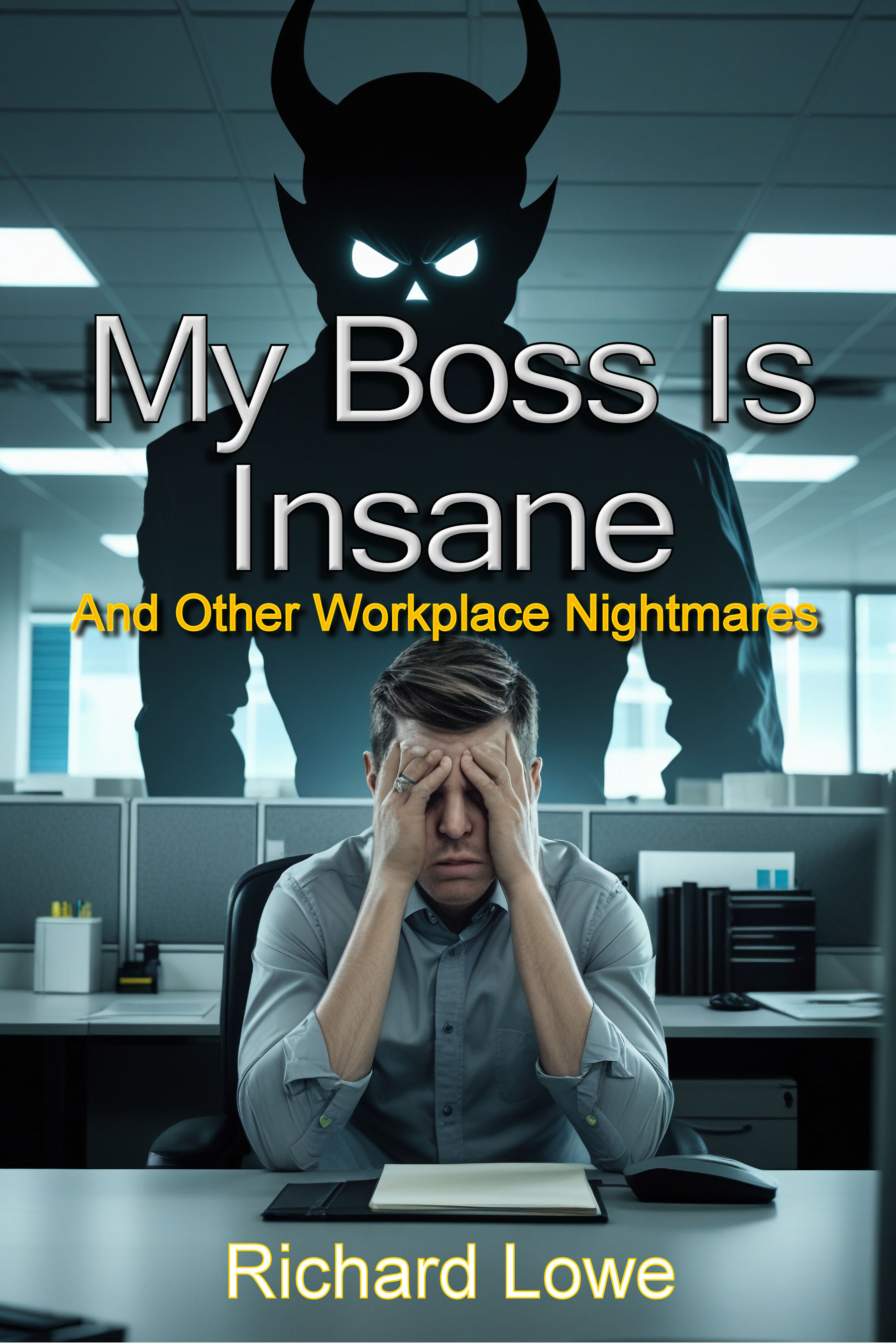
My survival guide for toxic workplaces. It covers documentation, escape funds and boss-proof skills, and how to know when it’s time to walk away.
Frequently Asked Questions
Your story could be a book
Every leader I interview has a book in them. If you’ve spent a career learning what works, let’s talk about turning it into the book that outlasts the work.