Ghostwriter for Cybersecurity Leaders Who Knows the Material Cold
A Book In Your Voice. Accurate Where It Counts. The Authority That Outlasts the Threat Cycle.

The Book That Survives the Threat Cycle
You run security. You’ve handled the incidents, sat in the board meetings, made the calls when the stakes were real. A book in your own voice is where that experience becomes the reference other people cite, instead of one more deck nobody keeps.
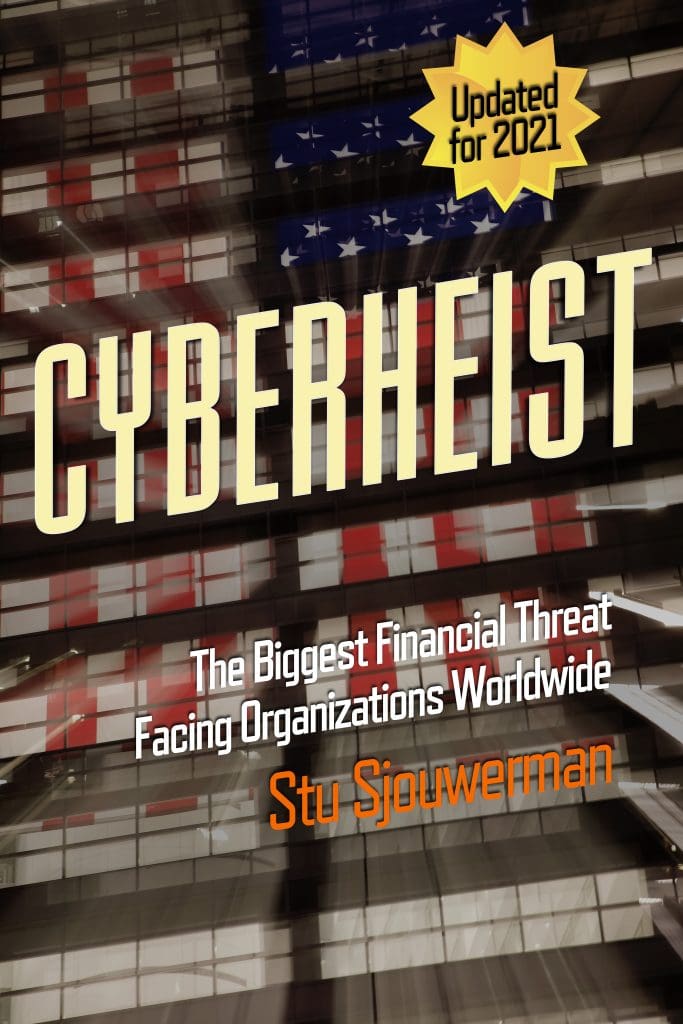
CISOs, security founders, and technical executives hire me when they want the book done right by someone who won’t flatten the material. I ran enterprise security for two decades and handled annual PCI compliance at Trader Joe’s. I was the technical editor on Cyberheist for KnowBe4, and I wrote Family Cybersecurity and Sins of the Internet. You won’t spend the engagement explaining what a threat model is.
The work is discreet. Strict NDAs. Your name on the cover, mine nowhere on it unless you decide otherwise. The process fits your schedule, not the other way around.
I’ve authored 113+ books and ghostwritten 54+ more, including thought leadership titles, technical books, and the kind of security writing that has to be accurate or it’s worthless. Whatever you’re trying to say, the work has probably touched something close to it.
Accurate for Your Peers. Clear for Everyone Else.
Clarify the Message
The work is technical and the audience usually isn’t. A book has to be accurate enough to satisfy the people who know the field and clear enough that a board member, a customer, or a reporter can follow it. The job is finding the line your expertise actually draws, then making it land for readers who don’t live in your stack.
Protect Your Time
You talk. I write. The interviews fit around your schedule, sometimes 20 minutes between incidents, sometimes a few hours on a weekend. You bring the experience and the judgment. I bring everything else: structure, research, writing, revisions, the work of turning conversations into chapters. No typing required on your end, and no engagement spent explaining the basics, because I ran enterprise security for two decades.
Control the Record
Right now your expertise lives in conference decks, vendor panels, and other people’s articles that quote you out of context. A book is the one place the framing is yours. It’s what a journalist pulls from, what a board reads before they hire you, and what outlasts the product launch, the breach cycle, and the job you held when you said it.
Expand Your Influence
You have authority in the room. A book turns that authority into something portable: speaking slots, board seats, advisory roles, the credibility to charge what the expertise is worth. Being good at security gets you respect inside the field. A book is what gets you taken seriously outside it.
The Version Only You Can Tell
Here’s what I’ve learned working with technical leaders: the version of your expertise that’s public is built from whatever you’ve had time to publish. A conference talk catches one idea. A vendor panel serves the vendor’s agenda. A quote in a trade article gets cut to fit the writer’s angle. None of it is wrong. None of it is the full depth of what you actually know.
The whole version exists only in your head, twenty or thirty years of decisions, incidents, and hard-won judgment. The work of a book is getting it out before it scatters across old slide decks and dead Slack channels, and getting it down accurately, not dumbed down.
I work in private with CISOs, security founders, and technical executives who’ve decided to put their real thinking on the record instead of leaving it in fragments. I ask the questions that get at what you actually know. I won’t flatten the technical material or fake my way around it, because I ran enterprise security for two decades myself. I write it in your voice, at the depth the subject demands. You stay in control of every word on the page.
Selected Cybersecurity Books
These are some of the books I’ve ghostwritten, coached, or developed. Each one came from someone who decided their knowledge was worth getting down right, accurately, in their own voice, at the depth the material deserved. The covers below show what we built together. The names on most of them are the clients’, not mine.


What Happens During the Work
Most clients are surprised by what comes out of the interviews. Not the polished talking points, those they’ve given a hundred times. The useful material is the reasoning underneath: why they made a call the textbook would have made differently, the incident that changed how they think, the thing they know is true but have never written down because no one ever asked the right question.
A lot of clients tell me the process did something they didn’t expect. They came in wanting a book. They left with a clearer sense of what they actually know and why it matters. The book is the artifact. The clarity about their own expertise is the side effect.
When the finished manuscript arrives, the reaction is usually quiet. Seeing two decades of judgment laid out as a coherent argument, accurate and in their own voice, lands differently than any conference talk or panel ever did.
Whatever shape your book takes, the goal is the same: get it down accurately, get it down well, and put it in a form that outlasts the next product cycle.
📚Document What You Know (NIST 800-53)
The most valuable things you know never made it into a talk or a paper. The call you made against the playbook, the incident that changed how you think, the reasoning you’ve never had time to write down. A book is where that record finally lives, accurately and in full.
🧠Find the Pattern in Your Work (Safe Sex)
Talking through twenty years of decisions with someone who’s paid to listen carefully, and who won’t interrupt, surfaces the throughline you’d stopped seeing. Clients tell me they figured out what their whole approach to the field had actually been about somewhere around chapter six.
🎯 Set the Standard for Your Field (AI Book)
The people coming up behind you will read this book to learn how the work is actually done. The people deciding whether to hire you will read it to judge whether you know your stuff. What you put on the page becomes the reference, long after the conference talk is forgotten.

Ready When You Are
You’ve already done the work that would make the book. The decision now is getting it down properly, and choosing who you trust to help you do it.
The process is private and built around your schedule. We talk through the material over a series of structured interviews. I write the chapters between sessions. You review, push back, correct the technical detail. The book moves at your pace. Your name is on the cover. Mine isn’t anywhere unless you decide otherwise.
When the book exists, two decades of expertise lives in a form that’s accurate, that’s yours, and that outlasts the next product cycle. That’s the whole point.
Discovery & Listening
Story Development
Ghostwriting
Final Manuscript
About Richard Lowe
Richard Lowe is a professional ghostwriter and bestselling author. He has authored 113+ books and ghostwritten 54+ more for executives, founders, coaches, and public figures. His clients have used their books to raise over $30 million in venture capital, land a TEDx invitation, and secure deals with traditional publishers. His own book How to Manage a Consulting Project was used as required reading in a course at Purdue University's Krannert School of Management.
His current lead book, The Ghostwriting Advantage, is the comprehensive guide to hiring a ghostwriter. He also authored the bestselling Focus on LinkedIn and the publishing-journey trilogy: Make a Living as a Self-Published Author, Publish Your Book, and Sell Your Books. He served as Technical Editor and Contributing Author on Cyberheist, the cybersecurity book by KnowBe4 founder Stu Sjouwerman. His ongoing series include Enemies of You (nonfiction cultural commentary) and the Victorian fiction series, contemporary reimaginings of classic Victorian science fiction by Jules Verne and H.G. Wells.
Before becoming a full-time ghostwriter, Richard spent 33 years in enterprise technology, including 20 years as Director of Computer Operations at Trader Joe's, where he managed infrastructure across 474+ stores. He hosts three interview podcasts: Leaders and Their Stories, Author Talks, and Conversations With Influencers, totaling 98 episodes, and has appeared as a guest on 100+ podcasts including The Chris Voss Show.
Want to explore all my ghostwriting insights? Visit the Ultimate Ghostwriting hub.
Based in Clearwater, Florida, serving Tampa, St. Petersburg, Palm Harbor, Largo, Safety Harbor, Pinellas and Polk counties, all of Florida, and authors everywhere remotely.
Straight Answers to Real Hesitations
Security people have sharper objections than most. Good. Here are the answers.
“Won’t publishing a security book help attackers?”
No, attackers already know the techniques; it is defenders and executives who lack the knowledge. Every credible security book, from Schneier onward, faced this question. Responsible security writing shares defensive judgment, not exploit code, and after 33 years in enterprise security I know precisely where that line sits. Your book makes the people on the right side of the fight smarter. Read the full answer: Will a Cybersecurity Book Help Attackers? »
“My work is under NDA, there’s nothing I can write about.”
Every senior security person believes this, and it is almost never true. The book is your judgment, patterns, frameworks, lessons, not your incident logs. Details get anonymized, composites get built, and specifics that cannot be sanitized stay out. I have written security books and NIST-aligned documentation under exactly these constraints; the knowledge that makes you valuable survives the redactions. Read more: How to Vet a Ghostwriter When NDAs Hide the Portfolio »
“It won’t sound like me.”
This is the most common fear and the most fixable. The book is built from recorded interviews, your stories, your phrasing, your judgment, and you review every chapter as it is written, correcting anything that misses your thinking. Early samples get tuned until the voice is right, before the bulk of the writing happens. By the end, readers who know you recognize you on the page. That is the entire craft of this work, and after 54+ ghostwritten books, it is the part I am best at. Read more: How a Ghostwriter Captures Your Voice »
“Why not just have AI write it?”
Try it and read the result out loud, that is usually answer enough. AI produces competent generic text; it cannot interview you, notice the story you undersold, challenge a weak chapter, or carry a voice across 60,000 words. I use AI where it genuinely helps and wrote a book about exactly that boundary. A book that sounds like everyone else’s actively hurts an authority position. The value was never typing speed; it is judgment. Read the full answer: Can AI Write Your Book? »
“That’s a lot of money for a book.”
It is. A professionally ghostwritten book runs $15,000 to $60,000 here, with budget options starting at $7,597, and I will not pretend that is casual spending. Here is the honest frame: the 2024 Business Book ROI study found most business books return their investment through clients, speaking, and authority pricing, and my clients have used their books to raise venture capital, land TEDx stages, and fill coaching programs. If a book is a vanity purchase for you, do not buy one. If it is a business asset, price it like one. And if you want certainty before committing: the Book Discovery Intensive is $4,000 for ten hours of strategy, a full book plan, and a sample chapter in your voice, credited in full toward the engagement if you proceed within sixty days. Read more: What Ghostwriting Costs and Why »
“I don’t have time for this.”
Your time commitment is the interviews, typically an hour or two at a stretch, scheduled around your calendar, plus reading chapters as they arrive. Most clients spend 20 to 40 hours total across the whole project while I spend hundreds. If you cannot find that, you are right that now is not the moment. If you can, the book that has been waiting for years gets done in months. Read more: “I Don’t Have Time” and Other Lies We Tell Ourselves »
Go Deeper on Any of These
How do I vet a ghostwriter when NDAs hide everything?
The better a ghostwriter is at the job, the less evidence they can show you, and the scam operations exploit that gap deliberately, with fake writer profiles claiming the same unverifiable bestsellers real writers cannot prove. So you vet around the NDA wall instead of through it. The full article walks through what cannot be faked, the writer’s own published books, years of public history, named case studies, the questions only working writers can answer, and the red flags that should end a conversation on the spot. Read the full answer »
Will my ghostwriter secretly use AI on my book?
It is happening across the industry: mills charge professional rates, feed your questionnaire into a language model, and pocket the difference, and the clients who hired them paid for months of craft and received a weekend of editing. The protection is structural, not hopeful. There are four things to demand from any ghostwriter before signing, starting with an AI policy written into the contract, and my own policy is published in plain terms: your book is written by me, AI serves as a checking tool only, and your material never trains anything. Read the full answer »
What if my thinking changes after the book is printed?
The smartest prospects raise this one: publish now and the book freezes this year’s ideas in print while your thinking keeps moving. The full article takes it apart honestly, why the settling point you are waiting for never arrives, why a visible trajectory of evolving thought is the proof of expertise rather than a liability, and the modern mechanics the fear does not know about, from afternoon-upload second editions to the three-page preface that reframes an entire book. Read the full answer »
What will people think if they find out?
This is a different question from whether ghostwriting is ethical, and it survives after the ethics are settled: what happens at the conference when a colleague finds out. The full article covers who actually finds out and how, what the observed reactions are among professionals, the numbers behind professionally assisted nonfiction, the Agassi precedent, and the consistency test worth running against everything else you already delegate under your own name. Read the full answer »
Will I lose control of my own book?
Some prospects arrive with this exact bruise from a previous writer who treated the outline as their territory. The full article maps every control point of a professional engagement: work-for-hire copyright that makes the book yours outright, the five approval gates from strategy through final sign-off, and the working rule that keeps candid professional pushback from ever becoming a grab for the wheel, because every disagreement resolves in your favor. Read the full answer »
What happens after the manuscript is done?
A manuscript is not a book; between the two sit editing, cover design, formatting, the publishing path, and launch, and a contract that ends at delivery ends at the moment you need the next map. The full article lays out the honest anatomy of what comes after the writing, how my engagements handle the handoff, why the publishing conversation happens during strategy rather than at the end, and the one question that instantly separates working writers from mills. Read the full answer »
Frequently Asked Questions
How does cybersecurity ghostwriting work?
The work starts with structured interviews, usually a series of conversations recorded in private over several weeks. I ask the questions, you talk. From those recordings I write the chapters and send them to you for review. You push back, correct the technical detail, request changes. We iterate until each chapter reads in your voice and gets the material right. The book comes together as the interviews progress, not as a single drop at the end.
Will the book sound like me, or like you?
Yes. The voice is yours. I write from your interviews, so the phrasing, the opinions, and the way you explain things come from you, not from a template. The job is to make it read like you on your sharpest day, clear, accurate, and yours, not like marketing copy or a committee-written report.
How long does the process take?
Most books take 4 to 8 months from the first interview to the final manuscript. The variation depends on length, technical complexity, and how much access I have to you for interviews. Shorter timelines are possible when there’s a real deadline driving the project, a conference keynote, a product launch, or a publisher contract with a delivery date. I’ve turned manuscripts around in 90 days when the situation called for it.
Do I own all the rights to the book?
Yes. The arrangement is work-for-hire, which means you are the sole copyright holder the moment the manuscript is delivered. You can publish it under your name, sell it, license film or audio rights, adapt it into a series, or do nothing at all with it. I have no claim on royalties, no claim on derivative rights, no claim on future earnings from anything you do with the book. The contract spells this out in writing before any work begins, so there is no ambiguity later about ownership, credit, or future income.
Can this help my brand or career?
That’s usually why people do it. A book turns scattered expertise into a single credential. It’s what a board reads before they hire you, what a conference pulls from when they pick keynote speakers, and what positions you above competitors who are equally skilled but invisible. The book opens doors that the work alone doesn’t.
Can I publish the book under my own name?
Yes. That’s the point of ghostwriting. The book is yours, published under your name. I don’t take a byline or a cover credit unless you specifically want one. What we build is your book, your authority, your name on the spine.
Is this confidential?
Yes. Strict NDAs are standard, and confidentiality is the default, not the exception. Your name is on the cover. Mine is nowhere on it unless you decide otherwise. Anything sensitive you share in interviews stays between us, and we agree in advance on what does and doesn’t go in the book.
What if I’ve already started writing?
That’s fine, and common. Plenty of clients come with a half-finished draft, a pile of articles, old talks, or notes they never pulled together. I can work from existing material, fix what’s there, or rebuild from scratch, whatever serves the book. You’re not starting over. You’re handing off the part that’s been stuck.
More questions? See the full Cybersecurity FAQ.
Client Testimonials for Richard Lowe
Cybersecurity Writing Library
Articles from 33 years in enterprise security, on the work and the books it deserves:
- ✓︎ What Executives Get Wrong About Cybersecurity Books
- ✓︎ Will Publishing a Cybersecurity Book Help Attackers?
- ✓︎ What a Security Leader Actually Does
- ✓︎ The Human Layer Is Where Security Actually Breaks
- ✓︎ Most Security Tools Are Theater
- ✓︎ What Actually Gets Attacked First in a Cyberattack
- ✓︎ The Boring Security Work That Keeps You Safe
- ✓︎ What Eight PCI Audits Taught Me About Real Security
- ✓︎ Good Security Policy Names Names
- ✓︎ How to Document Security Policies and Procedures
- ✓︎ Security Policy Regulatory Documents
- ✓︎ Home Computer Security: From 33 Years in Enterprise
More questions? The Cybersecurity Book FAQ covers process, pricing, and what to expect.
Cybersecurity Interviews and Conversations
Hear the same experience in conversation, on cybersecurity, scams, and writing the books security leaders deserve:
- ✓︎ Secrets of Ghostwriting and Cybersecurity: The Ghostwriter Who Speaks Fluent Nerd
- ✓︎ Tequila and Tech Talk: Cybersecurity, Leadership, and the Power of a Book
- ✓︎ A Cybersecurity Expert’s Guide to Scams, Passwords, and Staying Safe Online
- ✓︎ Don’t Live in Fear: A Preparedness Mindset for Computers and Disasters
- ✓︎ Norman Kromberg: The Banker Who Became a Cybersecurity Unicorn
- ✓︎ Jothi Dugar on People-Centric Cybersecurity, Wellness, and Women in the Field
- ✓︎ Erik Boemanns on Breaking Into Cybersecurity and Networking on LinkedIn
Talk With Richard About Your Book
Ready to talk about your book? Book a discovery call. We’ll spend 30 minutes on what you’re writing, what you’ve already tried, and whether the work we’d do together is the right fit. No pitch. No pressure. If we’re not a match, you’ll leave with a clearer sense of what kind of help your project actually needs.
Booking requires JavaScript. Please use the contact form instead.