TL;DR
Larry Winget’s first big book, and the one that made his name. Its argument is a single sentence: your life is your own fault, and it gets better when you get better. No affirmations, no parables, just responsibility pinned squarely on the reader. Wiley published it in 2004 and reissued it, revised and expanded, in 2011.
Shut Up, Stop Whining, and Get a Life is where Larry Winget’s public career as the Pitbull of Personal Development took off. Wiley published the first edition in hardcover in August 2004 at 256 pages, and called it a national bestseller; it also made the Wall Street Journal and BusinessWeek lists. A revised and updated second edition followed in 2011 at 272 pages, keeping the original principles and adding new examples and stories. In 2010 the book was adapted as a SmarterComics graphic novel, written by Cullen Bunn and drawn by Shane Clester.
The book rests on one formula Winget repeats in nearly everything he writes: everything in your life gets better when you get better, and nothing gets better until you do. Business improves when the people in it improve, a marriage improves when each partner works on themselves, and kids improve when their parents do.
The three parts of the title
Wiley’s description of the second edition breaks the title into a formula. Shut up means listen more, because you probably talk too much and learn nothing while you do. Stop whining means quit complaining and blaming, and take responsibility for where you are. Get a life means live by design instead of by default: decide what you want, make a plan and act on it.
Under that sits a four-step sequence: accept that your circumstances are your responsibility, find what needs fixing and do something about it, work hard on the right things, and enjoy the results.
What the 23 chapters cover
The second edition’s table of contents shows how much ground the book covers. The first three chapters take the title one word group at a time, and the rest work through nearly every area of adult life:
- Shut Up!
- Stop Whining!
- Get a Life!
- Live by Design, Not by Default
- Slaughtering the Sacred Self-Help Cows
- The Enjoyment Factor
- Your Beliefs Determine Your Results
- Fitness, Fatness, and More
- Everyone Screws Up
- Get Smarter
- Money Rules!
- Relationships: Friendship, Marriage, and Other Calamities
- Kids Are a Pain in the Butt
- Sex: Gotta Love It
- Criticism Happens
- Sometimes Work Is Just Plain Work
- You Are Out of Time
- Change: Get Used to It
- Hot Topics
- What’s Really Important?
- Hard Lessons to Learn
- The Test for Success
- A Final Thought
What the book argues
“Slaughtering the Sacred Self-Help Cows” names the target. Winget goes after feel-good self-help, which he says doesn’t produce many tangible results: the cult of positive attitude, the idea that success should feel easy, and the habit of blaming circumstances, bosses, spouses and the economy. The only place he lets the reader put the blame is the mirror.
The book is meant to be worked through as well as read. Summaries describe it working as a workbook, with room for notes and action plans, and the early advice is practical: read with a pen in hand, talk less so you can learn, listen to your partner, kids, colleagues and customers, and use idle time for learning.
Under the bluster sits a point that surprises first-time readers. Wiley’s description says Winget names love and service to others as the keys to success, happiness and prosperity, in business and at home.
Keep reading
Winget’s best-known book on the same theme, People Are Idiots and I Can Prove It!, turns the accountability argument into ten specific ways people sabotage themselves.
Who should read Shut Up, Stop Whining, and Get a Life?
It suits anyone stuck in a pattern of excuses who has already tried the gentle version of self-help. Winget says up front that his style will annoy some readers and that his ideas aren’t for everyone. Readers who want reassurance will hate it. Readers who want the truth about their own part in their results are the audience he wrote for, and the chapter list means most of them will find their particular problem covered somewhere.
Where this book fits in Winget’s work
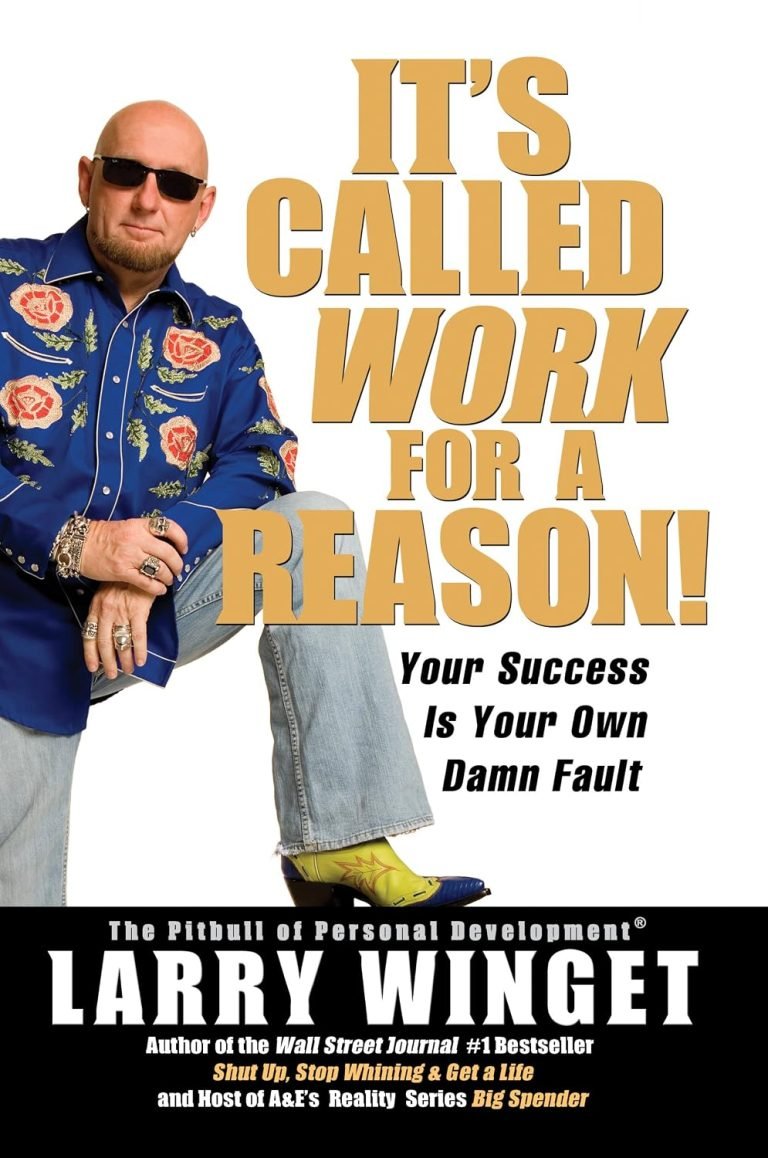
This book is the foundation. It’s Called Work for a Reason! applies the same thinking to the job, You’re Broke Because You Want to Be applies it to money, Your Kids Are Your Own Fault to parenting, and People Are Idiots and I Can Prove It! breaks it into ten habits. Start here, and the rest of his books build on it.
Explore the hub
The Psychology of Writing Hub: motivation, accountability, and the mental side of the work, gathered in one place.
Frequently Asked Questions
Other Books From – Self-Help