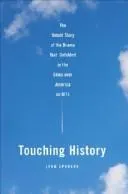
TL;DR
10/10. The air side of 9/11: air traffic controllers, the FAA command floor, National Guard fighter pilots, and airline crews, told minute by minute. Among the most moving books I’ve read. I’ve read it four times and it brings me to tears every time.
Lynn Spencer is a commercial pilot and a certified flight instructor, and that’s why this book exists and why it works. She was flying for a regional carrier when the attacks happened, which put her inside the industry that spent that morning improvising, and it gave her access a general-assignment journalist wouldn’t have got.
She conducted hundreds of interviews with the people who were on the radios and in the cockpits, worked through the recorded transmissions, and assembled the morning as the people responsible for the sky experienced it. It runs to about four hundred pages and it corrects the 9/11 Commission Report in places. That’s a large claim and one she supports with the tapes.
Few books stir up anger and gratitude at the same time, and this one does it on nearly every page. Angry at a defense system pointed the wrong way, grateful for the controllers and pilots who patched it together with telephones and nerve. Spencer never asks for either feeling. She lays out the tapes and leaves the feelings to you.
What happened in the air on 9/11?
Nothing worked and people made it work anyway.
The hijackers turned off the transponders. That’s the equipment that makes an aircraft identifiable on a controller’s screen.
Without it a jet becomes an anonymous primary radar return among thousands, and controllers were suddenly hunting for specific aircraft in a sky holding around 4,500 commercial flights. The first sign of trouble on American 11 was a controller at Boston Center noticing a plane that wouldn’t answer.
The military side was oriented outward. NORAD’s air defense had been built to intercept threats approaching from beyond American airspace, and that morning there were a small number of armed fighters on alert for the entire continental United States. Nobody had planned for a threat originating inside, already airborne, flown by people with no intention of landing.
The two systems couldn’t talk to each other properly. Civilian and military communications ran on different equipment with different procedures, and a great deal of the coordination that morning happened because individuals picked up telephones and improvised a channel that didn’t officially exist.
Those telephones bother me more than any other detail. A national air defense, and the coordination that mattered that morning ran through people dialing each other on a channel nobody had authorized. It should embarrass every planner who signed off on that setup, and it should make you proud of the people who ignored the org chart.
Watch: Touching History: The Untold Story of the Drama… by Lynn Spencer · Audiobook preview, Google Play Books
Who was Ben Sliney and what did he do?
Ben Sliney was the FAA’s national operations manager, and 11 September 2001 was his first day in the job. Somewhere in that morning, with reports arriving faster than they could be verified and nobody able to say how many aircraft were involved, he ordered every plane in American airspace to land. All of them. Around 4,500 commercial flights plus general aviation, brought down at once, at whatever field was nearest.
Nothing like it had ever been done. There was no procedure for it, no rehearsal, no checklist, and he didn’t have the authority. He gave the order anyway, and controllers executed it across the country in a few hours without a single accident. That’s its own quiet achievement given what he was asking of controllers who had never done anything remotely like it.
Everybody above him backed the decision afterward. That’s not the same as having had permission at the time, and the distinction is why the moment stays with me. He made a call that could have ended his career on his first day, on incomplete information, because waiting was worse than being wrong.
Spencer won’t call Ben Sliney a hero, so I’ll do it for her. Bureaucracies punish the man who acts without permission far more reliably than the man who waits, and he knew that on his first day. He brought the whole country down anyway.
Did fighter pilots plan to ram Flight 93?
Yes, and this is the section that takes four readings to get through without stopping.
The aircraft that launched from Andrews Air Force Base went up unarmed.
There had been no time to load missiles and the pilots went anyway. The understanding between them, arrived at with very little said out loud, was that they’d bring the airliner down using their own aircraft. One would take the cockpit, the other the tail.
They were on their way when United 93 went into the ground in Pennsylvania. The passengers had already done it.
Spencer leaves them there, still flying toward something that no longer existed, and doesn’t editorialize. She doesn’t need to. Two people took off in unarmed jets having privately worked out how to kill themselves and several dozen strangers because it was the least bad option available, and the reason they didn’t have to is that the people on board reached the same arithmetic first.
I can’t read this section quickly and I’ve stopped trying. Two pilots and a cabin full of passengers reached the same terrible arithmetic from opposite ends of the sky, and every time I picture those jets still flying toward a plane that was already gone, I nearly cry.
Why does Touching History work as a book?
Because nothing is heightened. Spencer’s method is to put you at a console or in a seat and report what that particular person could see and hear at that moment, which on that morning was fragmentary and frequently wrong.
Radar returns without transponders. Reports of aircraft that didn’t exist. A phantom American 11 believed still airborne long after it had hit the tower, because nobody had reconciled the reports. Commanders making decisions on information they knew was incomplete because the alternative was making none.
People with no procedure, no working inward-facing air defense, and no time improvised the response. What it was is human, and Spencer lets that stand without arguing for it. That’s why it’s more powerful than a book making a case would be. She also resists making heroes. The people here are competent professionals having the worst day of their working lives, and several of them are wrong about things. That honesty makes the moments of real courage credible when they arrive.
That refusal is what I admire most about Spencer. A lesser writer would have turned every controller into a saint, and the book would be worth less for it. She lets them be wrong on the page, and I found I trusted their right calls far more because of it.
What a writer takes from it
The discipline of staying inside a single point of view for the length of a scene. Spencer has dozens of viewpoints and never lets one leak into another. When you’re with a controller at Boston Center you know only what that controller knows, including the wrong things, and the tension comes entirely from the reader’s knowledge exceeding the character’s. That’s dramatic irony operating on real material, and it’s the hardest thing to do in narrative nonfiction, because the writer knows everything and the temptation to reassure the reader is constant. She never does it.
The other lesson is restraint at the emotional peaks. The Andrews section is the most affecting passage in the book and it contains almost no adjectives. She reports what the pilots agreed and what happened next, and stops. Any writer tempted to pile adjectives onto a tragedy should read the Andrews pages and feel ashamed of the urge. Too many accounts of that day reach for grandeur. Spencer reaches for the transcript, and it moves me more than the grand ones ever do.
Verdict
The best book I know about people improvising correctly under conditions nobody prepared them for. Read it alongside a ground-level account and you have the shape of the day: this one is the sky, Pfeifer is the towers, Starnes is the Pentagon. Four readings in and the Andrews section still stops me. If you read one book about 9/11 that’s not about the buildings, read this one.
It’s a ten from me without a second’s hesitation. I’d give it to anybody who thinks courage looks like a movie, because the courage in this book looks like a tired man on a headset making the call nobody authorized him to make.
Explore further
September 11th: A Writer’s Tribute: the day, the record, and what writers owe a subject like this.
Frequently Asked Questions
Other Books From – History