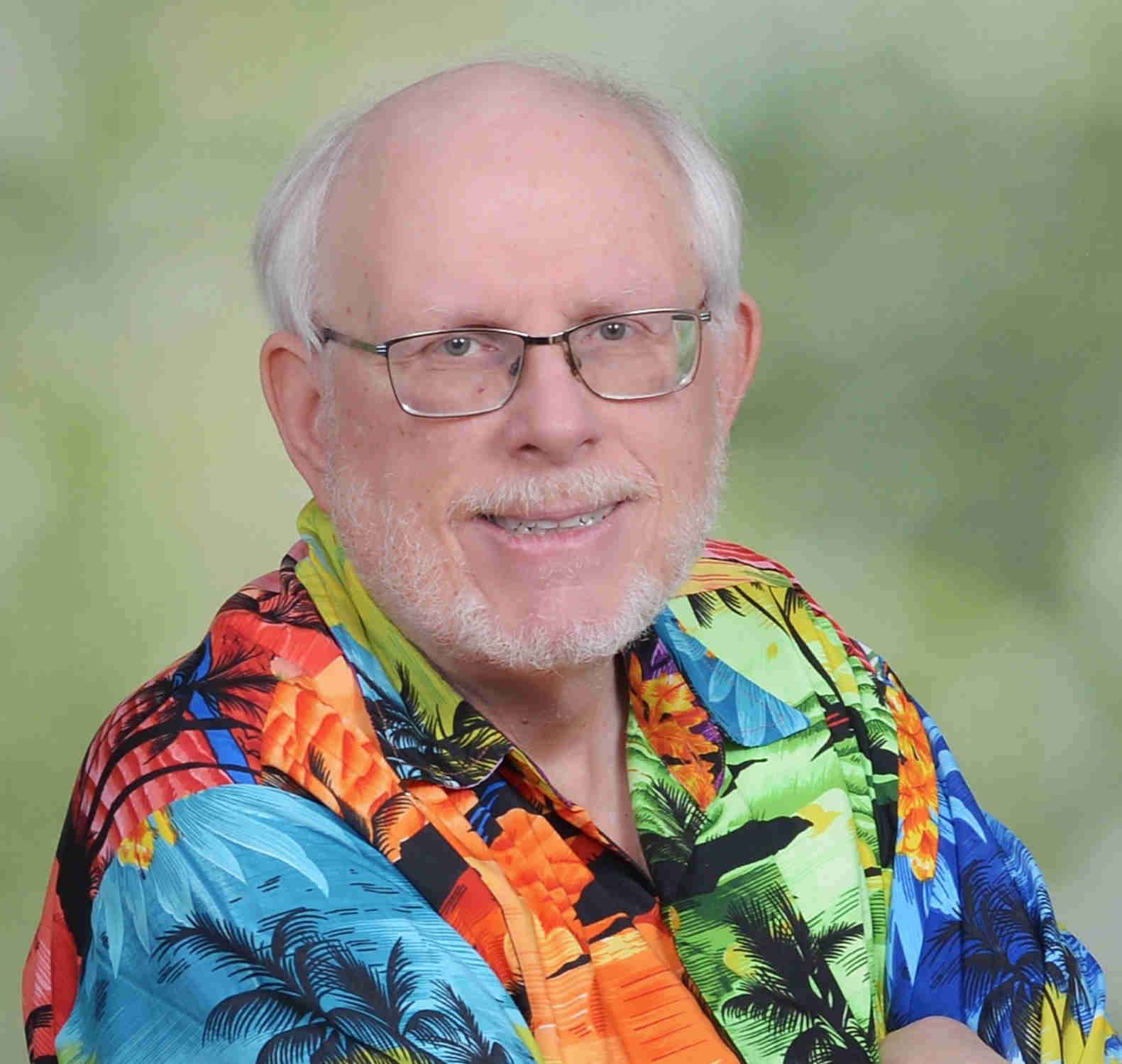
Anyone who lives in Florida, as I do, knows the cone of uncertainty. The hurricane center draws the storm’s likely path as a cone, narrow near today and wide five days out. Nobody boards up a house in Clearwater because of where the cone points on day five. They watch the near end, where the forecast is good, and they get ready for the wind that’s already coming.
AI forecasts deserve the same treatment. Mo Gawdat, who spent years as chief business officer at Google X and wrote the book Scary Smart, has drawn a cone of his own. A summary of it has been going around Facebook, and he put out a video titled “AI Will Break Humanity Before It Saves It.” His forecast says the bad years start in 2027 and run 12 to 15 years before things get better.
I’ve spent 33 years in technology, much of it in cybersecurity, and I’ve heard plenty of forecasts like this. Some of what Gawdat says is the near end of the cone, and you should prepare for it now. Some of it is day five.
What does Mo Gawdat predict about AI starting in 2027?
Gawdat laid out the long version on The Diary of a CEO podcast in August 2025. He predicted 12 to 15 years of what he calls a short-term dystopia, starting in 2027, before AI helps build something much better. In his telling, the technology is neutral and the danger comes from the values of the people running it. AI is controlled by organizations chasing profit, surveillance and power, and it multiplies whatever values it’s handed.
The harms he lists are concrete. Companies hire fewer people and squeeze more out of the ones who stay. White-collar and senior jobs, executive roles included, become replaceable. Deepfakes, scams and hacking stop being rare. Fake content outruns anyone’s ability to check what’s real. People get lonelier, the way they did with smartphones and social media. Surveillance grows with every efficiency gain, and power gathers in fewer hands.
In August 2026 he went further. At an event called Gladiator Summit II, he said that within 12 months the smartest being on the planet won’t be human. He said AI’s capability doubles about every 5.7 months, that it could be a billion times smarter than us by 2037. People who use it well, he said, already gain the equivalent of 45 to 50 IQ points. He called that last figure an informal observation and said it wasn’t a measurement.
Will AI really be smarter than humans within a year?
It depends entirely on what you mean by smarter. I have a problem with any claim built on a word nobody defines. I’ve written that the AI singularity is overrated, and the reason is the same: nobody agrees on the definition, so the prediction can’t be wrong.
By some measures AI passed us years ago. IBM’s Deep Blue beat world chess champion Garry Kasparov in 1997. In 2020, AlphaFold started predicting protein structures that took researchers decades. ChatGPT arrived at the end of 2022, and millions of people started using AI every day. It reads faster, remembers more and writes a passable first draft of almost anything.
The AI curve so far, and the forecast Gawdat draws from it. The shape is illustrative; the dates and the doubling rate are his.
On other measures it isn’t close. It has no curiosity and no awareness of itself. It doesn’t want anything, and it doesn’t wake up wondering about a problem nobody gave it. A calculator beats me at long division, and I don’t call it smarter than me.
The billion-times number has a problem too. At one doubling every 5.7 months, 2026 to 2037 is about 23 doublings, a few million times. A billion takes 30 doublings, so the arithmetic only works if you start counting around 2023. That’s a forecast built on a curve, and curves bend.
A 15-year AI forecast is the far end of the hurricane cone. Prepare for the wind that’s already here.Share on X
Which of Mo Gawdat’s AI warnings are already happening?
Nobody needs to wait for 2027 to get scammed by a cloned voice.
Most of them. That’s the near end of the cone, and it’s where Gawdat is strongest.
Nobody needs to wait for 2027 to get scammed by a cloned voice. Deepfakes, fake reviews, AI-written phishing and fake news sites exist now. Companies are already holding headcount flat and handing the people who stay more work and more tools. Surveillance is already cheap. None of that is a prediction.
| His warning | Already happening? | What you can do now |
|---|---|---|
| Fewer jobs, more work for those who stay | Yes, in hiring more than in layoffs | Learn the tools in your own field before a colleague does |
| Deepfakes and scams | Yes | Set a family code word, and call back on a known number before sending money |
| Hacking at scale | Yes | Use a password manager, two-factor login and backups you’ve tested |
| Losing track of what’s real | Partly | Check the source before you share anything that makes you angry |
| Loneliness | It started with smartphones | Keep the in-person groups and friendships you have |
| Surveillance and concentrated power | Yes, by companies as much as governments | Assume what you type into a cloud service can be read, and decide what goes there |
From a security point of view, his list is useful because it’s specific. Risk management starts with knowing which risk you’re managing, a point I made in planning for an AI catastrophe. “AI will ruin everything” isn’t a risk you can plan for. A cloned voice calling your mother for bail money is. So is a phishing email with no spelling mistakes. The defenses against those are well known, and most people still don’t use them.
What does that look like at my house? My passwords live in a password manager. Backups run to the cloud with Backblaze. My Wi-Fi uses WPA3, and the smart devices sit on their own network, away from my computers. None of it is exotic, and none of it waits for 2027.
If I had to bet on a disaster, I’d bet on people. A cyberattack paid for by Russia or Iran is a much better bet than a rogue AI turning on us by itself. There are thousands of data centers and countless other targets, and the worst day could involve no hack at all. Vague dread doesn’t help you plan for any of it. A named risk gives you something to defend.
The surveillance warning bothers me most. This year an AI company reported a user in Florida to police over a conversation. It made me very uneasy, and I wrote about whether AI should report you to police. I want people stopped before they do harm. I don’t want private companies deciding which of my thoughts get sent to the authorities. Follow that road far enough and you get 1984, run by corporations instead of a government.
Is AI going to take white-collar jobs, as Mo Gawdat warns?
Some of the work, yes. The jobs, mostly no, at least not on their own.
In 33 years of enterprise IT, I never saw a piece of software take anybody’s job. Somebody decided to use it, and somebody else decided to wait. I made that case in AI isn’t coming for your job, other people using AI are, and Gawdat’s own numbers back it up. If a person who uses AI well gains the equivalent of 45 to 50 IQ points, the threat to you is the colleague who learned the tools last year.
I see it in my own business. I use AI every working day for outlines, research and first drafts, and I still write the books.
Does that mean nobody loses a job? No. Companies that hire fewer people and pile the work on the ones who stay are making a choice, and Gawdat is right to call it out. I’d call it out too. But the software didn’t make that choice. A manager did.
Executives aren’t exempt.
A lot of what a senior manager does is read reports, summarize them and write memos, and AI does that fast. The parts that remain are judgment, relationships and taking responsibility when the decision goes wrong. Those were always the job.
Should governments regulate AI or punish how people use it?
Gawdat’s answer is the part of his argument I agree with most. He says governments should go after harmful uses of AI and stop trying to redesign the technology. His example is a hammer. It can build a house or kill a man, and we don’t regulate hammers. We prosecute murder.
I’ve said for a long time that AI is a tool. Laws aimed at the tool tend to land on the people using it legally, the small businesses and the one-person shops, while the bad actors move offshore or ignore the rules. Laws aimed at the harm go after the person who used a deepfake to steal, the company that sold surveillance it promised not to collect, the scammer behind the cloned voice. You can write those laws today with the courts we already have.
Where Gawdat and I part ways is the dystopia itself. He sees AI controlled by a small group with the wrong values, multiplying the worst of us for a decade and a half. I see a tool that’s already letting one person build what used to take thousands of programmers. Both of those are true at the same time. Which one wins depends on what people do with it, and he says the same thing. He just doesn’t think enough people are paying attention.
So what do you do with a 15-year forecast? You read it for the list and set the dates aside. Gawdat has spent more time inside the AI industry than most of the people arguing with him, and his list of harms comes from watching it up close. His calendar comes from a curve on a slide.
My take
Gawdat’s dates are guesses, and his harms are real. Ignore the 2027 start line and the billion-times curve. Pay attention to the list, because deepfakes, scams, flat hiring and cheap surveillance are already in your inbox. His fix is the right one: punish the person who swings the hammer at someone and leave the hammer alone. Then learn to use the tool before someone else uses it better.
How to prepare for AI without waiting for 2027
Board up for the near end of the cone. Set up the family code word. Turn on two-factor login everywhere it’s offered. Learn the AI tools in your own field well enough that you’re the colleague other people worry about. Be careful what you type into any cloud service, AI or not. And when the next forecast says the world ends in a particular year, check what it says about next month. Next month is the part forecasters get right.
The AI & Writing Hub collects my articles on AI, including why the doomers and the hypers are both wrong. If you want help putting AI to work on a book or a business, my AI services are a place to start. Watch the storm that’s coming this week. The one on day five can wait.
If Gawdat is right that AI multiplies whoever uses it, I wrote this one about the good side of that: using AI to amplify your thinking instead of replacing it.
The companion volume covers the other path, where people hand their judgment to the machine one reasonable decision at a time and don’t notice what they’ve lost.