TL;DR
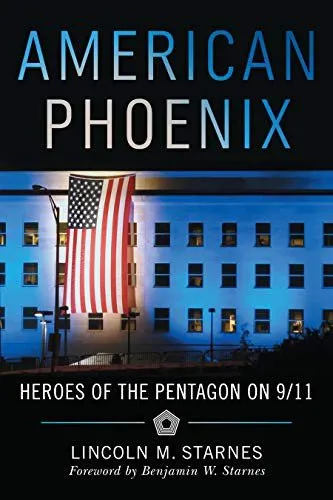
8/10. American Airlines 77 and the Pentagon. It’s the part of that day almost nobody writes about. Starnes runs it from the groundbreaking on 11 September 1941 through to the memorial dedication in 2008, and the middle is the people who went back into a burning building for strangers.
One hundred and eighty-nine people died at the Pentagon, one hundred and twenty-five in the building and sixty-four aboard the aircraft, and the attack occupies a fraction of the attention given to New York. Part of that is scale, since the towers killed far more. Part is imagery, since there was no equivalent of a skyscraper collapsing on live television and the Pentagon footage that exists is fragmentary. And part is simply that the story got told first and loudest from Manhattan, and the shelf filled up.
Nobody gives the Pentagon its due, a glaring oversight. One hundred and eighty-nine people died there, and the shelf treats them as a footnote to Manhattan. I was grateful to Starnes before he wrote a single good sentence, simply for deciding they deserved a book of their own.
Starnes set out to correct the imbalance and mostly succeeds. He’d help that matters: his brother Ben was one of the first responders at the Pentagon that morning, which gave him access and, more importantly, gave him people willing to talk to somebody they considered one of their own.
Why does American Phoenix start in 1941?
Because the Pentagon’s builders broke ground on 11 September 1941, exactly sixty years to the day before the attack.
That coincidence could easily be milked and Starnes doesn’t milk it. He uses the opening chapters to make the building a character with a history: Roosevelt looking at land that had been part of the Lee family estate and had since become a slum, the wartime urgency that put up the largest office building in the world in a matter of months, and the decades of ordinary work that followed.
Plenty of writers would have hammered that coincidence into a paragraph of portent, and I’m glad Starnes kept his hands off it.
The effect is that when the aircraft arrives, it’s happening to something instead of at a location. That’s a real structural achievement and it’s the best decision in the book. It closes with the memorial dedication in 2008. That gives the book an arc most single-day accounts can’t manage. Sixty-seven years from groundbreaking to memorial, with the attack near the end instead of at the center.
Who went back into the building in American Phoenix?
This is the material the book exists for, and it’s where the writing steadies and becomes good.
People who had got out went back in, repeatedly, into smoke and structural collapse and burning jet fuel, for people they didn’t know. Some were soldiers and many were civilians. Several had no training for any of it and went anyway, in office clothes, into a building that was on fire and would partially collapse about half an hour later.
This is what I came to the book for, and it delivers. Civilians in office clothes going back into smoke for strangers is a kind of courage that gets almost no credit, because nobody filmed it and nobody handed them a uniform. Starnes gives them their names back, and for that alone the book deserves its place.
Christopher Braman, an Army sergeant first class, gave Starnes the line the book uses as its epigraph, and it’s the book compressed: that day he saw humanity at its best and its worst, and humanity doesn’t have race, creed, or color when you’re looking into the souls of people.
What makes these accounts land is that Starnes lets them stay confused. People didn’t know what had happened. Early reports inside the building suggested a bomb. Nobody had a picture of the event they were inside, and they made decisions about who to carry out in conditions where they couldn’t see.
What is wrong with the book in American Phoenix?
The opening, and I’d rather say so than pretend otherwise. The front matter and the first stretch are noticeably rougher than the rest. There’s a self-congratulatory note about the writing of the book that a firmer editor would have removed, and the early transitions between people are handled clumsily, so you lose track of who you’re with.
That self-congratulatory note annoyed me, and I’d have cut it on sight. A book about people who ran into fire for strangers has no room for the author patting himself on the back, and an editor should have told him so.
Reviewers who read it before publication flagged both, and they were right. It improves markedly once the day itself starts, and a reader who gives up in the first fifteen percent will miss the part that justifies the book.
The prose throughout is workmanlike. This isn’t a stylist’s book and it’s not trying to be. Where it succeeds is in access and in patience with the people it interviewed, which for this subject counts more than sentences.
I’ll take workmanlike prose on this subject over a stylist any day. These people deserve accuracy and patience far more than pretty sentences, and Starnes gives them the two things that matter.
How does American Phoenix compare to the other 9/11 books?
It’s the least polished of the three I keep together and the most necessary, because the others have competitors and this one doesn’t.
Several readers compare it to Garrett Graff’s oral history. That’s the better-known book and covers the whole day across all three sites. The comparison is fair on method and unfair on scope. Graff is assembling the entire event; Starnes is filling one specific hole with more depth than any general account can give it.
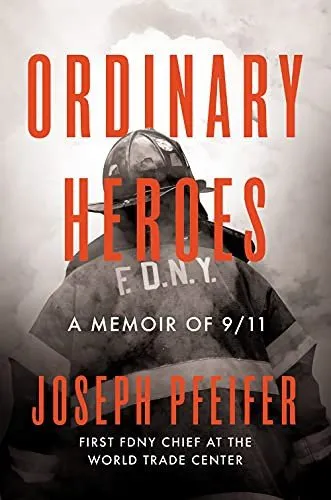
If you’re building a shelf on that day, the aviation side is Spencer, the towers are Pfeifer, and the Pentagon is this. There’s no better single book on the third. That’s both a recommendation and a comment on how little has been written about it.
Verdict
The book that fills the Pentagon-shaped hole in the 9/11 shelf. Not as polished as the best accounts of that day and more necessary than most of them, because the Pentagon side of the story has been under-told for a quarter century. Read it after the New York books, not instead of them, and push through the first fifty pages. It’s an eight from me, docked for the rough opening and for nothing else. If you care about that day at all, you owe the people at the Pentagon the few hours this takes, and a clumsy first stretch is a small price for meeting them.
Explore further
September 11th: A Writer’s Tribute: the day, the record, and what writers owe a subject like this.
Frequently Asked Questions
Other Books From – History