
AI Enablement and Child Welfare Technology
Featuring William Bessette on Leaders and Their Stories with Richard Lowe
Chapters
- 0:02 Meet William Bessette
- 0:37 What Eliances Gets Right
- 2:53 Richard’s AI Advisory Work
- 3:17 Twelve Years of The Brilliam Group
- 4:23 An Invoicing System in a Weekend
- 5:52 AI as a Digital Employee
- 7:04 Understanding Before Implementation
- 8:24 People, Processes, Technology
- 9:39 The AI Pile-Ons in Writing Groups
- 11:29 Will AI Take Every Job?
- 14:08 Humanity and AI Come to Terms
- 15:28 The Death of Thinking
- 16:44 Homeward Wise and Foster Care
- 18:16 Turning Trauma Into Purpose
- 21:00 ADHD as a Superpower
- 23:21 Face Blindness
- 28:16 Leaving the United States
- 30:09 People Get Angry When They Go Hungry
- 32:20 AI Is Societal, Not a Bubble
- 33:36 Where to Find William
How should a company implement AI without creating new bottlenecks?
TL;DR: What This Conversation Establishes
- William Bessette co-founded The Brilliam Group, a web design and digital marketing company, 12 years ago and has rebuilt what it offers around AI
- He warns that companies rush into AI implementation before they understand how a tool will interact with their current processes and software
- Richard Lowe argues for treating AI as a digital employee and running any transformation in people, processes, technology order
- William’s newest company, Homeward Wise, builds software for private and state foster care agencies
- Both see AI as a societal shift bigger than the dot com era, one that will reach everything from medicine to where you shop
What You’ll Learn
- Why some companies spend more on AI than they save, because they still pay people to verify the work
- How an AI tool that clears one bottleneck can create new ones further down the process
- Why William and his husband left the United States eight years ago with two backpacks
- How Richard came to see his ADHD, from hyperfocus to face blindness, as a superpower
- Why William, a survivor of human trafficking, and Richard, who ran away from an abusive father, both turned childhood trauma into work that helps others
Referenced in this episode
The Brilliam Group, William Bessette’s web design and digital marketing company.
Homeward Wise, his company building software for private and state foster care agencies.
Floppy Hat Adventures, William’s travel blog, and Sports Out in the Open, his husband’s podcast.
Eliances, the networking group where Richard and William met.
The Death of Thinking and its companion, The Birth of the Augmented Human, Richard Lowe’s books on AI.
Enemies of You, the series those books belong to.
Richard Lowe: Hello, this is Richard Lowe and this is the Leaders and Their Stories podcast. I’m here with William Bessette and we’re going to talk about whatever comes to mind. William, welcome to the show.
William Bessette: Thank you so much, Richard. It’s really an honor to be here. You know, I know your level of work and ability, so thank you so much for inviting me.
Richard Lowe: Yes, well, there’s plenty of things to talk about. We’ve got similar overlap and things. We’ve been friends with the Eliances group for what now, 18 months, something like that.
William Bessette: Yeah, a little over a year and a half.
Is Eliances worth joining for business networking?
Richard Lowe: Yeah, which is amazing. That’s a pretty good group. It’s a kind of a networking group, a little bit more than that. Everybody gives a one minute speech. And then at the end there’s a get together where you can go into a remote room, which is kind of a virtual room.
You can talk to people, whoever you want, whoever you, anybody who you liked it during give their speeches, you can go talk to in that room. And I get a lot of value from that whole thing. How’s it work? Does it work for you?
William Bessette: I’ve, you know, I’m always skeptical about groups like these. But I will say that in a year and a half I’ve been a member. It’s been it’s been great. I’ve gotten huge value out of it. Clients, friends, you name it. It’s been great, and I have no regrets about my about joining.
Richard Lowe: Yeah, joining, it’s a good group. It’s not like BNI or those other groups which require you to bring in a certain number of people and exchange. What do they call it, referrals, and stuff. It’s more laid back. So it’s a little easier to be in which has advantages and disadvantage, I suppose.
But I never liked the BNI type groups for lots of reasons, but I do like Eliances. It’s probably the best group of the type that I found.
William Bessette: Absolutely. And you know, I got to tell you, Richard, what I was really afraid of in the beginning was that it was going to be a room full of marketers trying to sell you marketing. And as someone that tries to sell people marketing, I was one of those people.
But I’ve tended to find that people that come into Eliances, they do all sorts of interesting things I’ve never heard of before. And, you know, they’re authors, they’re coaches, they’re entrepreneurs, technologists. So I really appreciate the diversity that is in that group as opposed to just every other person is offering, you know, the next branding or marketing service.
Richard Lowe: Yeah. Yeah. Yeah. You get more leaders in that group.
William Bessette: Right.
Richard Lowe: Now this isn’t intended as a sales thing, you know, by going to Eliances and stuff, it’s just us chatting about things.
William Bessette: Absolutely.
Richard Lowe: Something I’ve been getting into a lot is artificial intelligence. And I’ve actually started a new line of business with artificial intelligence where I’m offering my services as an advisor, joining advisory boards and things to help companies and people learn how to use AI or advise them on how to use AI to strengthen whatever they’re offering. What kind of experiences have you had with AI?
How are web design and digital marketing agencies adapting to AI?
William Bessette: Well, you know, we’ve had a web design and digital marketing company for 12 years and called The Brilliam Group. And in the past couple of years, we’ve had to really adjust to the changing times. You know, AI is providing, you know, cool new ways of doing things, doing things faster, doing things more efficiently.
So we’ve sort of dove headfirst into that and have now kind of adjusted what we offer and what we do based on these new AI capabilities. You know, it wasn’t so long ago that if someone wanted a website, you know, you charge them many thousands of dollars and you had a group of developers building this website over several weeks.
Well, that game has changed. So there’s a lot of adaptability that digital marketing agencies, especially in this day and age and at this time, They have to adapt. They have to be flexible. They have to change as technology changes. So we’ve done that and now we’re incorporating AI into a lot of things that we do.
Richard Lowe: Yeah, I’ve been working with Claude. Claude, the new Opus 5.5, new as of now, has been wonderful. And I’ve told it to create some web pages. It’s like, okay, fine. A couple of minutes later, I got a web page and it looks good.
Over the weekend, I spent one day, six hours, and I made an entirely new invoicing accounting system with Claude, just from nothing to finished product minus a few bugs that invoices, sends it out through Stripe or PayPal or whatever, accepts returns, the whole thing, payments and everything.
And it just took a few hours. It’s amazing what you can do with Claude or any of the others, I’m sure.
William Bessette: It’s incredible. Absolutely. Definitely in a lot of fields, not just marketing, but many fields, AI is creating whole new areas of opportunity. Now, of course, you have to be careful how you utilize it, how you confirm what it’s telling you. A lot of companies have invested in AI and then realized that they’re still paying people to verify that work.
And in the end, if they’re actually spending more money than they would, if they just kept that person doing the work. So it’s a very nuanced thing. It can be highly beneficial in some instances and in others it can, you wind up spending way more money than you expected to.
Should businesses treat AI as a digital employee?
Richard Lowe: Yeah. What I found AI is what you have to consider for AI is an AI is a digital assistant. It’s a person. Think of it as an electronic person. Virtual assistant is probably the best way to think of it. So you give it tasks and it comes back with results for tasks.
So you have human employees and you have digital employees and they do whatever they’re best at. If you think of it that way, it actually makes a lot of sense. You might have a digital employee that handles the workflow from between these various applications, whereas a human employee is responsible for analyzing those applications maybe in coming up with what to use those results for the future of the business.
So he’s freed from all of the grunt work, which is what the digital employee does. That’s just a primitive example. But right. Get a get your human employees working with digital employees, and you’re going to have a lot better if you think of it that way, it’s going to have a lot better results.
William Bessette: Absolutely. No question.
Richard Lowe: Yeah, it’s not so much, oh, I can lay off 25% of my staff. You should think of it as I can make my entire staff more productive and better and actually increase my bottom line because they’re doing better things and more things.
Why do AI implementations fail in large companies?
William Bessette: Absolutely. Yeah, for sure. You know, a lot of companies are deploying an entire AI workforce now. Now I think on the backside of that is a lot of companies are putting the cart before the horse. There’s a lot of analysis that has to go into implementing AI, especially in larger organizations.
You’ve got many tools, many pieces of software. You have people in different departments interacting in different ways. So when, you know, it’s different from, you know, a roofing company, which is, you know, maybe a dozen people than it is for an enterprise level company that’s 10,000 people.
So a lot of these companies need to be aware of the fact that, you know, understanding is as important as implementation. And a lot of people just rush into implementation before they have an understanding. If you create an AI tool that relieves a bottleneck at this point in the process, you could have bottlenecks at this, and that point in the process.
So you can’t just throw an AI tool in there and be like, this is going to change everything. You may be creating more work down the road if you haven’t gained an understanding of how this tool is going to interact with your current processes and software.
Richard Lowe: Yeah, I used to do digital transformations. I’ve done two of them for Trader Joe’s. One from paper to machine, and one from machine to machine. And one of the things I learned is you have to do it in people, processes, technology order. If you do it from, oh, I got this cool technology called AI, and I’m going to do all this stuff, you’re doing it wrong.
You need to start from the people then the processes they perform, and then what technology will fill in those gaps that the people have in their processes, or what processes can go away, what processes are inefficient, what processes can be re-vectored, and what can these people do?
You always start from the people. And that’s a mistake a lot of corporations make, especially larger, well, all of them, is they start from the wrong end, and then of course it screws up. Of course it doesn’t do what they need. Of course they spend half their time debugging what didn’t work because they started from the wrong end of the pipe.
William Bessette: Right? Absolutely great point.
Richard Lowe: Something that I learned the hard way.
William Bessette: Right? You know, a lot of us have. But I think the way that it’s advancing so quickly. You know what it did 6 months ago is nothing compared to what it does now, so it will continually evolve and sort of change the paradigm about how we look at work.
Why do writing groups attack authors who use AI?
Richard Lowe: Right, right now. What I think is. I’m in a lot of writing groups, and I’ve since taken myself out of most of them because they have. They’ve always been full of vitriol, but they have gotten so much worse because of AI, where you walk in there and if you even breathe the word AI, you’re immediately attacked.
And I mean, like, you should die kind of attack. People will tell you, should die. I wish you had retroactive abortion so you should be castrated. I’m not kidding. These are actual comments.
William Bessette: Wow.
Richard Lowe: And you get what I call dogpiling. I have a whole series of articles on my website about the dogpiles where one person who says, I just made this little AI thing. What do you think? And they just get ripped to shreds. How dare you write a book with an AI cover?
It’s just for my grandson. That’s it. I’m going to while you’re driving somebody to work, you’re doing this, you’re doing that. I think they’re thinking of AI wrong. They think of AI as a threat. They’re losing whatever they’re losing. And what I think of as AI is about to is currently and is going to even more increase a burst of creativity that the world has never seen because the barriers are removed.
I can create things with AI that I couldn’t even dream of before because the barrier to creating that is gone or lessened. And I think that’s huge. I think that’s what they’re missing. I don’t have to learn all the bits and bytes about how to do a digital picture or how to draw a painting or all that.
I can just use electronics to do it for me and create something of real beauty with that. That’s super controversial now. It shouldn’t be, but it is.
William Bessette: Right. Absolutely.
Richard Lowe: Thoughts.
Will AI eventually take every job?
William Bessette: Well, I mean, I agree with you 100%. You know, definitely there’s a lot more possibility today than there was years ago in terms of creating software, doing work in general, you know, you could push this down the road and see where it leads.
That’s why a lot of people have a lot of nervousness about AI. It could potentially do everything. And once it’s inserted into humanoid form, whether that’s through robots or whatever you have, you know, then, because everyone right now is saying, well, it’s the white collar jobs at stake.
True. Down the road, it’s going to be all jobs at stake. So definitely this is creating a whole new paradigm for how we think about work and living and what the future may bring.
Richard Lowe: Yeah. Yeah. I think it makes humanity able to be free and be free of the drudgery of daily living, be free of the drudgery of having to work through barriers to get things done. There will be a painful process involved. Very painful, probably, because we’re not used to that.
We’re used to having want to make some money. You’re used to having to work your ass off to make the money. Well, you can come up with some AI stuff and create a business and make some money. Now you can do that now.
And it’s probably not that hard. I mean, there’s parts that are really hard, you know, the promotion and things, finding a product that has a niche, all that kind of stuff. But the actual product itself. I was telling you, I just created a whole new financial package for myself.
I just looked at all the, I’ve been doing invoicing and bits and pieces now, and I finally said, you know, I’m done with this. So I wrote my own invoicing program in Claude. I had Claude write it in a weekend that does invoicing, it does payments, it accepts returns, it does the bookkeeping, it does everything.
And I wrote that in under a weekend. And it’s better than anything out there that I could find. And it’s, of course, you know, it’s, I’m going to spend the next few weeks finding bugs because Claude is in no way perfect. But what it means is I don’t have to put up with the limitations of some mass produced thing by some large corporations.
I don’t have to have the ads in it. I don’t have to have any of that stuff. Talk about freedom.
William Bessette: Absolutely. We’re on the same page about that. No doubt about it.
Richard Lowe: Yep. Yep. But I am careful to occasionally remind Claude that I’m one of the good guys, and when he releases the Terminators, he should remember that.
William Bessette: Let’s hope that doesn’t happen. I don’t want a real life Skynet to occur. Thank you.
Richard Lowe: I don’t think that’s what’s going to happen. I think what’s going to happen is humanity and AI are going to come to an agreement, so to speak, of their positions in the world.
William Bessette: Yeah. For sure.
Richard Lowe: And we’re going to have some jostling, and there’ll probably be some uncomfortable, a lot of uncomfortableness on both sides. And then we’ll figure out what each is good for, and we’ll come to terms with that. AI has value. Humanity has value.
William Bessette: Absolutely 100% right there with you, my friend.
Richard Lowe: Although I am writing a book, where in the book Ukraine’s been building all these advanced AI weapons and things, and they take over Ukraine, and then we have to fight them.
William Bessette: Right. Interesting. Very interesting. Well, that’s the way the future’s headed, you know, with drone warfare and, you know, AI in military situations. It’s a dangerous thing, but here we are.
Richard Lowe: We are what we eat.
William Bessette: Indeed.
Richard Lowe: It is what it is. And, you know, it’s not going to stop.
William Bessette: It’s not.
Richard Lowe: The weapons are getting smarter. And sometimes the people are getting dumber.
William Bessette: Sometimes. Many times.
Richard Lowe: I got a book on that called the I forget the name. Oh, the death of thinking. It’s out there on Amazon, The Death of Thinking, and it’s got a companion book, how you can use AI to optimize yourself.
William Bessette: Awesome. Well, congratulations on your book.
Richard Lowe: There’s two of them, the companion, so there’s two. It’s in the Enemies of You series, which has AI and it is part of it. And then war and other things, it’s going to include the oligarchy that we currently have in the United States and all kinds of other things in there.
William Bessette: That’s I’m sure it’s going to be a good read.
Richard Lowe: We don’t have really have an oligarchy. We have a corporatocracy. I think that’s how you pronounce it. A rule by corporation.
William Bessette: Correct. Corporatism in the shape of sort of this technocracy. Yeah, all of it. Nothing’s good about it, but.
Richard Lowe: When you’ve got companies that are worth multiples of trillions of dollars, they can certainly do what they want.
William Bessette: Absolutely.
Richard Lowe: To a certain extent.
William Bessette: Absolutely. You’re absolutely right.
What software helps foster care agencies place children?
Richard Lowe: Yeah. Yep. So what’s new in your world?
William Bessette: Well, you know, we’ve recently launched a new company called Homeward Wise.
Richard Lowe: Another company.
William Bessette: It’ll be a fourth.
Richard Lowe: You’re a company crazy man.
William Bessette: Trying to diversify and stay ahead of the game, you know?
Richard Lowe: Sorry, I interrupted. Go ahead.
William Bessette: No, not at all. So Homeward Wise develops software technology solutions for private and state foster care agencies in the US. So that’s kind of the big thing that we’re focusing on right now. Also, my husband just launched a new podcast called Sports Out in the Open.
So now he’s doing weekly podcasts with a LGBTQI+ sort of inspired theme. So it’s a it’s a talk show for, you know, people that want to hear and know about sports, but from a particular perspective. So we’re working on both of those new companies right now.
Richard Lowe: Nice. Nice. That’s podcasts are an interesting cat. They’re difficult to get off the ground, hard to promote sometimes. There’s so many of them now. But if you have a slant like that and you got an audience, then that probably makes it easier.
William Bessette: Exactly. And that’s what we’re trying to do with it. And there is a niche there.
Richard Lowe: And if you have a passion behind it?
William Bessette: And he does. And I have a passion behind Homeward Wise. I was a victim of human trafficking when I was a young teenager. And that trauma has embedded within me the desire to help children and to make sure children have good outcomes in their lives.
And so that’s why we’ve created Homeward Wise is to help these agencies place children better have better outcomes for the children and move kids in the system faster and more accurately.
Richard Lowe: Interesting. Interesting. Well, as you know, I’m a ghostwriter and several of the books that I’ve written for clients have been back exactly on that same subject, how they were trafficked.
William Bessette: Wow.
Richard Lowe: Those are hard books to write. They were very fulfilling when they were done because some of these got real serious into the traffic.
William Bessette: I can imagine.
Richard Lowe: Yeah. Hard to write lots of tears, lots of reminders. I’m not your therapist. Let’s write the book.
William Bessette: Right. Right. Absolutely.
Richard Lowe: But that’s one type of work that I’ll gladly take on because it’s fulfilling.
William Bessette: It is. And, you know, that’s one of the reasons why I, you know, I want my legacy to be how many children I was able to help. So it’s if this would be the only thing I ever do as long as I succeed at it. I’ll be happy for the rest of my life.
Richard Lowe: Yep. In my own memoir, my dad was a bit abusive and there was a point at which I think I was eight or nine. I ran away from home and I got about two miles away and then I thought my baby sister’s still there with him. I can’t leave. Turned around and came back.
William Bessette: Yeah. You know, I was an only child. I never knew my father. I grew up in poverty. I ended up I also was a runaway just after my 15th birthday. And that’s when I was trafficked to Hollywood and spent three days going through a very traumatic thing.
And so I try to sort of harness that energy, you know, that trauma to create good in the world and good outcomes. for kids. So I really identify with you, Richard, in terms of, you know, you being a runaway and, you know, I don’t know your full story, but I’m sure it’s complex and deep.
So, you know, I definitely identify with kids that may be going through some of the things that you and I went through and how can we help them?
Can ADHD be a superpower?
Richard Lowe: Yep. Yep. It’s called My Life in Crazytown, how I turned ADHD into my superpower. And it’s on Amazon, of course. And it came out really good. It goes through the whole thing up until 19 when I left home finally. And my sister turned out pretty good.
She started a school. She married a great husband, started a school with thousands of students. I think she’s got hundreds of thousands have gone through it by now, teachers, principals, the whole thing. And she’s still running it. So she turned out pretty good.
William Bessette: Excellent. Good to hear.
Richard Lowe: Five kids, by the way.
William Bessette: Wow. Yeah. My brother-in-law has seven, so I couldn’t even imagine what a you know, what a group. One boy and six girls. I feel sorry for my nephew.
Richard Lowe: Indeed. Indeed. That’s a lot of kids. So, yeah, it’s interesting. It’s interesting. But I, like you said, I turned those traumatic incidents into power, into something that I can harness. And in my case, that was the root of my ADHD. And if you know anything about ADHD, it’s a very interesting syndrome.
It’s not a disease, it’s a syndrome, a condition like hyperfocus. So I can focus on something. And time blindness means 12 hours will go by and I won’t even look, I won’t even know time has passed. I’ll look up. Oh wow, it’s a night already.
I gotta go back to work and I’ll finish an entire financial package on a weekend. Like I said, that’s hyper focus. Just focus, stop to eat and pee and that’s about it. And that’s ADHD. I’m not saying anybody who does that has ADHD, but that’s a symptom of ADHD.
William Bessette: Of course, yeah, totally get it. I have several friends that have been diagnosed with ADHD and obsessive compulsive disorder and all the things. So I definitely understand and empathize and, you know, it’s not an easy thing, especially nowadays where we’re bombarded with so much information from so many sources.
Sometimes it can be hard to tune out the noise. So definitely it’s something I identify with and understand.
Why do people with ADHD forget faces?
Richard Lowe: Well, the interesting one is face blindness. So I was standing in a restaurant a couple of months ago and I was just minding my own business in line waiting to go. And this girl comes up to me and she puts her arms around me.
Hey, Richard, how you doing? It’s been a while, blah. No idea who she was. And she said, you have no idea who I am. And I said, not a clue. And she filled in a couple of details. Turns out that several years before we’d walked around the block for several years talking for hours at a time.
But nothing, the thing with ADHD, if it doesn’t, if it’s not significant, it doesn’t imprint on the memory. So we must have just talked about blah stuff and it didn’t, it didn’t stick. That’s ADHD. I think that’s the way it works. I still don’t know who she is.
I faked it. Well, I remember you know, I have no clue.
William Bessette: Right. You gotta fake it till you make it.
Richard Lowe: I have no clue. I can’t remember her to save my life.
William Bessette: Too funny.
Richard Lowe: That’s the way it works. And sometimes it’s good. Sometimes it’s bad, you know, like everything else. It’s a condition. It’s just what it is. It’s not a bad thing or a good thing. It was a big relief to find out I had it.
It’s like, oh, yeah, that explains everything. Thank you. I’m going to go back to work now.
William Bessette: Yeah, totally get it. Absolutely. And I’m sure especially growing up, I bet, when you’re going through these things, it must be kind of hard to understand, why do I feel this way what’s going on? And I’m just glad that, in modern times that it’s much more well known and easily addressed.
Richard Lowe: Yeah, I don’t need any medications or anything. I just know what it is and know how it affects me and go, oh yeah, that’s just that. Okay, I can move on. You know.
William Bessette: Yep, exactly.
Richard Lowe: It makes it easy to spot it, which makes it easy to deal with when it’s a mystery, then it becomes hard.
William Bessette: Absolutely.
Richard Lowe: I only found out a year and a half ago.
William Bessette: Oh, wow.
Richard Lowe: Yeah.
William Bessette: Well, you made it through life up to this point.
Richard Lowe: Yeah, I found out I went, well, that explains a lot. Thank you for telling me. Okay, let’s move on with life.
William Bessette: Exactly. Yeah, totally.
Richard Lowe: What are you going to do, right? You know, there’s no, I don’t even know if I’d want it cured. I don’t even know if it is a curable thing. I don’t care. It’s fine with me. It is me.
William Bessette: Yeah, it’s part of who you are at this point. You know, it’s like, what’s the point of putting yourself through something just to get rid of something you’re diagnosed with, but you’ve already existed and lived up to this point with it. So you can live a lot longer with it.
Richard Lowe: Yeah, it actually has value. That’s why I say, that’s why the subtitles, how I made ADHD my superpower. It is. Although I would like to remember her name. I mean, her a little more about her.
William Bessette: Of course. Yeah.
Richard Lowe: But that happens all the time. I just, I can’t remember people and whatever. It did cause a few problems when I was married.
William Bessette: I could only imagine. And I’m kind of like, it’s not the same, but I never remember names. You know, I feel like I always tell people, I need to hear the name two or three times before I actually imprint it. But, you know, we’re all fallible beings dealing with, you know, what we’re good and bad at.
So, you know, sometimes I’ve wondered, you know, what Maybe I have something, you know, but I don’t know. I’ve never been diagnosed with anything. And honestly, I feel like I’ve made it this far in life with who I am, and I’m sure I can make it till the end.
Richard Lowe: Yeah, it becomes not significant. The only thing that I was happy was to get the answer.
William Bessette: I completely understand.
Richard Lowe: And then it filled in some blanks. I said, oh, okay, I got it. Thanks. That was good. It also made it easier to deal with things that happen. Because now, okay, that’s why, like her, now I understand why I couldn’t remember. It would have driven me nuts before I knew.
William Bessette: Yep, I bet.
Richard Lowe: Because, what, am I getting stupid? Am I going, see now, what’s going on here? No, it’s just, it’s just the way it works.
William Bessette: Right. Now, you know, you can, you can live your life based around that knowledge. And I’m sure it sort of makes things a little more easy to process and understand about who you are.
Richard Lowe: Yep. Yeah, I’m going to be changing the subject slightly. I’m going to be so glad when I stop getting all this political crap in the e-mail and ads and things, not getting into politics. But boy, they’ve inundated with a lot of garbage this year.
William Bessette: Remind me what state you live in?
Richard Lowe: Florida.
William Bessette: Oh, yeah. You’re going to get it. You and Texas and Georgia and all these states that are battlegrounds, you know, it’s.
Richard Lowe: Well, it’s hard to call Florida battleground. It’s pretty much going to stay what it is, but.
William Bessette: Well, we’ll see what happens in November. Either way, you know, we moved out of the States eight years ago for this reason. You know, we saw the writing on the wall and we said, you know what? We don’t want to be part of this.
We don’t. The United States has become very strange and weird and stressful. And, you know, a lot of our friends say, You know, after Trump got elected the first time, they say, oh, everyone said after he gets elected, they were going to leave.
But you guys actually did. And we did. We sold everything done to two backpacks and left. And we’ve never been back permanently. I mean, we’ve been back to visit, but I don’t think I’ll ever live in my country ever again on a permanent basis. And that’s a very weird thing to understand.
Richard Lowe: It’s part of change. And look at what’s happening in Europe right now. France has exploded and all these things I haven’t read very much on. I know about that little what’s going on, but it definitely is exploding.
William Bessette: Yeah. Well, all around the world, people are realizing that we are not the priority. You know that there is a there is a global sort of, you know, group of elites and People that have astronomical levels of wealth that what can they even do with that much money?
And, you know, here we are cutting taxes on them and giving so many breaks to these people that have two or five yachts. And yet the people get nothing. If anything, they get their benefits cut. So, you know, people are I totally understand why people are in a rage right now.
You know, the world is in a very dark place and people are upset and I get it.
Richard Lowe: I think it’s even simpler than all that because that’s more of the ideological background. I think it’s more of, am I eating or am I not eating? I’m not eating. I should. And people get mad when they’re not eating, when the water’s not clean, when the air is dirty, people get mad.
And if you forget the bed, they don’t have enough money in their pockets to even buy something. People start getting in, hospital care goes down, people start getting angry. If the government and business doesn’t take care of the basics, ignoring ideologies and all this other stuff, then you’re going to have explosions.
That’s been true since back in the days of Adam and Eve.
William Bessette: Yeah, totally.
Richard Lowe: Not feeding people, they’re going to get mad.
William Bessette: Of course, that’s why they say hangry. There’s a word for it.
Richard Lowe: Right. And that’s probably behind a lot of this that’s going on now. And I haven’t done, I think I’ve read one article on the whole thing. It just, because I don’t, I stay away from all that stuff because who want, who, it’s too much for me.
William Bessette: It’s not good for your mental health. It’s not good for anyone’s mental health, honestly.
Richard Lowe: Yeah, I just found it interesting that this, it reminds me of the Arab Spring, but it’s happening in Europe instead of, And it’ll go through whatever it needs to go through and it’ll finish. But I don’t like to get into the politics of it because I don’t understand the politics of it and probably don’t agree with half of what anybody says anyway.
William Bessette: I get it. You know, we’re in a we’re in a post fact, post truth society. It’s hard to know what is real or not anymore. So I completely understand.
Richard Lowe: Well, it’s hard to know who to talk to because when you can’t have a conversation with somebody without them screaming at you, How can you have a conversation? We’re having a conversation. We’re not screaming at each other. That’s what I call normal. But people aren’t normal now.
What? You believe this? Oh my God, you’re horrible. You’re going to hell. And then your house gets attacked, you know, because you’re, or you get attacked on the internet because you have a, you say one stupid thing on the internet, you know, say one stupid thing 15 years ago.
Is the AI boom a bubble like the dot com era?
William Bessette: Yep, absolutely. It’s the world we live in, social media and has changed the game, the internet. These are the things that happen every 10 to 15 years. there’s always something new and there’s always a new paradigm. There’s always a shift. And we’re in another one right now with AI.
Richard Lowe: This one’s going to be big. This one is big now, but it’s only just started. And I hear word, oh, it’s just one of those bubbles and things. This one’s a bit more than that. This one’s societal. Yeah. The dot com wasn’t societal. It was just technology. This one’s deeper.
William Bessette: Yeah.
Richard Lowe: This one affects everything.
William Bessette: You’re absolutely right.
Richard Lowe: From your biology to your medical, to your where you shop, to how you shop, to the food you get, to the water you get, to global warming, to anything you want to name, there’s going to be AI in it.
William Bessette: Absolutely. Now you’re 100% right.
Richard Lowe: Yep. Well, I think we should wrap it up now. Anything you want to say to the audience?
William Bessette: Well, just thanks for listening. I hope that, you know, everyone got something out of this. It’s an honor to be on your show.
Richard Lowe: Thank you.
William Bessette: You know, definitely follow us at any one of our channels. Floppy Hat Adventures is our travel blog. The Brilliam Group, like William but with a BR, is our web design digital marketing company. And yeah, if you’re ever down in Costa Rica, we’ve got property down here.
Come on down. And then also think of us. We’re building software to help children. And I think that’s the main thing I want to end on.
Richard Lowe: Very good. Very good. Well, hopefully, people get in contact with you and help children as well. That would be nice.
William Bessette: Absolutely. And thank you, Richard. It’s been great.
Richard Lowe: My pleasure. Thanks for coming. This has been Leaders and Their Stories podcast. I’m Richard Lowe, the Writing King, and you can find me at thewritingking.com. Thank you very much. Until next time.
Quotable moments
Understanding is as important as implementation. — William BessetteShare on X
You can’t just throw an AI tool in there and be like, this is going to change everything. — William BessetteShare on X
What it did six months ago is nothing compared to what it does now. — William BessetteShare on X
I want my legacy to be how many children I was able to help. — William BessetteShare on X
I try to harness that energy, that trauma, to create good in the world and good outcomes for kids. — William BessetteShare on X
There’s always a new paradigm. There’s always a shift. And we’re in another one right now with AI. — William BessetteShare on X
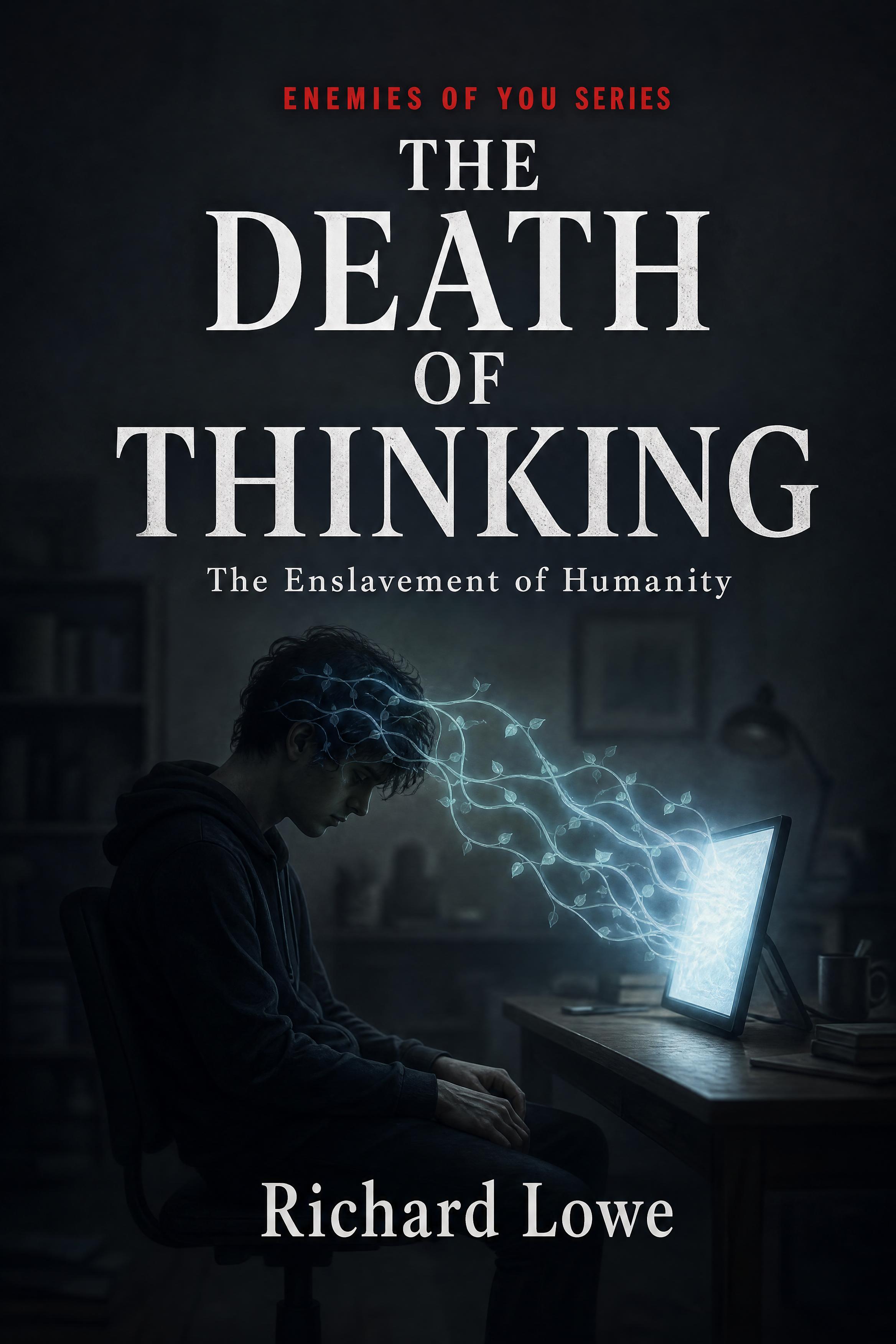
What happens when you hand your thinking to AI over and over. I document the pattern, what drives it, what it costs, and what gets lost before you notice.
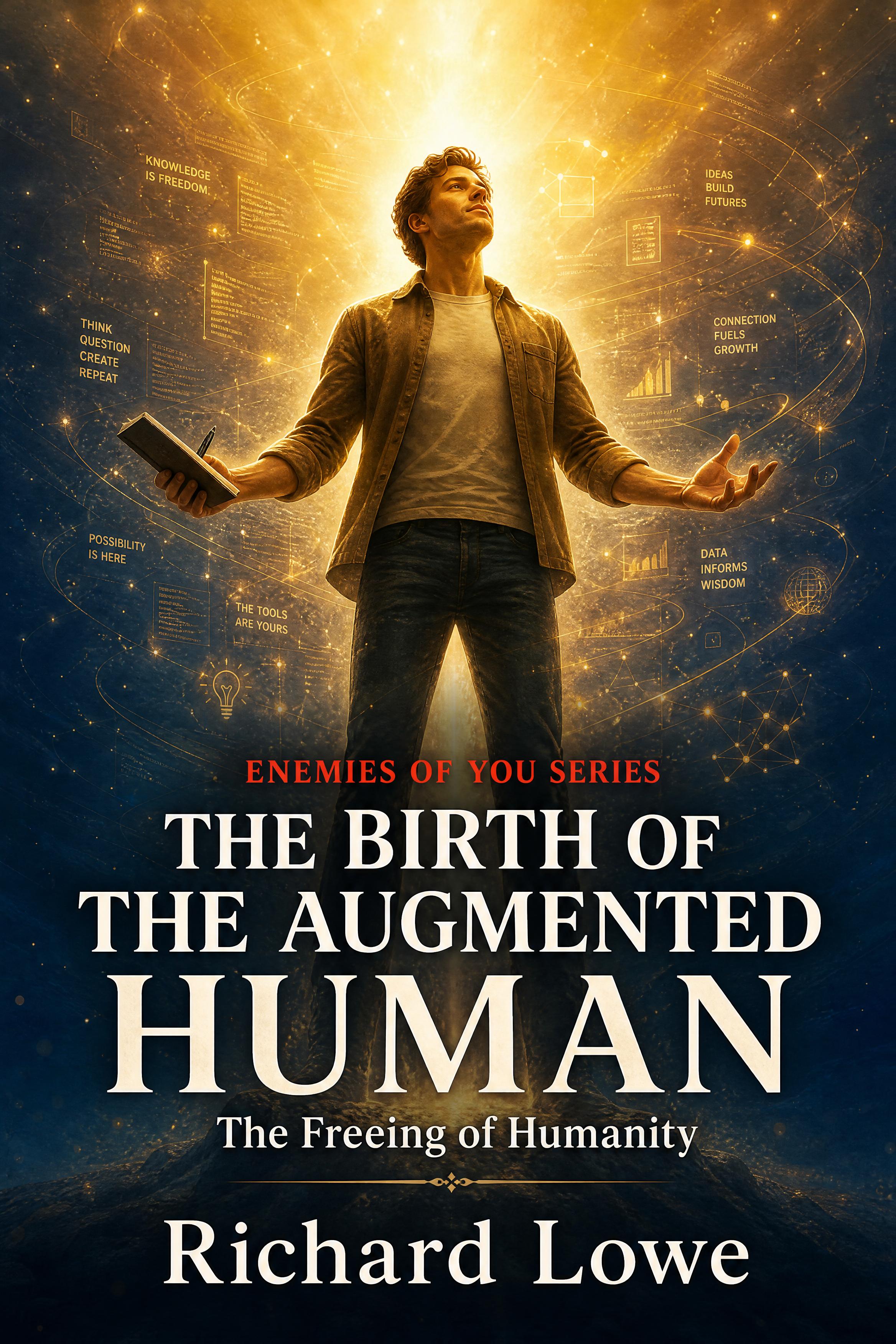
The companion to The Death of Thinking. It maps the other path: the practices that keep your thinking sharp while you use AI, and what they build over time.

My memoir. How the survival skills from a dysfunctional childhood became professional superpowers, from late-diagnosed ADHD and autism to a career I built almost by accident.
Frequently Asked Questions
Your story could be a book
Every leader I interview has a book in them. If you’ve spent a career learning what works, let’s talk about turning it into the book that outlasts the work.
