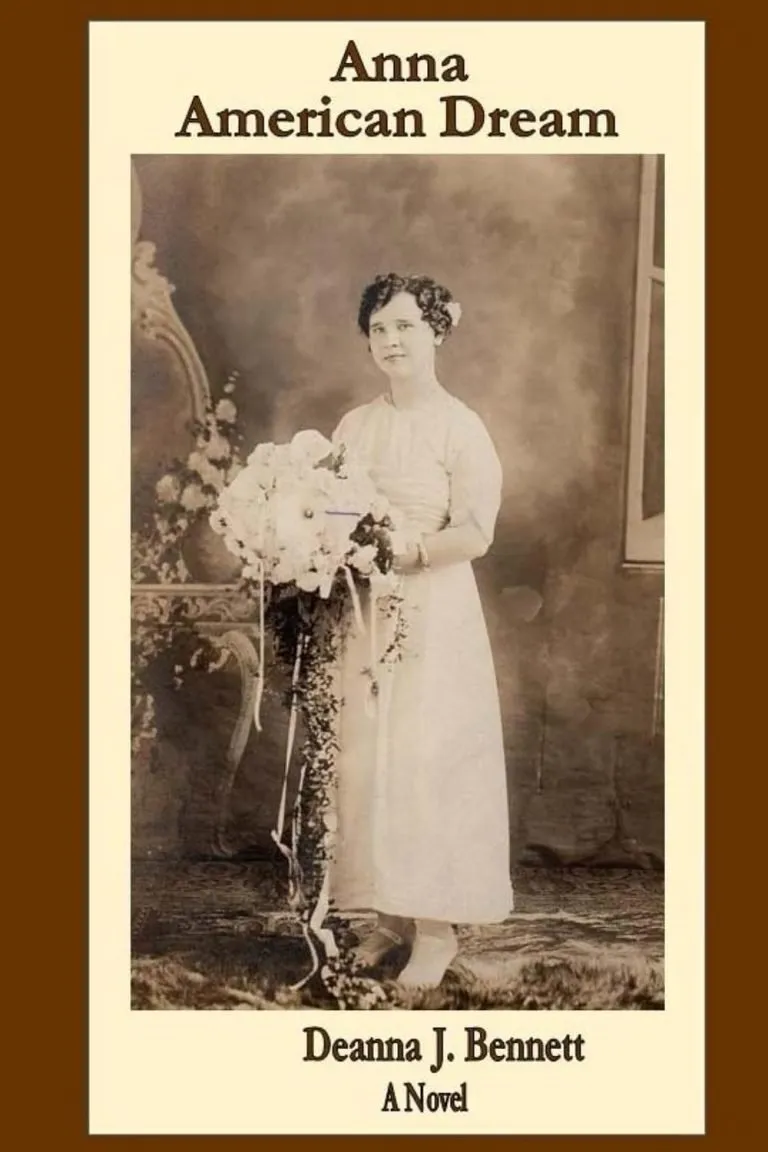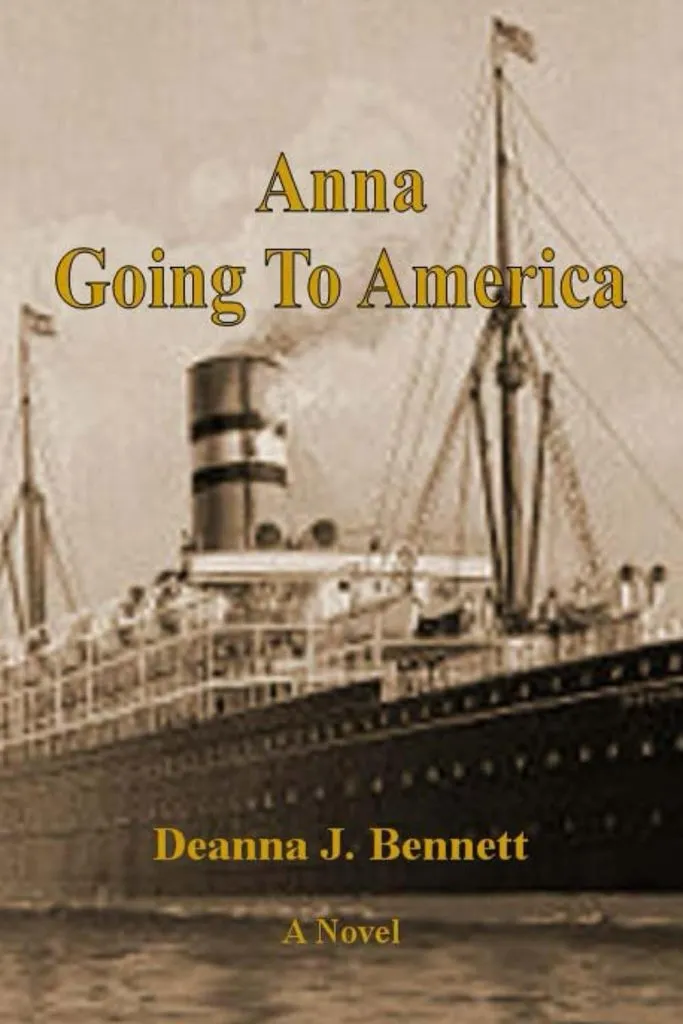
Book one of Deanna Bennett’s Anna Immigration Trilogy, drawn from her grandmother’s crossing in 1914. A tribute and a review.
In 1914 a fifteen-year-old Lithuanian country girl named Anna leaves home with her stern mother. They’re the last of the immediate family to go. Anna’s brothers and sisters are already in America, and the two women have to get there the hard way: by rail across a Europe about to tear itself apart, and then across the Atlantic in steerage.
That girl was real. Deanna Bennett built Anna: Going to America on the life of her own grandmother, who made that crossing at fifteen. Deanna ran the East Lake Writers’ Workshop in Palm Harbor, and I sat at her table for years and spent many hours critiquing her Anna chapters, along with everybody else’s pages. I heard the research for these books come out week after week, and I watched her do the homework most writers skip.
What is Anna: Going to America about?
It’s the crossing, and only the crossing. The book ends before the ship reaches Ellis Island, and everything that happens to Anna happens in transit, the place where an immigrant has the least protection and the most to lose.
Along the way she learns a disturbing secret about her absent father. Her mother works hard to keep her away from love and the heartache that comes with it, and fails, the way mothers do. A man stalks her. A ship’s steward courts her. A priest becomes the nearest thing she has to a father. Before the voyage is over, Anna’s cleverness about a death on board puts her own life at risk.
What I like about the setup is the moral weight Deanna put on a teenager’s shoulders. Anna learns that life isn’t black and white. She learns a lie can be both a mercy and a burden. That’s a grown-up lesson, and she learns it in the bottom of a ship with no one to ask.
In memory
Remembering Deanna Bennett: the founder of the East Lake Writers’ Workshop, the woman at the head of the table, and the writer behind the Anna books.
How much of Anna: Going to America is true?
The spine is true, and the story is embellished. Deanna based the book on historic figures and circumstances and on some of the real immigrant experiences of Ona Sacevich, then built a fictional plot around them to make a story readers of any age could follow. She called it fact-based fiction, and she was honest about where the line sat.
I respect that choice. Plenty of family historians freeze up because they don’t know what their grandmother was thinking on the train, and so they never write anything. Deanna gave herself permission to imagine the parts nobody recorded and kept the history under them solid. That’s how a family story gets out of a shoebox and into a reader’s hands.
Keep reading
Hiring a ghostwriter for an immigrant’s story: how a family crossing like Anna’s becomes a book, and why the oldest relatives need recording first.
Who should read the Anna Immigration Trilogy?
Anybody whose family came through Ellis Island will recognize something here. So will young readers, since Anna is fifteen and the book was written to reach them. Genealogists get a feel for what the paperwork leaves out. Deanna gave talks on European immigration to genealogy societies because of the research she did for these books. You can feel that care in every leg of the trip.
Start here. The story continues in Anna: American Journey, where Anna and her mother see the Statue of Liberty from their porthole, and concludes in Anna: American Dream. Anna: Going to America is available on Amazon.
Deanna wrote this for her grandmother and for everyone who braved that crossing. I think of her at the head of that table in the side room at the East Lake Community Library, reading pages about a girl in steerage, and it’s good that the girl made it into print.