
I Don’t Post Bad ARC Reviews. I Send the Author a Note.
If I can't give an advance copy five stars, I don't post a review. I send the author a note so they can fix the book, because a book can be corrected and a review is forever.
Working notes from a professional ghostwriter — on the craft of writing, the business of publishing, the psychology of authors, and the changing landscape of books in the AI era.
These articles come out of 113+ books authored and 54+ ghostwritten. They cover what's actually working in publishing right now, what isn't, how AI is changing the work for both writers and readers, what executives and founders get wrong when they try to write their own book, and what they get right when they bring in help.
No SEO listicles. No content-marketer fluff. Just observations from inside the work — written for people who care about books and the craft behind them.
 Book Marketing
If I can't give an advance copy five stars, I don't post a review. I send the author a note so they can fix the book, because a book can be corrected and a review is forever.
 Artificial Intelligence
Apollo's chief economist says AI has delivered zero payoff outside the tech giants. His charts are real, but margins measure who keeps the gains, and electricity took forty years to show in the numbers.
 Ghostwriting
The numbers behind a ghostwritten book: 50,000 to 60,000 words for a memoir or coaching book, about six months to write, 10 to 30 hours of interviews, and seven phases from the first call to launch day.
 Artificial Intelligence
Big tech plans about $725 billion in AI spending this year. The PHP Foundation took in about $730,000 last year. AI now finds PHP's flaws faster than its small team can fix them, and the AI companies should pay to…
 Cybersecurity
A PHP flaw first reported in 2004 sat unexploited because the work was tedious. AI found a way in two days. What PHP2Shell means for WordPress author websites, and what to check this week.
 Book Marketing
Amazon renamed Kindle Unlimited to Kindle+ and added audiobooks, with AI-narrated Virtual Voice titles in automatically. Listening is paid by the page from the same fund as reading.
 Artificial Intelligence
China-linked networks have been caught posing as Americans to push anti-data-center messages. OpenAI and X both found them, and both found they got little traction, because most Americans already oppose data centers nearby.
 Writing
I've quit dozens of books at the outline, the middle and the finished first draft. When to abandon a writing project, how to tell a slump from a dead book, and why you should keep every manuscript you stop.
 Artificial Intelligence
The UK's Society of Authors helped write a charter asking for consent, licensing, payment and transparency in AI use. After member backlash, its leadership said no use of generative AI can ever be ethical and pulled out eight days later.
 Artificial Intelligence
Mo Gawdat says a 12-to-15-year AI dystopia starts in 2027. His dates are a long-range guess. His list of harms, from deepfakes to surveillance, is already here, and his fix is the right one.
 Business
Getty Images filed for Chapter 11 to cut more than $500 million of debt. Your licenses are still good and so are its copyrights. What authors should keep for every image on their site and cover.
 Writing
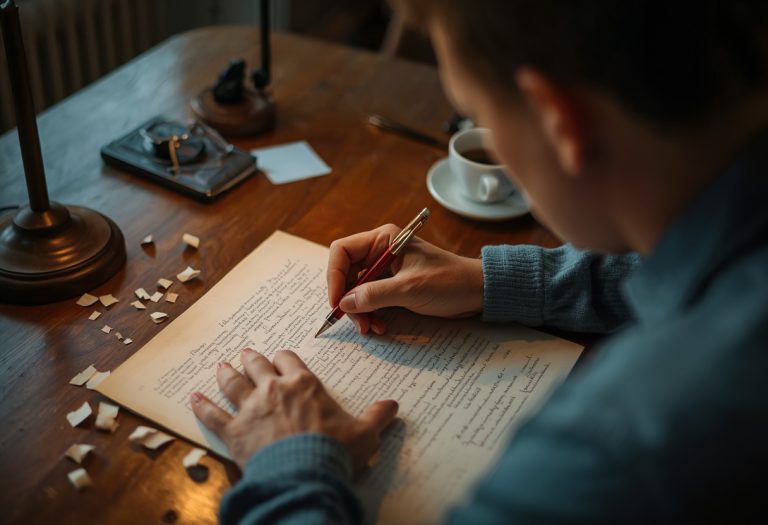
Fluff words make a sentence longer without making it say more. Cut them from narration and business writing, and keep the ones that make dialogue sound like real people talking.
Subscribe to the Substack for new articles, working notes on publishing, and observations from inside the ghostwriting practice. No spam. No sales funnel. Just the work.
Professional ghostwriting for executives, founders, coaches, and authors who want to get the book done right. 113+ books authored. 54+ ghostwritten for clients.
Ready to discuss your book?
BOOK YOUR PRIVATE CONSULTATIONNo pitch. No pressure.
© 2026 Richard Lowe. The Writing King. All rights reserved.