TL;DR
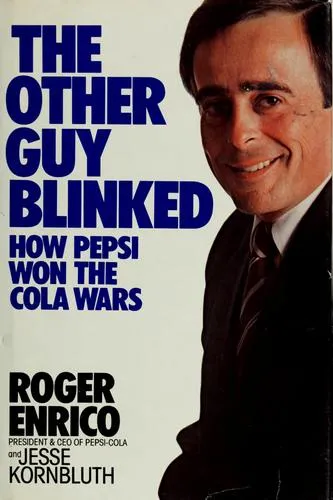
8/10. The president of Pepsi-Cola tells the story of the cola wars from inside, published in 1986 with New Coke barely a year old. Written with Jesse Kornbluth, and a useful case study in what a book does for a business and what a business does to the truth.
Roger Enrico ran Pepsi-Cola through the period covered here. The Pepsi Challenge, the blind taste tests that ran in shopping malls and put a market leader on the defensive for the first time in decades. The Michael Jackson deal, then the largest endorsement in advertising history. The run of commercials that turned a soft drink into a generational marker. And then, in April 1985, Coca-Cola reformulated its ninety-nine-year-old product and reversed itself within three months, after a public reaction nobody at the company had modeled.
Enrico wrote the book almost immediately afterward, in collaboration with the journalist Jesse Kornbluth. Bantam published it in November 1986. The speed is the point. I prefer a business book written in the heat of the moment to a calm retrospective, and this is the best example I know. Enrico sounds like a man still flushed from a win, cocky and a little reckless, and that swagger is worth more to a reader today than any tidy hindsight could offer.
Why does writing it too early make The Other Guy Blinked better?
Because a book written later would have known how it turned out.
The title is a taunt. Enrico is claiming that Coke blinked, and he’s claiming it while the Coca-Cola Company would have preferred everyone move on. That’s not a considered historical judgment. It’s a victory lap taken at speed by a man who believed he’d won.
I love the taunt in the title. Executives almost never let themselves sound this pleased in print, because the lawyers and the PR people sand it off. Enrico got his gloat onto the shelf before anyone could stop him.
Which makes it more useful. A memoir written twenty years on would have been shaped by knowing that Coca-Cola was entirely fine, that New Coke turned into one of the luckiest accidents in marketing history because the return of the original formula generated more affection and more sales than the product had been getting before, and that the whole episode ended up strengthening the brand it was supposed to have damaged.
Enrico knew none of that. He’s writing from inside a moment when it looked as though Pepsi had taken the market, and that moment is preserved here in a way no retrospective could reproduce.
Every business book faces this choice and almost all of them go the other way, waiting until the story has a shape. This one is a snapshot, and snapshots preserve exactly the things retrospectives edit out.
Watch: The Cola Wars E01: The $1 Contract — Coca-Cola vs Pepsi, 140 Years at Five Cents, Wealth Echoes
What does a ghostwriter take from The Other Guy Blinked?
Kornbluth is credited on the cover. That was less common in 1986 than it is now and is the right way to do it. Reading it as somebody who does this work, the division of labor is unusually visible.
What Kornbluth supplies is structural. The pacing, the chapter breaks, the decision to open where it opens, and above all the discipline that keeps an executive’s account moving instead of collapsing into a list of accomplishments. Anyone who has interviewed a chief executive knows the gravitational pull toward the resume, and something in this book resists it consistently.
What Enrico supplies is the material nobody outside could have. The room where a decision got made, the argument that preceded it, the internal disagreement about whether the endorsement money was defensible, and what it felt like to watch a competitor make a mistake of that size. No journalist could have obtained that at the time, and by the time one could, it would have been recalled instead of remembered.
That division is what a collaboration is for, and this is one of the cleanest demonstrations of it I can point to.
Enrico deserves real credit for putting Kornbluth’s name on the cover. The collaborator did the work that makes the book readable, and in 1986 saying so openly was rarer than it is now. I think better of both men for it.
Is The Other Guy Blinked reliable?
No, and the ways in which it’s not are the interesting part.
Enrico is a partisan writing about his own company’s rival at a moment of apparent triumph. The reader has to hold that the whole way through. Coca-Cola’s internal reasoning is characterized from outside by somebody with an interest in it looking foolish, and the Pepsi decisions that didn’t work get considerably less space than the ones that did.
That imbalance is the book’s real flaw and the reason it tops out at an eight for me. Pepsi’s wins get chapters and its misses get sentences, and a reader who doesn’t know the history will walk away with a lopsided picture of a fight that was closer than Enrico wants you to believe.
A book like this is evidence about how its author saw the world at a particular moment. It’s not a neutral account of an industry, and treating it as one produces a distorted picture of a competition that was much more even than the title suggests.
Read alongside something from the Coca-Cola side it becomes far more useful, because the gap between two accounts of the same events is where the actual history sits.
What it tells you about writing a business book
The strategic function of this book was to fix a narrative while the narrative was still forming, and to do it under the name of the person with the standing to fix it. That matters if you’re weighing a book for your own company. The value is that a book becomes the version of events that sits on a shelf, gets cited, and shapes how people who weren’t there remember an episode.
Enrico understood that, moved fast, and got his version into print before anybody else got theirs. Forty years on it is still the account people reach for. That tells you the tactic worked whether or not the claim in the title did.
I find that tactic shrewd and a little ruthless, and I’d point any executive weighing a book straight at it. The first version in print has a way of becoming the version, and Enrico clearly understood that better than his rivals did.
Verdict
Dated, partisan, and worth reading, especially if you’re considering a business book of your own. It shows what an executive account can do that a journalist’s history can’t, and it shows the cost: you’re reading a man’s case for himself and have to keep remembering it.
The New Coke chapters are the reason to pick it up, and the speed with which he wrote them is the reason they’re worth anything. An eight from me. It’s a gloating, lopsided, wonderful document of a man who thought he’d won, and I’ll take that over a hundred sober memoirs written after everyone’s lawyers had a look.
Explore further
The Writing Hub: craft, technique, and the books worth learning from.
Frequently Asked Questions
Other Books From – Business and Economics