
TL;DR
A practical playbook for leading change. Dutt Kalluri lays out why digital transformation efforts fail and how to run one that doesn’t, built around the five-level ICFIT structure. It reads for executives and decision makers who need a structured roadmap instead of theory, covering technology, culture, leadership, risk, and the long game of staying ahead of disruption.
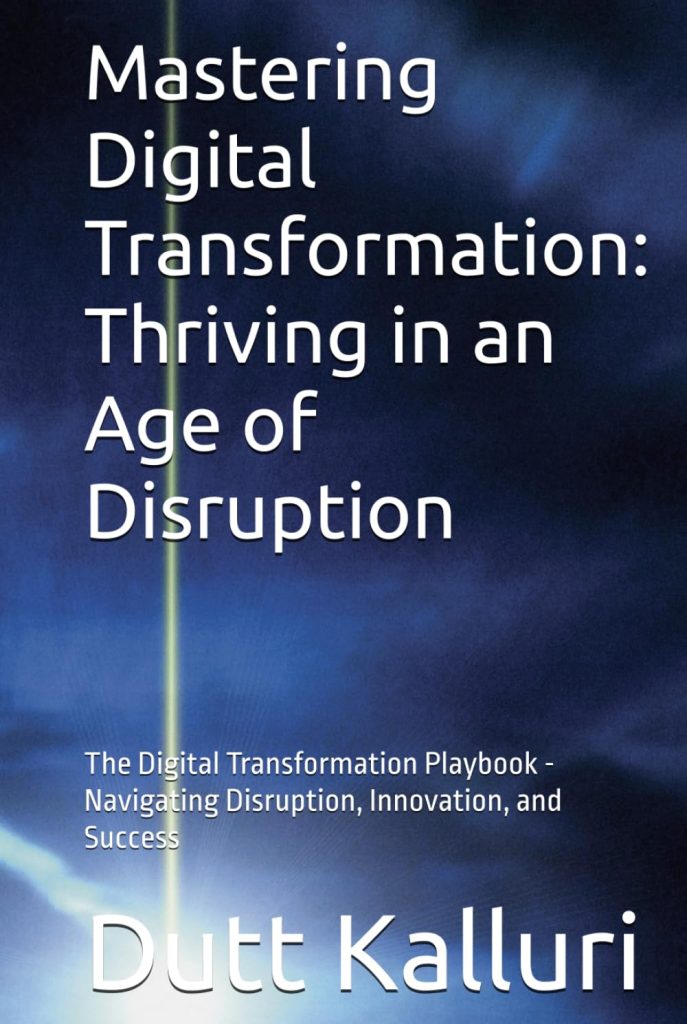
Mastering Digital Transformation: Thriving in an Age of Disruption by Dutt Kalluri is a practical guide that gives business leaders, executives, and decision makers a structured roadmap for change they can’t avoid. Disruption is now the norm, and its argument is simple: transform or risk becoming obsolete.
Kalluri is a seasoned digital transformation leader and business strategist, and the book draws on that background to explain why so many transformation efforts fail and how businesses can avoid the common pitfalls. With real-world examples, it works through the fundamental drivers of disruption, the role of technology and innovation, and the importance of culture and talent in achieving long term success.
I dislike the phrase digital transformation. Most of what gets sold under that label is new software bolted onto an old company that hasn’t changed its mind about anything, and the consultants collect their fee while the staff inherit the mess. I opened this book braced for another brochure for that racket. Kalluri spared me, and I was grateful.
What does Mastering Digital Transformation cover?
This is a blueprint. It moves from the initiation of a transformation effort through to full integration, and it keeps returning to the point that technology alone is never the answer. The chapters build on each other, so a leader can read it start to finish for the full method or open it to the stage they’re stuck on.
I strongly agree with the insistence that technology alone is never the answer. Leaders keep buying the platform because a purchase order feels like progress, and then act surprised when the people using it carry on exactly as before. A book that keeps dragging them back to that point is doing them a favor they won’t thank it for.
Keep reading
The Digital Transformation Hub: the wider body of work on disruption, technology, and leading change, gathered in one place.
Main points
The insight that matters most to me is the one about failure. Kalluri spends real time on why so many transformation efforts collapse, and that’s the right place to start, because the collapse is where the budgets and the careers go. I trust a roadmap that begins with the wreckage more than one that begins with a vision statement.
- The Truth About Digital Transformation: why it’s about more than technology: reimagining business models, processes, and culture.
- The Five Levels of Business Transformation (ICFIT Structure): a structured approach to evolving from initiation to full integration.
- Operational Excellence and Technology Adoption: how to align digital tools like AI, automation, and data analytics with business goals.
- The Role of Leadership and Culture: why executive commitment, talent evolution, and an agile mindset matter for success.
- Risk Management and Cybersecurity in a Digital World: understanding geopolitical, technological, and economic risks.
- Creating a Sustainable Digital Future: how to continually evolve and stay ahead of competition.
Keep reading
The Leadership Hub: the culture, talent, and executive side of change, which the book treats as the main work behind the technology.
Who should read Mastering Digital Transformation?
For a leader just starting a digital transformation or refining one already underway, the book provides a step-by-step blueprint to drive real, measurable impact. It reads best for leaders who own the outcome: executives, founders, and decision makers who have to move a whole organization. If you’re ready to transform your business before disruption forces you to, this book was written for you.
I’d put this in the hands of any executive about to sign off on a transformation program, and I’d tell a middle manager hoping it’ll convince the boss to skip it, because the book assumes the reader already has the authority to act. My one gripe is that the prose leans polished and generic in places. The substance holds, and a leader who takes the failure material seriously will waste a lot less of other people’s time.
Explore the hub
Digital transformation ghostwriting: how books like this one get written, from structure to finished manuscript.
Frequently Asked Questions
Other Books in the Books I Contributed To Series





Other Books From – Business and Economics










About the author
