TL;DR
A leadership book by Bill Bratton and Zachary Tumin arguing that organizations which work across their own boundaries, with partners, customers and citizens, thrive, and those which won’t, die. Its case studies run from policing to Alcoa to Rio’s schools.
Bill Bratton spent his career getting organizations that didn’t like each other to work together: transit police and city police, precincts and headquarters, cops and the neighborhoods they patrolled. Collaborate or Perish! is what he and Zachary Tumin made of that experience once they took it outside policing.
Crown Business published it in January 2012. It isn’t a memoir. It’s an argument, and the title gives it away.
What is the argument of Collaborate or Perish!?
In a networked world, the organizations that thrive are the ones that reach across their own walls to work with partners, customers, suppliers and citizens. The ones that won’t, perish. Technology makes that collaboration possible, but the authors insist it’s people who make it work.
Bratton summed up the book’s principles in a talk at Harvard Law School that spring. Start with a vision people care about. Win something small early, so the partners believe the effort can work. Build a shared platform, and make sure there’s something in it for everyone at the table. Get the right people, measure the results and keep political support behind the effort, giving the credit to the people doing the work. And bring passion, but with a plan.
The book also covers tactics, such as sizing a problem so it’s big enough to matter and small enough to solve, and compelling participation when persuasion fails.
Which organizations does Collaborate or Perish! study?
A wide range, and that’s the book’s strength. Paul O’Neill making worker safety the top priority at Alcoa. Claudia Costin reforming Rio de Janeiro’s schools by bringing sidelined teachers back into the work. The analytics behind a presidential campaign. IBM, Visa, Wells Fargo and Toyota. A state child-welfare agency, a casino’s customer loyalty program, Los Angeles’s regional intelligence center and port security. DARPA’s 2009 red balloon challenge, where teams raced to find ten weather balloons scattered across the country. And, of course, CompStat at the NYPD. The book closes with a chapter on the Arab Spring.
Who are the authors of Collaborate or Perish!?
Bratton ran the Boston, New York and Los Angeles police departments. When he wrote the book he was chairman of a risk-consulting firm and vice chair of the federal Homeland Security Advisory Council.
Zachary Tumin was a senior researcher at Harvard Kennedy School. He’d worked in Boston’s budget office in the 1970s, for the Brooklyn district attorney in the 1980s, for a state organized crime task force and as head of public safety for New York City’s schools. When Bratton returned to the NYPD in 2014, he brought Tumin with him as deputy commissioner for strategic initiatives.
What did critics say about Collaborate or Perish!?
Publishers Weekly treated it as a practical playbook. Kirkus found it mostly enlightening but faulted it for never quite defining the world it wants and for not asking how centralized platforms could be misused. Some readers found the Arab Spring ending the weakest part.
What does Collaborate or Perish! teach a police leader?
That the hardest work isn’t inside the department. Bratton connected the book to what policing learned after September 11, 2001, when agencies that had guarded their own information had to start sharing it through regional intelligence centers and public campaigns that asked citizens to report what they saw. It also grows out of his community policing work, where results depended on neighborhoods, businesses and other agencies pulling the same way.
A chief or sheriff reading it today will recognize the problem immediately. Mental health calls, homelessness, addiction and school safety all cross agency lines. None of them gets solved by one department alone. The book shows how to get partners to the table and keep them there.
What Collaborate or Perish! shows a leader planning a book
Because it shows the other road a law enforcement leader can take. A memoir tells your story. A book like this one takes what you learned and hands it to people who’ve never worn a badge, and it’s the kind of book that gets a retired chief invited into boardrooms and conference keynotes. It’s also co-written, with two names on the cover. Most books of this kind get done that way.
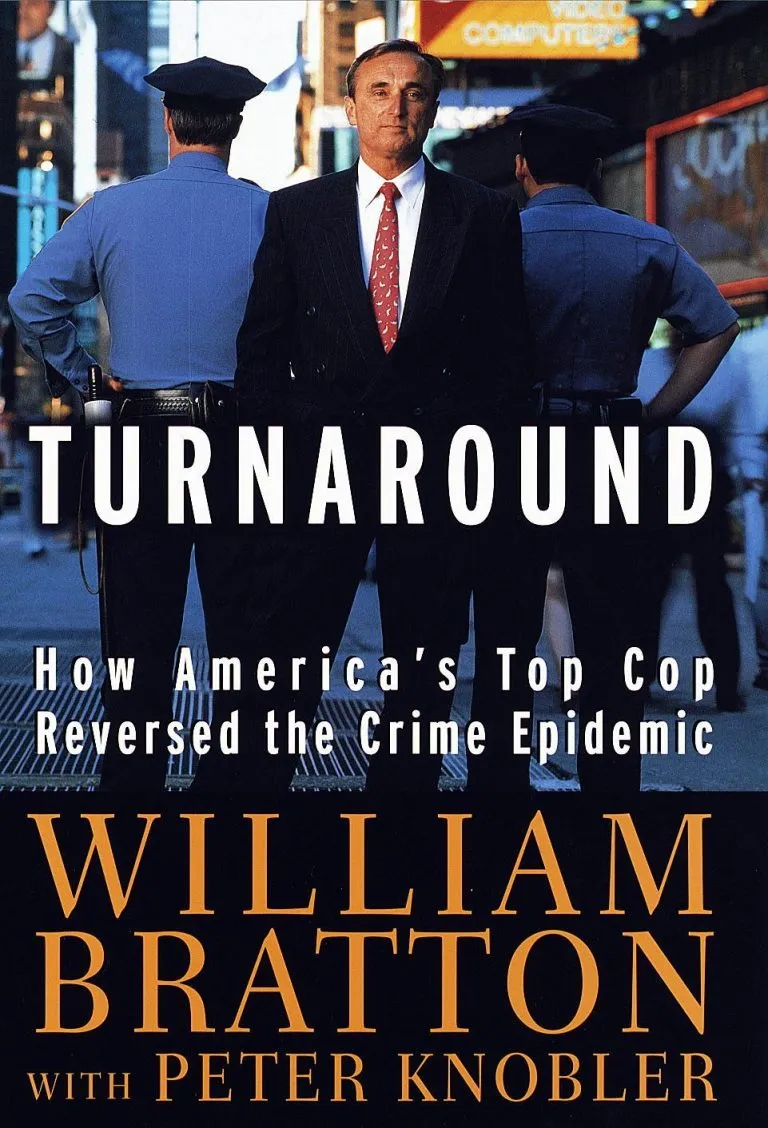
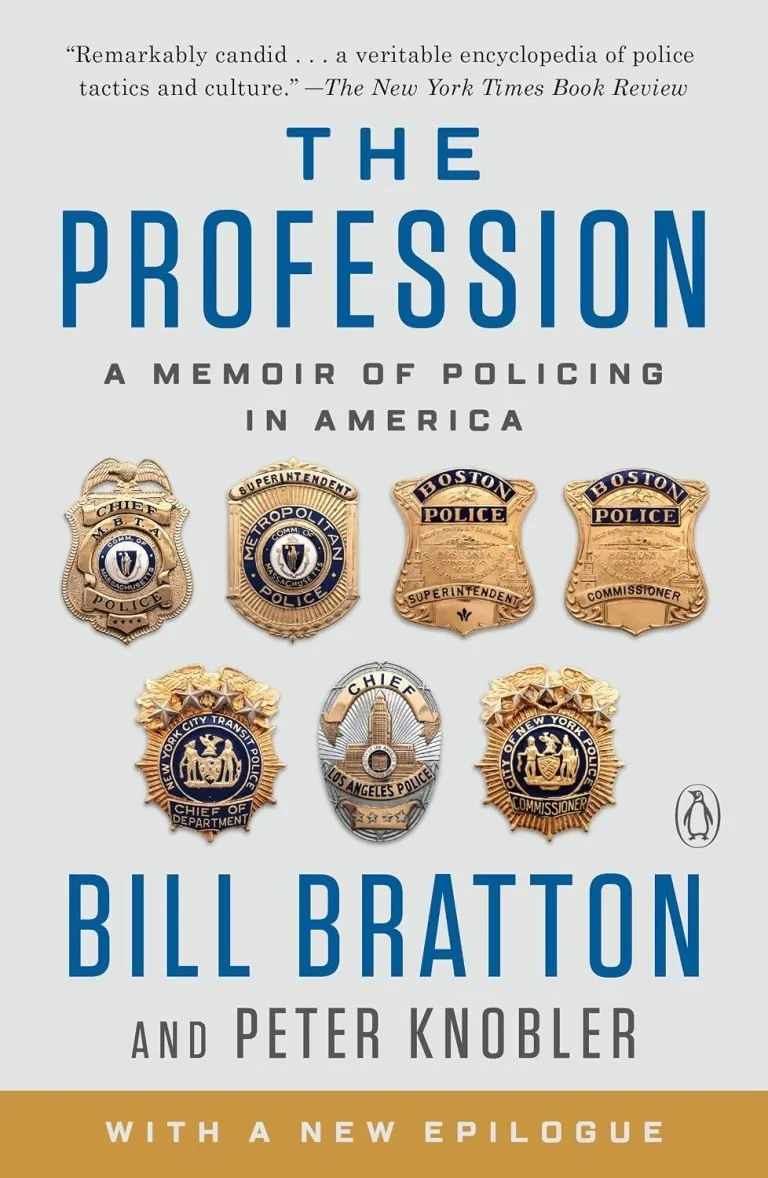
Bratton’s memoirs, Turnaround and The Profession, are on the shelf too.
Keep reading
Hiring a ghostwriter for a sheriff’s or police chief’s book: how law enforcement leaders turn a career into a book, and what has to stay out.