Latest
How Much AI Is Too Much in Writing? 83 Writers Drew the Same LinePost an AI Image and Unfriend MeShe Asked How to Publish Her Bedtime Story. They Called Her a Thief.The AI Hype Cycle: Why the Crash Is Coming, and Who’s Causing ItSix Claude Prompts That Get You Unstuck, and Why the Order MattersDogpiled Over AI Art at the Renaissance FaireClaude Opus 5.5: What the New Release Means for WritersTrump’s AI Force Is a Fire Department With No Fire CodeMonthly or Milestone: How Ghostwriting Gets BilledThe Hugging Face AI Agent Attack: An Operations ReadingWhat It Costs to Fix an AI-Written ManuscriptWhen Your Memoir Should Be a NovelWhat Belongs on a Copyright PageThe Clients Who Pay and VanishWhat an AI Detector Score on Your Manuscript Is WorthThe Quotation Marks That Get Authors SuedThe One-Hour Call Before I Quote Your BookWhen Your Own Memoir Sounds Like BraggingThe Work You Would Never Have StartedWhen a Client Thinks the Ghostwriter Used AIBehind the Book: The Mysterious Island, Neb’s SideHow to Organize Decades of Memories Into a MemoirWhy Rotten Tomatoes Sucks: The Score Does Not Mean What You ThinkWhy Amazon KDP Sucks: They Terminated My Account OvernightIngramSpark: How I Publish Now and WhyWhy Fiverr Sucks for Ghostwriting: The Buyer’s SideWhy eBay Sucks Now: A Seller’s Numbers and a Buyer’s WarningThe Ghost Story TraditionThe Gothic TraditionThe Christmas Ghost Story TraditionBooks to Give a WriterResurrection as a Narrative StructureThe Beach Read ArgumentWhy It’s a Wonderful Life Failed on ReleaseWhat to Read in SpringWhat to Read in SummerWhat to Read in OctoberHow Warner Bros. Dismantled a $17 Billion Cartoon EmpireThe Imaginary Scarcity TrapThe Graph That Goes Vertical Is Usually Somebody Else’sSubstack Is Not Collapsing. The Promise Was.The Disasters That Happen to Ordinary PeopleToba: The Winter That Almost Ended UsJay Stifflemire: Nothing Ever Gets Written DownGeorgie-Ann Getton: I Forgot I Had Free WillAI Detection Cannot Be Evidence, and Publishing Is Using It That WayAI Consciousness Left Philosophy and Entered the LaboratoryThe Office Block Where the Bedrooms AreBlack Tuesday: The Web Ring War Nobody Outside It NoticedThe Web Got Fenced: What AI Search Costs Small Sites

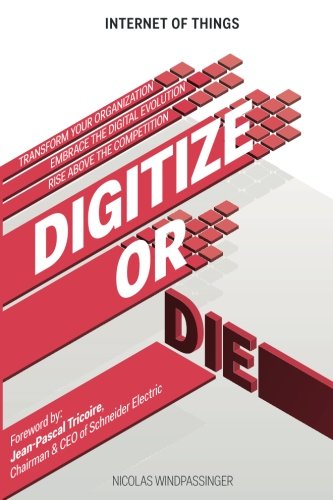
Internet of Things: Digitize or Die

Internet of Things: Digitize or Die
Publisher:IoT Hub
Published:November 17, 2017
ISBN:979-1097580032
Share:

Buy Now

Description:

A book I contributed to. Instead of score work I had a hand in, here’s what it is and who it serves.

I had a hand in this one, so instead of score it I’ll tell you what it is and who it serves. Internet of Things: Digitize or Die is a business-strategy book that sets out to help business leaders understand, navigate, and survive the Internet of Things through a clear, structured methodology.

The blunt title carries the argument. The IoT is a fundamental shift instead of a passing technical curiosity, and businesses either adapt or get left behind. The book is built to give decision-makers a practical structure for doing exactly that.

The book belongs to Nicolas Windpassinger and serves a clear strategic purpose. It establishes his authority on the subject. It also gives business readers and clients a structured way to think through a confusing technological shift.

What the book sets out to do

The aim here’s to make a sprawling, intimidating subject practical. The Internet of Things touches strategy, products, business models, and organizational structure, and for a business leader the sheer scope of it can be paralyzing. The value is the structured methodology. A step-by-step approach breaks the challenge into manageable parts, so a decision-maker moves from vague awareness that the IoT matters to a concrete plan for responding to it.

It’s pitched at front-line business decision-makers who need a usable structure instead of a technical treatise, and that practical, strategic orientation is exactly right for its audience.

Keep reading

How a strong book builds authority for an expert or executive: the kind of authority-building business book I help leaders create.

A book as a strategic asset

This is worth saying because it’s the smart logic behind a project like this: for an expert or executive, a well-built book is one of the most powerful credibility assets available. For Windpassinger, a book laying out a clear IoT methodology is far more than a publication; it’s proof of expertise, a teaching tool for clients, a structure prospective clients can engage with, and a durable artifact that says here’s how I think about this problem.

In a fast-moving, jargon-heavy field, the leader who can explain it clearly and offer a usable method stands out, and a book is how that clarity gets packaged and proven. Used this way, it does real work for its author beyond its page count.

Work with me

Build the book that establishes your authority: I help executives, founders, and experts turn deep knowledge into a book that proves it.

Honest about scope and shelf life

Two honest notes. First, like any book tied to a specific technology, it faces a currency challenge: the IoT landscape moves quickly, and a strategy book from a few years ago will have aspects that the field has since moved past, so a reader should weigh the structure’s enduring logic against the dated specifics. The methodology, the structured way of thinking, ages better than any particular technical detail.

Second, it’s a focused business-strategy book for decision-makers, not a technical manual or a general-interest read; judged against its actual purpose, helping business leaders build an IoT strategy, it does its job, and judged as anything else it’s simply outside that scope.

Is Internet of Things: Digitize or Die worth reading?

This is a capable, purpose-built business-strategy book that does what it set out to do: make the Internet of Things practical for decision-makers through a clear methodology, while establishing its author’s authority on the subject. I don’t assign it a number, both because I contributed to it and because a score would miss what the book is for. If you’re a business leader trying to get your arms around the IoT, or you want to understand how Windpassinger approaches it, the book gives you a structured, usable structure.

A focused professional book that knows its audience and serves it.

Explore the hub

The Publishing & Marketing Hub: using a book to build authority and grow a business, gathered in one place.

Frequently Asked Questions

What is Nicolas Windpassinger’s IoT strategy book about?
It’s a business-strategy book that helps business leaders understand and respond to the Internet of Things through a clear, structured methodology. The blunt title carries the argument: the IoT is a fundamental shift instead of a passing technical curiosity, and businesses either adapt or get left behind. The book gives decision-makers a practical structure for doing exactly that.
Who is Nicolas Windpassinger’s IoT book written for?
It’s pitched at front-line business decision-makers who need a usable structure instead of a technical treatise. It also serves clients and prospective clients of the author, giving them a structured way to think through a confusing technological shift. That practical, strategic orientation is exactly right for its intended audience.
How does a structured methodology help business leaders understand the Internet of Things?
The Internet of Things touches strategy, products, business models, and organizational structure, and the sheer scope of it can paralyze a business leader. A step-by-step methodology breaks that challenge into manageable parts, so a decision-maker moves from vague awareness that the IoT matters to a concrete plan for responding to it. That’s the value the book is built to deliver.
How well does Nicolas Windpassinger’s IoT book hold up as technology changes?
Like any book tied to a specific technology, it faces a currency challenge, since the IoT landscape moves quickly and some specifics from a few years back will be dated. The methodology, the structured way of thinking through the problem, ages better than any particular technical detail. A reader should weigh the structure’s enduring logic against those dated specifics and not dismiss the whole book over them.
Did Richard Lowe contribute to Nicolas Windpassinger’s IoT book?
Yes, I had a hand in this one. Because of that involvement, I describe what the book is and who it serves instead of scoring it the way I had a book I had no part in. I don’t assign it a number, both because of my contribution and because a score would miss what the book is for.

About the author

Nicolas Windpassinger

Nicolas Windpassinger is a French-born global technology executive and the author of Digitize or Die: Transform Your Organization, Embrace the Digital Evolution, Rise Above the Competition (Pang Publishing, 2017), one of the most-cited business books on the Internet of Things and digital transformation for executives. The book is written for senior leadership of midsize and enterprise companies trying to translate…

More about Nicolas Windpassinger

Back