Latest
It’s Not X, It’s Y: The AI Tell Shakespeare Wrote FirstWho Gets Rich From AI Data Centers? The Local, National and Global EconomyAre AI Data Centers Bad for the Environment? What’s True and What Isn’tAI Data Centers and Geopolitics: Chips, China, Spies and PowerAI Derangement Syndrome: Who Cares If the Cover Was Made With AI?How to Write a Plot Twist Readers Never See ComingBook Ads Getting Clicks but No Sales? The Problem Is the PageCan Writing a Memoir Make You Sick? The Toll Nobody Warns You AboutWhen Caregiving Ends and the Words Won’t ComeCan You Publish a Clean and a Spicy Version of the Same Book?Do You Need a Writing Buddy? What Works and What Doesn’tCan You Put Someone Who Wronged You in Your Novel?Kindle Unlimited or Wide? Where to Publish Your Debut NovelWriting Vampires: How to Build Your Own Vampire RulesWhat Software Do Novelists Use to Write a Book?What If Your Family Doesn’t Support Your Writing?ARC Reviews: Real Follow-Through Numbers, and Do Reviews Sell Books?The AI Singularity: Would a Conscious AI Even Care About Us?“Forbidden” AI Prompts: Why Viral Prompt Lists Are Mostly JunkAuthor Scam Emails: Fake Agents, Flattery and the $500 PitchWill AI Steal My Book? Turn Off Training Before You UploadThe Fear of Being Judged for Your Memoir: My Father Told Everyone to Burn MineShould You Only Use “Said” in Dialogue Tags? My Rules for Tags and AdverbsWhy a Good Book Isn’t Enough: Agents, Quiet Novels and What SellsShe Asked How to Format Her Comic for KDP. The Thread Went to War Over AI.Why Are Writing Groups So Hostile?My Ghostwriter Stopped Responding. What Do I Do?My Ghostwriter Missed the Deadline. What Are My Options?I Hate My Ghostwriter’s First Draft. Now What?Can I Get a Refund From a Ghostwriter?How Many Revisions Should a Ghostwriter Include?Can My Ghostwriter List My Book in Their Portfolio?My Family Doesn’t Want Me to Publish My Ghostwritten Memoir. Now What?Should a Ghostwriter Write a Free Sample Chapter?How Much Does a Ghostwriter Take Up Front?Can a Ghostwriter Get Me a Book Deal or a Literary Agent?Can I Work With a Ghostwriter Over Zoom or From Another Country?Ghostwriting a Tribute Book, Eulogy or Obituary for Someone You LostCan a Ghostwriter Write My Book in Spanish?Ghostwriting a Book for a Dental or Chiropractic PracticeWhy Keynote Speakers Need a Ghostwritten BookGhostwriting a Science or Research Book for General ReadersGhostwriting a Book for Teachers and EducatorsHiring a Ghostwriter for a Pilot’s or Aviation MemoirHiring a Ghostwriter for a Musician’s MemoirCan a Ghostwriter Help Me Write a Whistleblower Memoir?Hiring a Ghostwriter for an Immigrant’s StoryCan a Ghostwriter Help Me Write About Losing Someone to Suicide?Can a Ghostwriter Help Me Write a Depression or Mental Illness Memoir?Hiring a Ghostwriter for a Special-Needs Parent’s Memoir

Roger Enrico

Roger Enrico

Roger A. Enrico was born in Chisholm, Minnesota in 1944, served as a naval officer in Vietnam, and joined General Mills before moving to Frito-Lay and then to Pepsi-Cola, where he became one of the defining marketing executives of the late twentieth century.

He ran Pepsi-Cola USA during the period known as the cola wars, when Pepsi went from a distant second to a genuine competitor to Coca-Cola. He oversaw the Pepsi Challenge, the blind taste tests that put a market leader on the defensive for the first time in decades, and he signed Michael Jackson to what was then the largest endorsement deal in advertising history.

The campaigns of that era turned a soft drink into a generational marker, which is a marketing achievement of a different order from selling more units.

In April 1985 Coca-Cola reformulated its ninety-nine-year-old product and reversed itself within three months after a public reaction nobody at the company had anticipated. Enrico declared victory publicly and quickly, and wrote a book about it.

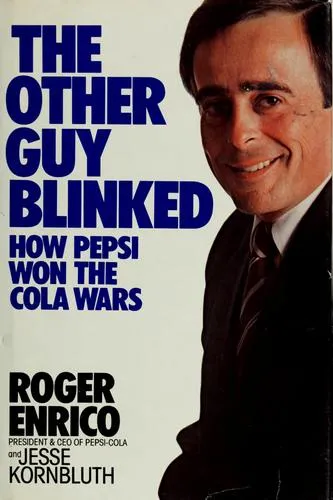
The Other Guy Blinked: How Pepsi Won the Cola Wars was published by Bantam in November 1986, in collaboration with the journalist Jesse Kornbluth. Its speed is its defining feature. Written before anybody knew that Coca-Cola would be entirely fine and that New Coke would turn into one of the luckiest accidents in marketing history, it preserves a moment that a later account would have edited away.

He went on to become chief executive of PepsiCo from 1996 to 2001 and chairman until 2001, oversaw the spin-off of the restaurant division that became Yum Brands, and later served as chairman of DreamWorks Animation and on the board of the National Geographic Society. He died in 2016.