TL;DR
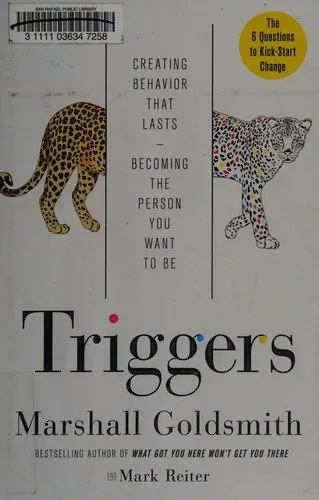
8/10. We’re excellent planners and terrible doers, and the reason is environmental. Goldsmith, writing with Mark Reiter, looks at the triggers that turn a patient person impatient and a committed person forgetful, and gives a daily-questions practice that’s annoying and works.
The central observation is that behavior doesn’t happen in a vacuum. The colleague who makes you short-tempered. The phone that chirps mid-conversation. The smell of something you told your doctor you’d stopped eating. These are triggers, and the gap between the person you believe you are and the person you were in that moment is usually one of them.
Goldsmith is an executive coach with a client list of chief executives, and the material comes out of that work and not out of a laboratory. He’s best known for What Got You Here Won’t Get You There, and this is the more useful book.
Why does knowing what to do not make you do Triggers?
Because we’re superior planners and inferior doers, and Goldsmith spends the first third of the book on why. The planner is optimistic, rested, and imagining a future self who will be disciplined. The doer is tired, interrupted, and standing in an environment that wasn’t designed to help. They’re effectively different people, and the planner keeps making commitments the doer has to honor. He identifies a set of beliefs that block change and they’re uncomfortably recognizable. If I understand, I’ll do. I have willpower and won’t give in to temptation. Today is a special day, meaning the rules are suspended. I won’t get tired and my enthusiasm won’t fade.
Each of those is a story the planner tells to avoid designing for the doer, and each of them is why a perfectly good plan produces nothing.
Watch: "Triggers"- Mark Reiter and Marshall Goldsmith BOOK REVIEW, RutendoReads
What are the Daily Questions?
The method at the center of the book, and the part that transfers to anybody.
A list of questions asked every evening, each phrased as did I do my best to instead of a yes-or-no about the outcome. Did I do my best to be happy.
Did I do my best to build relationships. Did I do my best to make progress toward my goals. Did I do my best to find meaning.
The construction counts for more than the content. Did I do my best makes the effort your responsibility and removes the excuse that circumstances were against you. You can’t answer it by blaming the day, and you have to score yourself, usually one to ten. That forces a number onto something you’d rather leave vague.
Goldsmith pays somebody to telephone him every evening and ask these questions. That sounds absurd and it’s the most honest thing in the book, because he’s admitting the method doesn’t hold on him either without external accountability. A man who has coached the chief executives of enormous companies can’t make himself answer a list of questions without somebody on the phone.
What are active questions in Triggers?
The related idea and the one I use more. Passive questions ask about your circumstances. Do you have clear goals. Passive questions invite the respondent to evaluate the environment. That means every answer becomes a judgment about somebody else. Active questions ask about your contribution. Did you do your best to set clear goals for yourself. The same subject, and now the respondent has nowhere to put the blame.
Goldsmith ran this as an experiment on engagement surveys and reports considerably different results from the two phrasings. Whatever the numbers, the reframe is right, and it’s directly usable in any conversation where somebody is describing a problem as something happening to them.
How does Triggers apply to a writing habit?
Directly, because a writing habit fails on environment and not on knowledge.
Nobody who wants to write a book is missing the information that writing requires sitting down. What defeats them is a phone in the room, an email client that opens on startup, a desk in a space where other people talk to them, and a plan made by a rested optimist for a tired person at the end of a working day.
Goldsmith’s answer is to change the environment instead of the intention, and to accept that the intention won’t survive contact with a badly designed one. Any plan that assumes willpower will hold is a plan that hasn’t accounted for the environment.
Where does Triggers run long?
It’s longer than the idea. That’s the standing complaint about this entire genre and this book has it.
There’s a real insight here and it could be delivered in sixty pages. The executive anecdotes start to blur, several of them make the same point, and the middle section on structure repeats the argument from the opening with different examples.
What survives is the reframe and the practice. Read the first third, do the Daily Questions for a month, and skim the rest without guilt.
Verdict
Read it, and skim the places where it repeats itself. The Daily Questions practice is the part that transfers, and it’s uncomfortable enough to work.
Pair it with the observation that the environment is doing more of your deciding than you think, and you have the useful half of a book that runs long. That’s a better return than most of this shelf offers.
Explore further
The Psychology of Writing Hub: what drives creative work and what stops it.
Frequently Asked Questions
Other Books From – Business and Economics