Latest
How to Turn Your Expertise Into a Book People Want to Read | The Expert MethodWhat’s New at The Writing King: Week of October 25, 2026Challenger Remembrance Day: The Engineer Who Wouldn’t SignJoel Salomon: The Truth About MoneyReddit Is Putting Up a Login Wall. Wikipedia Won’t Be Far Behind.Victoria Chemko: The Body Is the First TechnologySir Patrick Stewart: A TributeA Yale Economist Says We Won’t Be Missed. He Forgot the Bread Line.Walter Koenig: A TributeI Don’t Post Bad ARC Reviews. I Send the Author a Note.AI Has Paid Off Outside Tech. Apollo Is Reading the Wrong Scoreboard.The Little Red Book of Stuff That Works!Your Kids Are Your Own FaultGrow a PairYou’re Broke Because You Want to BeIt’s Called Work for a Reason!No Time for TactShut Up, Stop Whining, and Get a LifeWilliam Bessette: AI Enablement and Child Welfare TechnologyFree Book Planning ToolsWhat’s New at The Writing King: Week of October 18, 2026Ghostwriting by the Numbers: Timelines, Word Counts and the First CallPromising Young Woman (2020) ReviewBillions for AI, Pennies for the Plumbing: AI Companies Should Pay to Keep PHP AlivePHP2Shell: AI Found a 22-Year-Old Crack Under Your Website in Two DaysKindle Unlimited Is Now Kindle+. AI Audiobooks Just Joined the BuffetPetrov Day: The Officer Who Didn’t Believe the ComputerMo Gawdat Says the AI Dystopia Starts in 2027. Read the List, Skip the DatesWhen to Quit Writing a Book: I’ve Abandoned Dozens, and I’d Do It AgainThe Society of Authors Signed an Ethical AI Charter, Then Ran From It in Eight DaysChina Is Using Bots to Fan the Data Center Backlash. The Backlash Is Still Real.Getty Images Filed for Bankruptcy. Can You Prove You Licensed Your Book’s Images?Fluff Words: Cut Them From Your Prose, Keep Them in Your DialogueWhere Can Writers Learn Storytelling From Movies? Richard Lowe Publishes 1,226 Film and TV Reviews With Writing Craft NotesWhere Are the Independent Bookstores and Public Libraries Worth Visiting in Tampa Bay? Author Richard Lowe Profiles 44 of ThemWhat Should You Know Before Hiring a Ghostwriter? The Writing King Publishes 57 New Answers, Including What to Do When It Goes WrongWhere Can You Hear Founders and Executives Tell Their Own Stories? Richard Lowe’s Leaders and Their Stories Publishes Every Unscripted Interview With a Full TranscriptAuthor Richard Lowe Publishes Eight Volumes of Enemies of You, a Researched Series on the Forces Working Against Ordinary AmericansThe Jackal (1997) ReviewThe Day of the Jackal (2024) ReviewYour First Novel Is an Apprentice Piece: What Beta Readers and Editors Can’t FixWhen the Cloud Gets Bombed: What the AWS Data Center Strikes Teach About BackupsHuman-Written Book Labels Are Gatekeeping With a FeeThe Enshittification of Microsoft Office: Why I Switched to a Free CloneGlobal Encryption Day: The Padlock Every Writer Depends OnWriting Your Worst Moments in a Memoir: Show the Evidence, Skip the VerdictHow to Register a Copyright for Your Book (and What Doesn’t Count)Your AI Chats Aren’t Private: Deleted ChatGPT Logs in CourtThe Board Seat Scam: A 419 Letter in a Business SuitI Joined the Science Fiction Book Club 30 Times
The Writing King Your Ethical Ghostwriter. Your Story, Done Right.

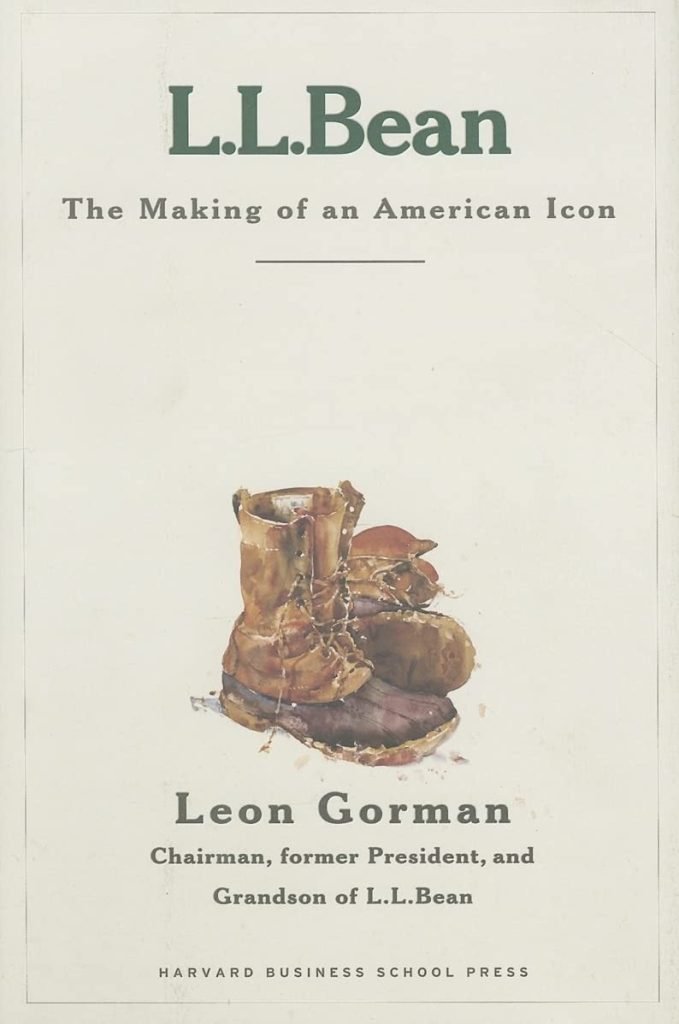
L.L. Bean: The Making of an American Icon

L.L. Bean: The Making of an American Icon

The Making of an American Icon

Author:Leon Gorman
Published:October 3, 2006
ISBN:1578511836
Pages:336
ISBN:9781578511839
Language:English
Share:

Buy Now

Description:

TL;DR

Leon Gorman, grandson of L.L. Bean’s founder, tells how he took over a stagnant Maine mail-order company in 1967 and grew it into a national brand without losing what made it L.L. Bean. Harvard Business School Press published it in 2006.

When Leon Leonwood Bean died in 1967, his company was a small Maine mail-order business that sold about $5 million a year and had stopped growing. His grandson, Leon Gorman, took over.

Forty years later sales were over $1.5 billion.

L.L. Bean: The Making of an American Icon is Gorman’s own account of those decades, published by Harvard Business School Press in October 2006.

What is L.L. Bean: The Making of an American Icon about?

How to grow a family business without losing what it is. Gorman inherited a company built on his grandfather’s famous guarantee and on Maine’s outdoor life, and he had to modernize it without breaking either one. The book covers the catalog years, the expansion, the tension between growth and tradition, and the hard stretches along with the good ones. The employee count went from about 100 to more than 5,000 on his watch. It’s written in the first person, by the family member who ran the company longest.

The guarantee runs through the whole book. Bean built the company on a promise to make things right for customers, and Gorman treats keeping that promise as the test of every big decision. The book includes sixteen pages of photographs.

The early chapters tell the founder’s story the way the family tells it. Bean was orphaned at 12 and left school after eighth grade. In 1912 he mailed a three-page catalog for his Maine Hunting Shoe to out-of-state hunters, and about 90 of the first 100 pairs came back because the tops tore away from the soles. He refunded every customer, borrowed $400 from his brother and started over. That refund is where the guarantee comes from.

Who was Leon Gorman?

Gorman was the founder’s grandson. He ran L.L. Bean as president for decades, stepped back as chief executive in 2001 and served as chairman until 2013, when Shawn Gorman, a fourth-generation family member, took over the chair. He died in September 2015 at 80, still the company’s chairman emeritus. The company is still privately owned by the founder’s descendants and still headquartered in Freeport, Maine, where it began in 1912.

How did Leon Gorman write L.L. Bean?

With help, and the help is a lesson. Harvard Business School Press approached Gorman about a decade before the book came out and paired him with a professional writer, Kent Lineback, who did many of the interviews and helped shape the structure. Gorman, who called himself computer illiterate, wrote in longhand.

The press printed 100,000 copies and treated it as its big fall book. L.L. Bean promoted it in its holiday catalog, held signings in its stores and slipped inserts into millions of customer packages. A company with that kind of reach to its own customers has a built-in audience for its history.

Who runs L.L. Bean now?

The family, at the top. About fifty descendants of the founder own the company. Shawn Gorman, a great-grandson, has chaired the board since 2013, and Greg Elder was named president and chief executive in January 2026.

Why does L.L. Bean belong on this shelf?

It’s a second-generation book, and those are rarer than they should be.

Founders’ memoirs get written. The people who take over from founders usually don’t write anything, even though they make the decisions that decide whether a family business lasts. Gorman’s book shows what the heir’s version looks like, and it’s the version most useful to the next generation of a family business. They’ll face the same choices.

Second-generation books also tend to be more practical than founders’ memoirs. The founder had the vision. The successor had to turn it into systems, budgets and hiring. Another family business can copy those.

Keep reading

Hiring a ghostwriter for a family business history: how families turn the story behind the business into a book before the people who remember it are gone.

Sources

Frequently Asked Questions

Who wrote L.L. Bean: The Making of an American Icon?
Leon Gorman, the founder’s grandson, who ran the company for decades. Harvard Business School Press published it in October 2006.
How much did L.L. Bean grow under Leon Gorman?
Sales grew from about $5 million to more than $1.5 billion, and the staff from about 100 people to more than 5,000.
When was L.L. Bean founded?
Leon Leonwood Bean founded it in 1912 in Freeport, Maine, where the company is still headquartered.
Is L.L. Bean still family-owned?
Yes. It’s privately held and owned by the founder’s descendants. Shawn Gorman, a great-grandson of the founder, has chaired the board since 2013.
What is L.L. Bean: The Making of an American Icon about?
How Gorman modernized and grew the company after taking over in 1967 while keeping the values, guarantee and Maine heritage his grandfather built it on.
When did Leon Gorman die?
He died in September 2015, at 80, as chairman emeritus.
Categories and tags
CategoriesMemoirs

About the author

Leon Gorman

Leon Gorman was the grandson of L.L. Bean and ran the company as president for decades, growing it from a Maine outdoor outfitter into a national retailer while keeping his grandfather's guarantee. He stepped back as chief executive in 2001 and wrote L.L. Bean: The Making of an American Icon, published in 2006.

More about Leon Gorman

Back