TL;DR
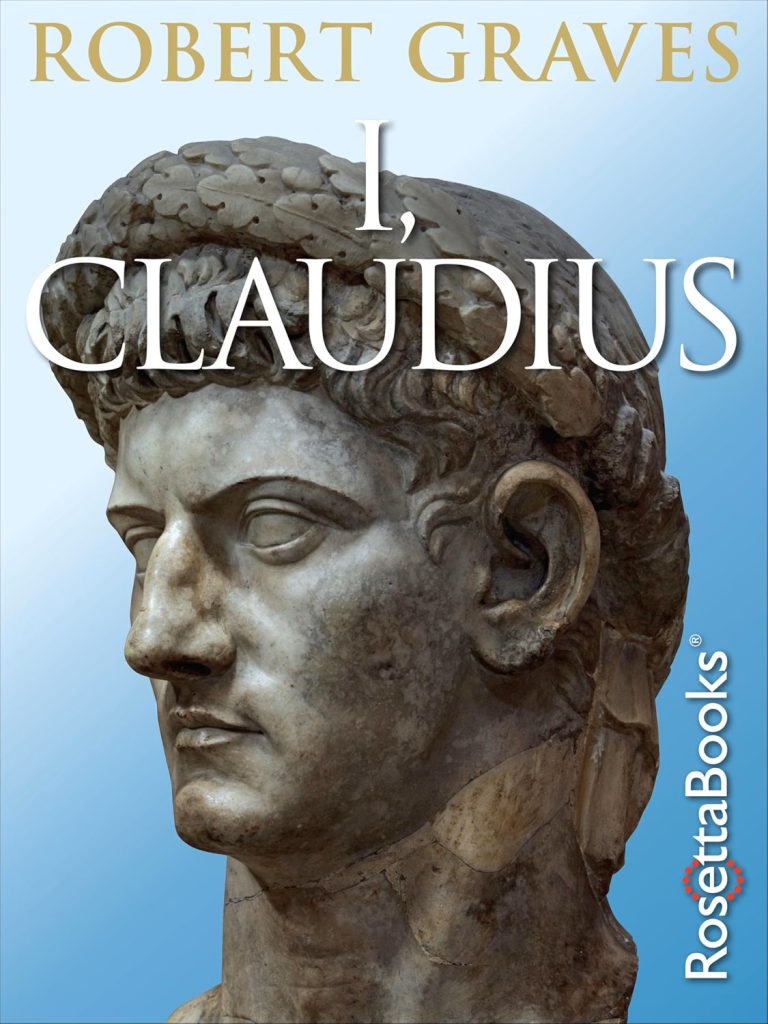
9/10. The Julio-Claudian court told by the man everyone dismissed as a fool. That’s why he lived. I read this and its sequel, and I’ve watched the BBC adaptation a dozen times. It’s still the best thing ever made about Rome.
Graves narrates the reigns of Augustus, Tiberius, and Caligula through Claudius, who stammers, limps, drools when agitated, and is written off by everyone at court as an embarrassment the family has to tolerate. The device is close to perfect. A man nobody considers a threat is a man who gets to stay in the room, and the result is a court history told from the one vantage point where nobody bothers to lie carefully.
It was published in 1934, won the James Tait Black and the Hawthornden, and is still the frame most people carry for imperial Rome whether or not they know where it came from.
Why does the narrator work so well?
Because it solves the problem every historical novel has. Somebody has to witness the events, and anybody important enough to be present is important enough to be a participant. That contaminates the account.
Claudius is present and irrelevant. Graves gets access and distance out of a single choice, and he gets a third thing free. That’s motive. Claudius is writing a secret history to be found generations later. That explains why he’s being candid about material that would have killed him.
The other thing the device buys is the reader’s affection. We spend the book with somebody being humiliated by people we watch murdering each other, and the eventual accession lands as a joke the universe is playing on everybody involved.
Livia is the beneficiary of all this. Graves gives her the best material in the novel and she becomes the most memorable villain in twentieth-century historical fiction, largely because Claudius is the one person she doesn’t bother to manage.
Watch: "I, Claudius" (2010) Claudius survives Rome’s madness in BBC’s haunted historical drama., JR The Old Radio Cat
How accurate is I, Claudius?
Less than its reputation suggests, and the reasons are structural and have nothing to do with carelessness. Graves works primarily from Suetonius and Tacitus, both of whom were writing under later regimes with reasons to make the Julio-Claudians look monstrous. Suetonius in particular is a gossip collector, and a great deal of what makes the novel entertaining comes from material a modern historian would treat as rumor.
The portrait of Livia as a serial poisoner running the empire from behind the throne is the clearest case. It makes superb fiction and the evidence is thin. Modern scholarship generally treats her as a conventional and effective political operator in a system that gave women no formal role. That’s a duller story and probably closer to the truth.
None of this is a criticism of the novel. It’s a caution about using it as history, which people do, because it’s more vivid than anything a historian has produced about the same period.
What does the BBC adaptation change?
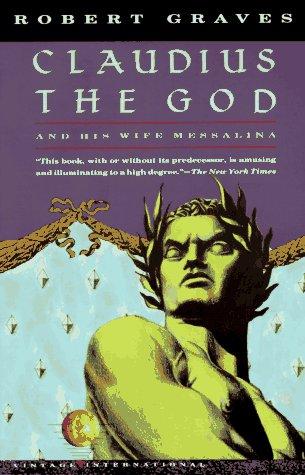
I read this and Claudius the God, and I watched the BBC series adapted from both of them probably a dozen times. I still think it’s among the best things ever made about Rome, even with British actors and English accents standing in for Romans.
The 1976 series compresses both novels into thirteen episodes, shot almost entirely on interior sets with very little action. That turns out to be the right decision. Everything happens in conversation. That’s how court politics works.
Derek Jacobi’s Claudius and Sian Phillips’s Livia have replaced the novels in public memory. When people picture the early empire they’re usually picturing that production. The series is better at faces and worse at the historian’s voice, and that’s a real loss because Graves’s Claudius is constantly telling you how he knows what he knows.
Where this stops and my own Roman novel begins
This book marked the edge of what I knew when I came to write A Treachery of Legions. Graves covers the Julio-Claudian era, Augustus through Nero, and that’s the Rome most people carry in their heads. My book comes after. By AD 69 the empire had changed. The Republic was long dead whatever nostalgia still clung to its forms, and the imperial system was fully in force.
The relationship between the legions and the throne was different. The role of the Senate was different. And a provincial general could become a claimant in a way that would have been unthinkable in Claudius’s court, because the year 69 established that an emperor could be made somewhere other than Rome.
So I couldn’t lean on what I knew about Claudius and his family and move it forward twenty years. I had to learn the later period from the ground up, and it took more research than anything I’ve written.
Verdict
The benchmark for Roman historical fiction and the source of most people’s mental picture of the early empire. Read it for the narrator. That’s a model of how to solve the historical novel’s central problem. Be aware that the Rome it gives you stops at Nero, that the empire which came after operated on different rules, and that Suetonius is doing more of the work than a modern historian would allow.
Explore further
The Writing Hub: craft, technique, and the books worth learning from.
Frequently Asked Questions
Other Books From – Fiction