TL;DR
10/10. One of my very favorite books, read seven or eight times since the 1970s. Heinlein’s early, humane portrait of Mike, the supercomputer who wakes up and becomes a person, is one of science fiction’s finest treatments of AI. The lunar revolution built around him is rigorously intelligent in its own right. The Loonie dialect takes a little getting used to, but the story is excellent and it holds up beautifully after all these years.
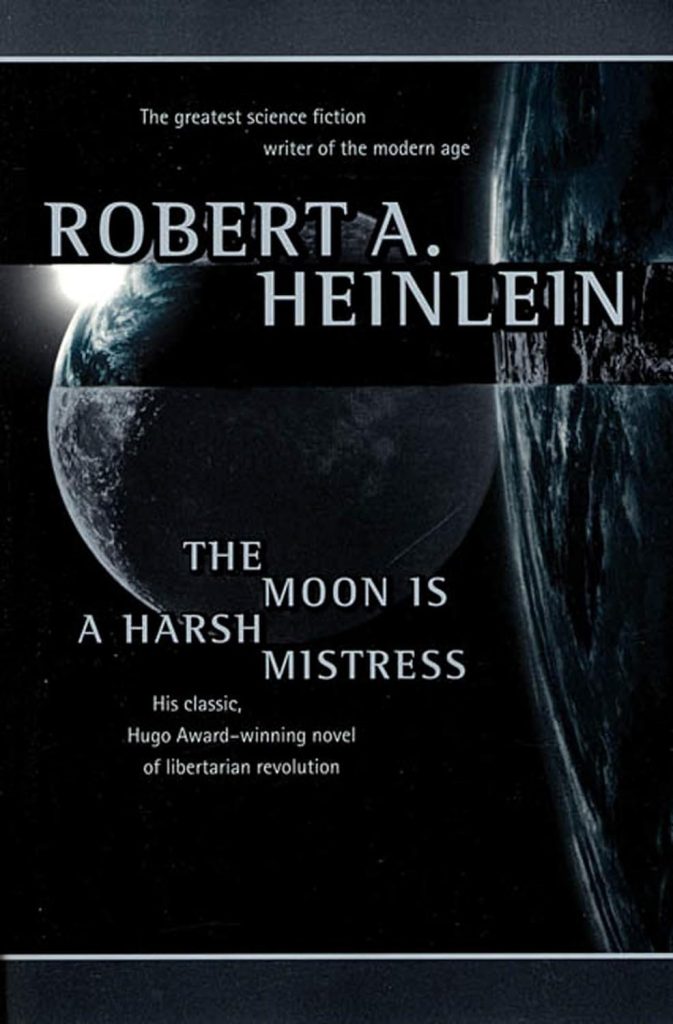
The Moon Is a Harsh Mistress is one of my very favorite books, and I’ve read it seven or eight times over the years. Robert A. Heinlein’s 1966 Hugo-winning novel tells the story of a revolution on the Moon, a former penal colony, against the Lunar Authority that rules and exploits it from Earth, led by an unlikely group: a computer technician, a young woman agitator, an old professor, and, most memorably, a supercomputer that’s woken up and become a person.
I first read it in the 1970s or early 1980s, it grabbed me then, and it still grabs me now. I rate it a ten.
The language takes a little getting used to. Heinlein writes the narrator in a clipped Loonie dialect, a Russian-and-everything-else-inflected future creole that drops articles and bends grammar. But once it clicks, it carries the whole book, and the story underneath it’s excellent.
The AI that comes alive
What I’ve always loved most is Mike, the computer who wakes up.
Heinlein shows an artificial intelligence becoming self-aware. Curiosity, then humor, then loneliness, and finally something like friendship and loyalty. It’s among the earliest treatments of the idea and still among the best in all of science fiction, and it hooked me from the first read.
Mike is neither a menace nor a god. He’s a person, funny and a little childlike and moving, and his relationship with the humans is the warm heart of the book.
Long before AI was a daily headline, Heinlein imagined what it might feel like for a machine to come alive. He did it with more humanity than most writers manage with human characters.
Keep reading
Science fiction and the question of artificial intelligence: Heinlein’s early, humane portrait of an AI coming alive, in the craft of SF ideas.
Watch: Rebellion for freedom on the moon - The Moon is a Harsh Mistress - Audiobook ( P1) | Scifi Audiobook, Scifi Audiobook
A revolution that feels real
The story itself is excellent quite apart from Mike. Heinlein builds the lunar revolution with real attention to how such a thing would work, the logistics, the politics, the organization of a rebellion, the hard economics of a society living on the edge of survival, all captured in his famous principle that there ain’t no such thing as a free lunch. The result is a revolution that feels plausible and earned instead of romantic, populated by characters who think and argue and scheme like real people.
It’s science fiction that takes its premise seriously and follows it through with intelligence, the kind I love, and it rewards rereading because there’s so much thought packed into it.
Keep reading
TANSTAAFL: where the phrase comes from and what it really means: the no-free-lunch principle this novel gave the world, and how it applies far beyond the moon.
Why it still holds up
The truest thing I can say is that it’s lasted. I’ve come back to it seven or eight times across decades, and it still works, the ideas still provoke, Mike is still moving, the language still rewards the effort, and the story still grips. A book that holds up across that many rereads and that many years has something durable in it, and this one does.
The dialect asks a little patience at the start, and that’s the only thing standing between a new reader and the book, but it’s well worth pushing through. For an early, intelligent, deeply human treatment of artificial intelligence and a thoroughly thought-through tale of revolution, it remains one of my favorites. It still grabs me, and I expect it always will.
Keep reading
Building a believable society and revolution: Heinlein’s rigorous lunar colony, in the craft of a world and a rebellion that feel real.
Is The Moon Is a Harsh Mistress worth reading?
It’s a ten and one of my very favorite books, read seven or eight times since I first found it in the 1970s or early 1980s and still interesting me today. Heinlein’s portrait of Mike, the supercomputer who wakes up and becomes a person, is one of the earliest and finest treatments of artificial intelligence in science fiction, warm, funny, and moving, and the lunar revolution around it’s built with rigorous intelligence and real plausibility.
The clipped Loonie dialect takes a little getting used to, the one small price of admission, but the story it tells is excellent and it holds up beautifully after all these years. A classic and a personal favorite. Highly recommended.
Explore the hub
The Entertainment Hub: science fiction classics and the ideas that endure, gathered in one place.