
My wife Claudia was unconscious in a hospital bed, and I was sitting next to her on the phone, working a problem for the company.
That wasn’t a one-time lapse.
When she was on her deathbed, I was still answering calls. I’d like to tell you I put the phone down and held her hand the whole time. I didn’t. The job demanded that I answer, so I answered.
For years I was on call 24 hours a day, seven days a week, 365 days a year. I worked every holiday.
I worked through so many illnesses I can’t count them, and some of them were serious. If I was too sick to drive in, I worked from home. Nobody ever asked whether I should be working at all. I didn’t ask either.
One of my bosses made the rule explicit. If I didn’t answer the phone within 15 minutes, I’d be fired. He was later fired himself, for cause.
The company threw him out. I’d already handed him years of my nights, weekends and holidays.
Why do people go to work when they’re sick?
Mostly because they’re afraid.
They’re afraid of losing the job, afraid of looking weak, afraid of the pile that’ll be waiting when they get back. Some can’t afford it. The Bureau of Labor Statistics reports that 80 percent of private industry workers had paid sick leave in 2025, so one in five didn’t. For them, a sick day is a smaller paycheck.
For the rest of us it’s culture. A graphic making the rounds, posted by Justin Mecham under the title “Texts My Boss Sent Me,” collects the kind of messages people get from managers. “I don’t care if you’re sick, I need you to be a team player and come in.” “Your grandmother better be buried on one of your days off.” “I need you to be reachable on vacation. That’s what phones are for.”
I didn’t need a text like that.
After the 15-minute rule, nobody had to say it to me again. I’d already absorbed it.
That’s how the culture works. A few bosses say it out loud, and everyone else learns from watching who gets promoted and who gets quietly sidelined. After a while the people who drag themselves in with a fever are the ones held up as committed, and the ones who stay home are the ones who “aren’t team players.”
The 15-minute leash
A phone that can fire you in 15 minutes owns every minute of your day.
I’ve told the story of the weekend off I asked for and the threat I got instead.
Think about what a 15-minute rule does to a life.
You can’t take a long shower. You can’t sit through a movie or a doctor’s appointment without checking the screen. You sleep with the phone on the nightstand and the ringer up, and you wake at every buzz wondering if this call will cost you the job. A phone that can fire you in 15 minutes owns every minute of your day. When you’re sick, it owns those minutes too, and when your wife is in the hospital, it owns the minutes you should have spent with her.
I don’t blame Claudia’s illness on my job. Sepsis took her, and no phone call caused it. What the job took from me was my attention during the time I had left with her. I can’t get that back.
The worst part is how normal it felt. I didn’t see it as a sacrifice while I was doing it. I saw it as the job. From the inside, a culture like this feels like professionalism, and that’s what makes it dangerous.
Does working while sick make you more productive?
No, and the research has been saying so for more than twenty years. In 2004 Paul Hemp wrote a piece in the Harvard Business Review called “Presenteeism: At Work, But Out of It.”
The research he gathered showed that people working while sick or in pain cost employers productivity at a scale that can exceed the cost of the days people take off. A body at a desk isn’t the same as a mind doing the work.
Anyone who’s sat through a meeting with a fever knows it. You read the same email three times. You miss the obvious question. You make the call you’d never make on a clear head, and somebody spends Monday fixing it. Then there’s everyone else in the building. A sick employee who comes in with the flu brings the virus with him, and by Thursday half the department has it. One person’s “dedication” becomes five people’s sick days.
A company that only runs when sick people show up has a staffing problem, and it’s making you pay for it. – Richard LoweShare on X
What does a healthy workplace culture do when employees get sick?
Organizational psychologist Adam Grant put it plainly in a post that keeps getting shared: “Working when you’re sick is not a symbol of commitment. It’s a symptom of a sick culture.” In a toxic workplace, he wrote, rest is a sign of weakness. In a healthy one, it’s a source of strength.
A healthy workplace plans for illness the way it plans for vacations and power outages, because all three are going to happen. There’s a backup for every critical person, and the backup knows the systems. On-call duty rotates so no single person carries it all year, the way the weekly rotation I set up for my own team did. Sick leave is paid and nobody is punished for using it. Managers go home when they’re sick, so the team learns from watching them that it’s allowed.
Plenty of managers call that soft. I call it running something that won’t fall apart when one person gets the flu. A team that depends on a single person answering the phone from a hospital room is a team one bad week away from failure.
If you’re the one on the leash, start with the smallest boundary you can hold. Say you’re sick and you’re offline until tomorrow, then turn the phone off. Name a backup before you need one. Write down what only you know, so someone else can find it.
And if the place fires you for being sick, you’ve learned something about the place that no performance review was ever going to tell you. I wrote more about that in doing your job without giving up your life, and about walking away from bad employers in burn your bridges.
My take
A company that needs you sick, on vacation and at your wife’s bedside is stealing from you. I gave that time away for years because a boss said answer in 15 minutes or you’re gone. He got fired. I’m still missing those hours with Claudia. Stay home when you’re sick, turn off the phone, and let the company find out if it planned for you to be human.
How can you tell a toxic workplace from a busy one?
Every job has crunch weeks. A product launch, a year-end close, a system that goes down on a Friday night. Nobody’s asking for a job where nothing ever goes wrong.
The difference is what happens afterward. A busy workplace says thank you, gives you the time back and fixes whatever caused the crunch. A toxic one makes the crunch permanent and treats it as the new baseline. Look at who’s allowed to be sick. If the boss takes a week off for the flu and you’re expected online with a fever, you have your answer.
Read the texts, too. When a manager tells you to choose between your family and the job, or reminds you that everyone is replaceable, he’s telling you exactly how much you’re worth to him. Believe him.
Who the job was really for
So who was all that for?
I spent 33 years in corporate technology, and the companies I worked for survived every one of my sick days that I didn’t take. They’d have survived the ones I did take, too. They’d have survived me sitting with my wife and letting the phone ring.
If you have a story like mine, the years you gave and what they cost, it’s worth getting down on paper before the details fade. That’s the kind of book I help people write through my ghostwriting service, and the leadership hub has more on bosses, boundaries and the working life.
Next time you’re sick, put the phone in a drawer. Whatever it wants can wait until you’re well, and the people who love you can’t always wait.
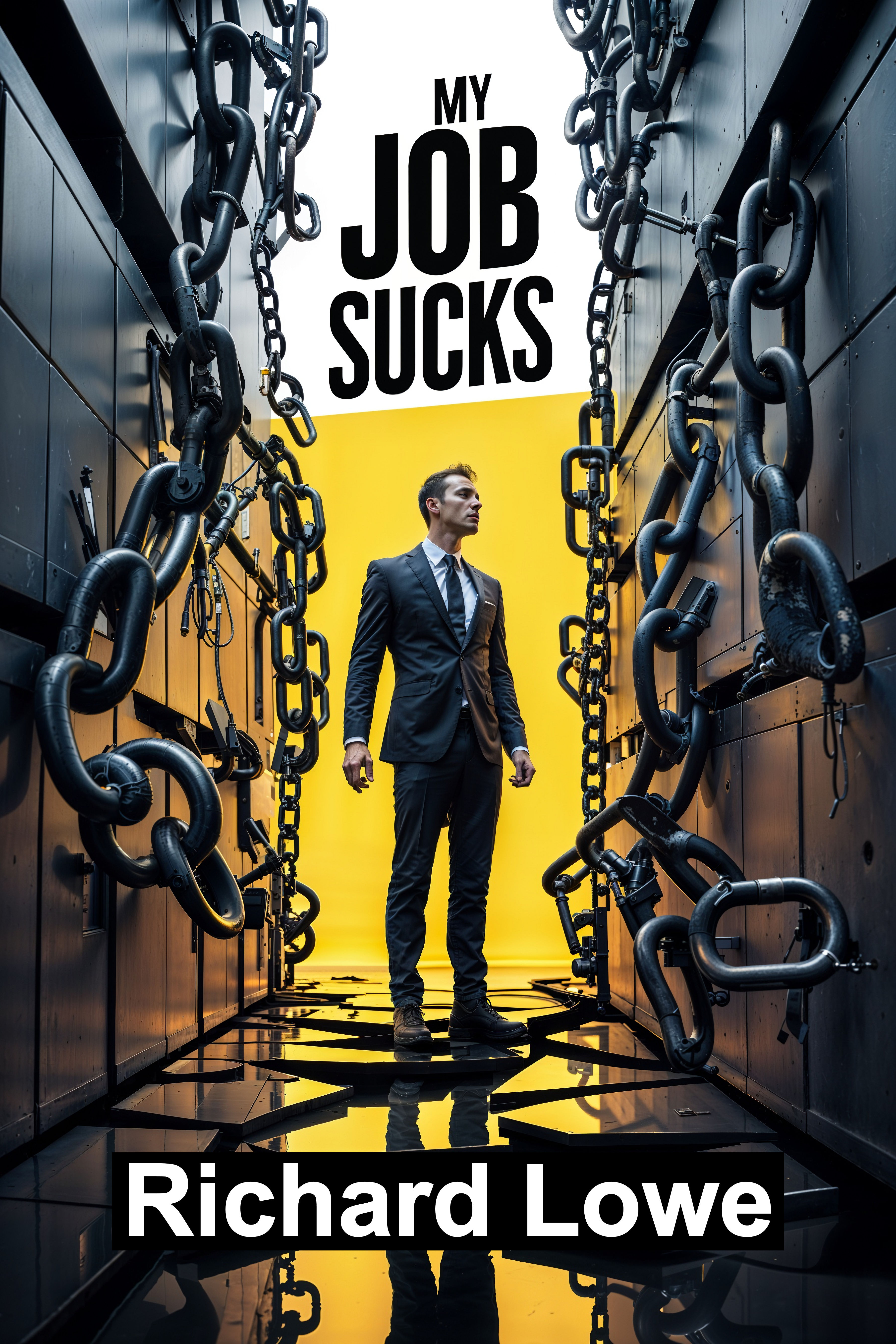
My book on the fear companies run on, the kind that keeps people at their desks a third weekend in a row and apologizing for looking tired.
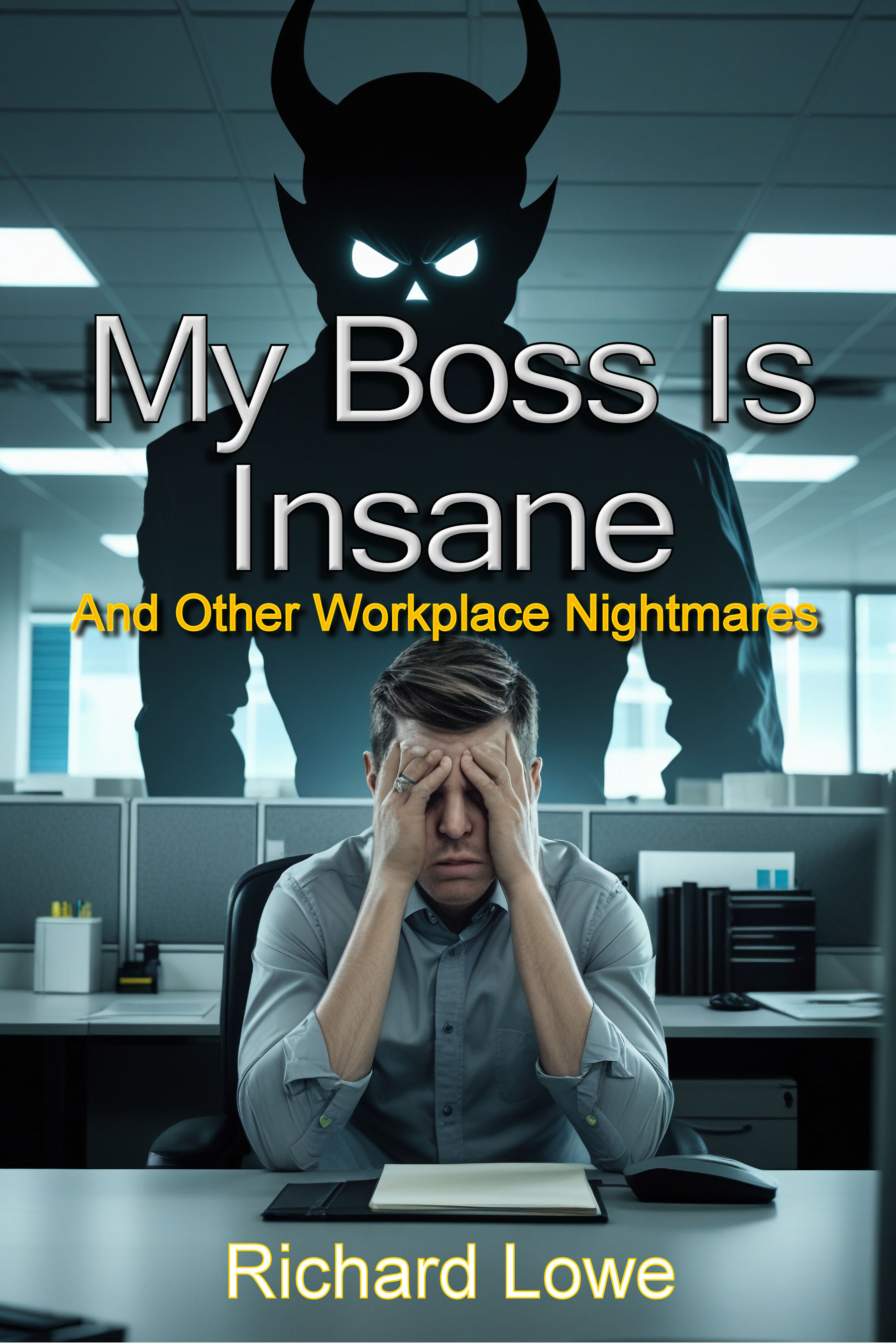
Nine kinds of bad boss, from the micromanager to the liar, drawn from real stories people told me, with what to do about each one.
