TL;DR
7/10. Over two thousand concise entries on historical terms, events, and institutions worldwide, a fast, broad reference that helps period-fiction writers avoid anachronisms and find the right term. A quick-check starting point, not a substitute for deep research, with mildly dated late-1990s scholarly framing. A solid specialist’s tool, best paired with deeper sources.
Write historical fiction and you hit the same wall constantly. What was that thing called?
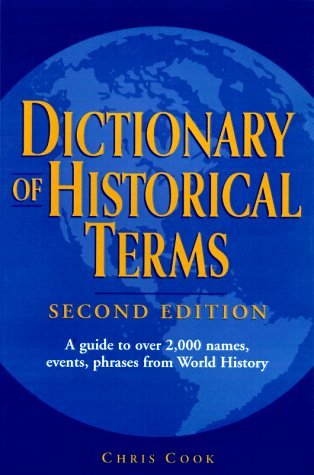
What did that office do? What did that event mean to the people living through it? The Dictionary of Historical Terms by Chris Cook is built for exactly that wall. With over two thousand entries covering worldwide history, it’s a specialized reference for writers, students, and history enthusiasts who need quick, reliable grounding in the terms, events, movements, and institutions of the past. It’s an unglamorous book that does an unglamorous job well, and a period writer who skips this kind of checking deserves the angry reader emails.
This is a dictionary of historical concepts instead of word meanings. The treaties, doctrines, offices, movements, and events that fill the background of any story set in the past, and that a writer must get right or risk pulling a knowledgeable reader out of the story.
What does Dictionary of Historical Terms cover?
The book’s value to a writer is breadth and convenience.
It gathers concise, clear explanations of historical terms from across world history into one place, so a writer can quickly check what a term meant, when something happened, or how an institution worked without launching a full research expedition for every passing reference. For historical fiction especially, this tool prevents the small anachronisms that betray insufficient research. The wrong title for an official. A concept used before it existed, an event misdated.
Those small slips are the dumbest way to lose a reader, because a two-minute lookup prevents them. As a desk reference to keep the historical background accurate, it’s worth having.
Keep reading
Writing historical fiction that feels authentic, not researched: Cook supplies the historical grounding; the article shows how to wear that research lightly.
A starting point, not a destination
The framing is that this is a quick-reference tool. Its entries are concise by design, basic and wide-ranging instead of deep, so it answers the what and when efficiently but can’t provide the rich contextual understanding that bringing a historical period to life requires.
A writer using it well treats it as a first stop, a fast way to check a fact or find the right term, and then goes deeper in proper historical sources for the detail and nuance that make a period feel inhabited. Anyone who uses it as a shortcut around real research will turn out thin, surface-accurate fiction. Period work like that is sloppy. Used as a quick-check companion to deeper study, it’s a real time-saver.
Keep reading
Research for fiction: how much, and how to hide it: the quick-check tool in the wider discipline of researching a believable world.
Is Dictionary of Historical Terms still current?
A mild caveat: the book dates from the late 1990s, and while the historical past doesn’t change, historical scholarship does, interpretations shift, and a reference’s framing can date even when its facts hold. For the basic terms, events, and definitions a fiction writer most needs, this matters little, the date of the Treaty of Westphalia isn’t in flux, but a writer relying on it for interpretive nuance should be aware that scholarly understanding evolves. For its core purpose of quick factual grounding, the age is largely immaterial.
Is Dictionary of Historical Terms worth reading?
It’s a usefully specialized reference for anyone writing about the past, a fast, broad, convenient way to check historical terms and avoid the anachronisms that undermine period fiction.
It loses ground only for the inherent shallowness of a quick-reference format. That makes it a starting point instead of a substitute for real research, and for the mild dating of its scholarly framing. For the historical fiction writer who wants to keep their background accurate without a full research detour for every detail, it’s a practical companion.
I like it for what it is: a fast, no-nonsense fact check that keeps period writers from embarrassing themselves. Pair it with deeper sources and it pulls its weight.
Explore the hub
The Writing Hub: historical fiction, research, and the rest of the craft, gathered in one place.
Frequently Asked Questions
Other Books From – History