TL;DR
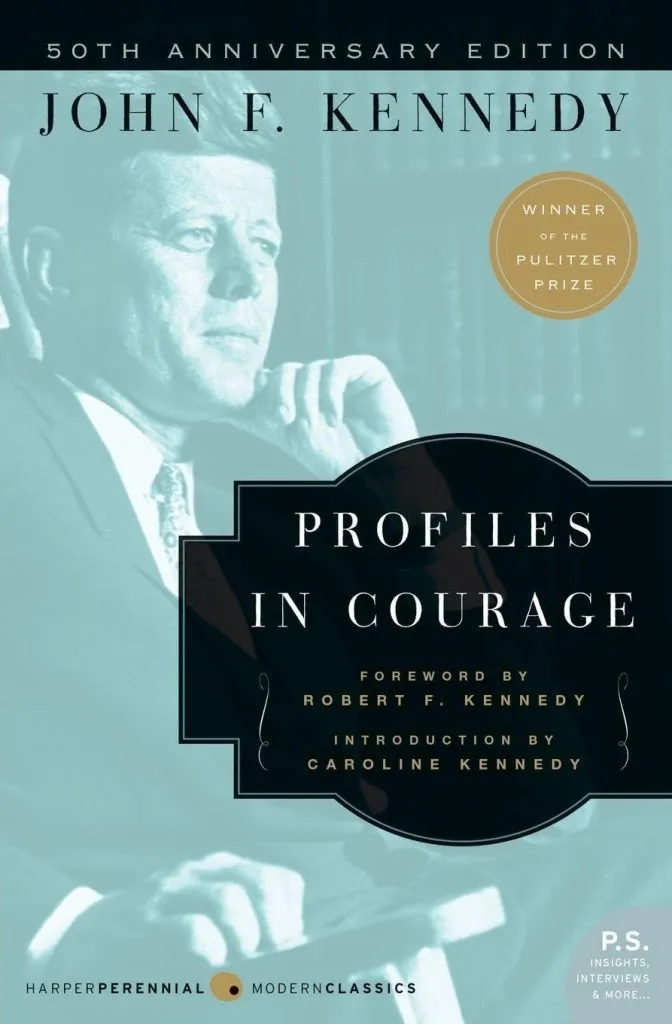
John F. Kennedy’s 1956 book about eight U.S. senators who risked their careers on unpopular votes. It won the 1957 Pulitzer Prize for Biography, and his aide Ted Sorensen later wrote that he drafted much of it.
Eight senators, each of whom cast a vote or took a stand that cost them, and in several cases ended their careers. That’s the premise of Profiles in Courage, and it’s a better one than most political books ever manage.
John F. Kennedy put it together in 1954 and 1955 while he was recovering from back surgery. Harper & Brothers published it in January 1956.
Who are the senators in Profiles in Courage?
John Quincy Adams, who broke with his own Federalist Party to back Jefferson’s embargo. Daniel Webster, who gave his Seventh of March speech in 1850 in favor of the Compromise and was condemned for it across New England. Thomas Hart Benton of Missouri, who stood against the spread of slavery and lost his seat. Sam Houston, who voted against the Kansas-Nebraska Act and lost his.
Then Edmund G. Ross of Kansas, whose vote saved Andrew Johnson from removal in 1868 and finished him politically. Lucius Lamar of Mississippi, who delivered a eulogy for the abolitionist Charles Sumner. George Norris of Nebraska, who led the filibuster against arming merchant ships in 1917. And Robert Taft of Ohio, who criticized the Nuremberg trials when nobody wanted to hear it.
Each chapter is a short portrait. Kennedy wasn’t interested in whether the senator was right. He was interested in what it cost them.
Who wrote Profiles in Courage?
Kennedy’s name is on the cover. The work was a team effort. His aide Ted Sorensen did substantial work on it, and in his 2008 memoir, Counselor, Sorensen wrote that he drafted most of the chapters. A Georgetown professor, Jules Davids, did much of the research. Kennedy chose the subjects, shaped the argument and revised the drafts, and the theme was his.
The question was public long before Sorensen’s memoir. In 1957 the columnist Drew Pearson said on ABC television that the book had been ghostwritten. Kennedy’s family pushed back hard, and ABC issued a retraction.
It won the 1957 Pulitzer Prize for Biography anyway.
What does Profiles in Courage show about ghostwriting?
That the arrangement is older than most people think. A sitting senator with a famous name, a staff writer and a researcher produced a book that won the Pulitzer and became a classic. Readers have argued about the credit for seventy years, and the book is still in print. What made it Kennedy’s was the subject, the selection and the conviction behind it. He never claimed to have done it alone, either. The book’s preface thanks Sorensen and Davids for their help.
The John F. Kennedy Library Foundation has given a Profile in Courage Award every year since 1990, to public officials who took a principled stand at a cost to themselves. The book outlived the argument.
Keep reading
Isn’t using a ghostwriter cheating?: what authorship means when a famous name is on the cover and a team helped write the book.
Frequently Asked Questions
Other Books From – History