TL;DR
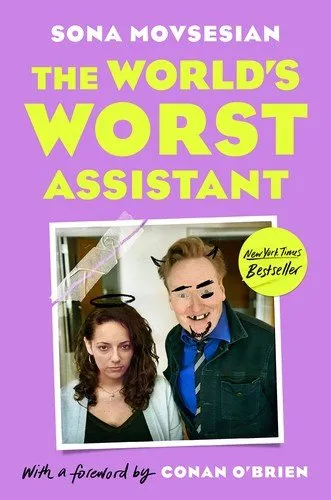
7/10. Conan O’Brien’s assistant of thirteen years explains how to nap at work, watch television at your desk, and become impossible to fire. A comedy bit stretched to book length, and there’s more underneath it than the premise suggests.
Movsesian and O’Brien have a long-running routine in which she plays the lazy incompetent and he plays the oppressive boss, developed across the television show and then the podcast where she’s co-host. The book is an extension of it.
How-to chapters on napping and on memorizing your boss’s social security number. Tips for becoming untouchable. Illustrations, graphs, and thirteen years of stories from the job. O’Brien wrote the foreword. That tells you the affection is real and that the shtick is a shtick. It was an instant New York Times bestseller. I expected to be mildly amused and ended up admiring it. A comedy bit stretched to book length usually dies within a few chapters, and this one keeps breathing because there’s a real person and a real relationship underneath. The jokes wear thin in spots, and that’s my main reservation.
Is the narrator of The World’s Worst Assistant really a bad assistant?
Yes and no, and the book is smarter about this than it lets on.
She does describe real dereliction. Binge-watching Friends at her desk. Crosswords on the clock. The corporate card. The napping. That has its own chapter with instructions.
She also kept a job for over a decade with somebody notoriously demanding, traveled with him, ran his life, and became a fixture of the operation. Whatever the bit says, somebody who’s useless doesn’t last thirteen years in that role.
What she’s describing is a person who declined to perform diligence while doing the parts that mattered. That’s a different thing and is the actual argument of the book.
I find that distinction refreshing. Plenty of workplaces reward the look of effort over the work itself, and she’s mocking that whole performance while doing the job that counts.
Watch: Sona Blames Conan For Making Her A Bad Assistant | Conan O'Brien Needs A Friend, Team Coco
What is the serious argument underneath The World’s Worst Assistant?
A takedown of grind culture that arrives as a joke and stays as an argument.
Her position, stated flatly when she stops performing, is that you should serve your own needs at work and try to work with people who are good and funny. She means it as a considered view about employment, held by somebody who has watched an industry chew through assistants, and I agree with every word of it.
The assistant memoir has a genre convention. That’s the tyrant boss and the suffering employee who endures and is vindicated. This book refuses it. There’s no tyrant, no suffering, and no vindication, and the refusal is the point. The second argument is about the relationship. The New York Times review put it well: this is about a boss accepting an employee for how she works, and an employee accepting her boss for everything he is. That’s a more interesting book than the title promises, and it’s the reason the book survives its own premise.
That relationship is the reason I like the book. A boss who accepts an employee exactly as she works is rare enough in print that it made the book feel generous, and the grind-culture memoirs could use a lot more of that generosity.
What can a comic writer learn from The World’s Worst Assistant?
The structural problem is visible and the solutions are worth studying. A running joke that works in three-minute segments has to survive three hundred pages. The bit is thin by design, because bits are thin, and stretching one across a book kills it in almost every case where somebody has tried.
Movsesian solves it by alternating. Bit, then real story, then bit. The sincere material recharges the joke, and the joke keeps the sincere material from becoming a standard celebrity memoir. Neither tone runs long enough to exhaust itself.
She also includes a chapter that announces itself as filler, which is either the joke working perfectly or the joke admitting defeat, and I can’t tell which. Both readings are instructive. My guess is the filler chapter is where the bit ran out of gas, and she was smart enough to make the exhaustion part of the joke. Either way, it’s the one stretch where I felt the premise straining.
What does The World’s Worst Assistant do that celebrity memoirs usually cannot?
It’s specific about her own failings without asking to be admired for them.
The standard move in this category is the humble brag, meaning a confessed flaw that’s secretly a virtue: I work too hard, I care too much. Movsesian confesses to laziness and then doesn’t redeem it. There’s no chapter where she learns her lesson and becomes diligent.
That refusal is rarer than it sounds and it’s what makes the book likeable. The reader isn’t being managed toward a conclusion about her character.
Verdict
Light, quick, and better than it needs to be. Read it if you like Conan, and read it anyway if you write comic nonfiction, because the alternation between bit and sincerity is a solved problem here and it’s not an easy one.
The grind-culture argument underneath is worth more than the jokes on top, and she never announces it. I’d hand this to anyone who thinks working themselves into the ground is a virtue, and I’d expect them to laugh before they noticed she’d argued with them.
Explore further
The Writing Hub: craft, technique, and the books worth learning from.
Frequently Asked Questions
Other Books From – Biography and Memoir