Latest
What’s New at The Writing King: Week of October 25, 2026Challenger Remembrance Day: The Engineer Who Wouldn’t SignJoel Salomon: The Truth About MoneyReddit Is Putting Up a Login Wall. Wikipedia Won’t Be Far Behind.Victoria Chemko: The Body Is the First TechnologySir Patrick Stewart: A TributeA Yale Economist Says We Won’t Be Missed. He Forgot the Bread Line.Walter Koenig: A TributeAI Has Paid Off Outside Tech. Apollo Is Reading the Wrong Scoreboard.I Don’t Post Bad ARC Reviews. I Send the Author a Note.The Little Red Book of Stuff That Works!Your Kids Are Your Own FaultGrow a PairYou’re Broke Because You Want to BeIt’s Called Work for a Reason!No Time for TactShut Up, Stop Whining, and Get a LifeWilliam Bessette: AI Enablement and Child Welfare TechnologyFree Book Planning ToolsWhat’s New at The Writing King: Week of October 18, 2026Ghostwriting by the Numbers: Timelines, Word Counts and the First CallPromising Young Woman (2020) ReviewBillions for AI, Pennies for the Plumbing: AI Companies Should Pay to Keep PHP AlivePHP2Shell: AI Found a 22-Year-Old Crack Under Your Website in Two DaysPetrov Day: The Officer Who Didn’t Believe the ComputerKindle Unlimited Is Now Kindle+. AI Audiobooks Just Joined the BuffetChina Is Using Bots to Fan the Data Center Backlash. The Backlash Is Still Real.The Society of Authors Signed an Ethical AI Charter, Then Ran From It in Eight DaysMo Gawdat Says the AI Dystopia Starts in 2027. Read the List, Skip the DatesWhen to Quit Writing a Book: I’ve Abandoned Dozens, and I’d Do It AgainGetty Images Filed for Bankruptcy. Can You Prove You Licensed Your Book’s Images?Fluff Words: Cut Them From Your Prose, Keep Them in Your DialogueWhere Can Writers Learn Storytelling From Movies? Richard Lowe Publishes 1,226 Film and TV Reviews With Writing Craft NotesWhere Are the Independent Bookstores and Public Libraries Worth Visiting in Tampa Bay? Author Richard Lowe Profiles 44 of ThemWhere Can You Hear Founders and Executives Tell Their Own Stories? Richard Lowe’s Leaders and Their Stories Publishes Every Unscripted Interview With a Full TranscriptWhat Should You Know Before Hiring a Ghostwriter? The Writing King Publishes 57 New Answers, Including What to Do When It Goes WrongAuthor Richard Lowe Publishes Eight Volumes of Enemies of You, a Researched Series on the Forces Working Against Ordinary AmericansThe Jackal (1997) ReviewThe Day of the Jackal (2024) ReviewYour First Novel Is an Apprentice Piece: What Beta Readers and Editors Can’t FixWhen the Cloud Gets Bombed: What the AWS Data Center Strikes Teach About BackupsHuman-Written Book Labels Are Gatekeeping With a FeeThe Enshittification of Microsoft Office: Why I Switched to a Free CloneGlobal Encryption Day: The Padlock Every Writer Depends OnWriting Your Worst Moments in a Memoir: Show the Evidence, Skip the VerdictHow to Register a Copyright for Your Book (and What Doesn’t Count)Your AI Chats Aren’t Private: Deleted ChatGPT Logs in CourtThe Board Seat Scam: A 419 Letter in a Business SuitI Joined the Science Fiction Book Club 30 TimesCitations in a Memoir: Endnotes, Footnotes and Fair Use

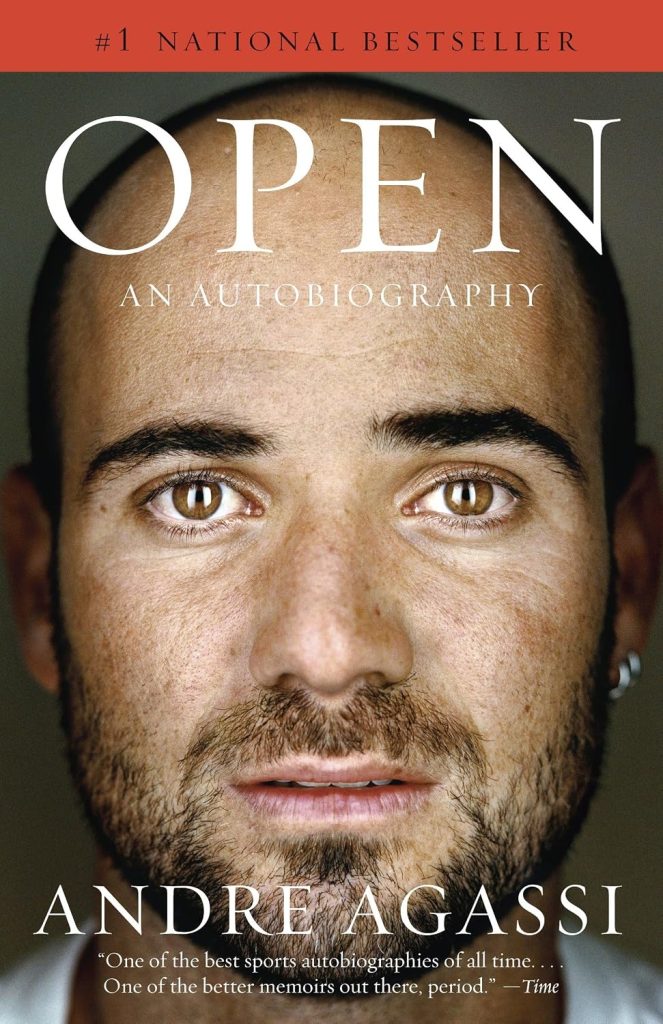
Open: An Autobiography

Open: An Autobiography

An Autobiography

Publisher:Alfred A. Knopf
Published:November 9, 2009
ISBN:0307268195
ISBN:9780307268198
Language:English
Share:

Buy Now

Description:

TL;DR

Andre Agassi’s 2009 memoir, written with Pulitzer-winning journalist J.R. Moehringer, in which he admits he hated tennis for much of his career. It’s my favorite answer to anyone who asks what a ghostwriter is for.

Andre Agassi opens his memoir by telling you he hates tennis. He means it, and he spends the next few hundred pages explaining why a man who won eight Grand Slam titles never chose the sport in the first place.

Open is my favorite answer to anyone who asks what a ghostwriter is for.

What is Open about?

The whole life, with nothing smoothed over. It starts with a boy in Las Vegas under a relentless father who built a ball machine to fire at him, and a mother who mostly stood aside. It covers his years at a Florida tennis academy, the rebellious image of the 1980s and the hairpiece he wore early in his career.

Then come the admissions that made news. Agassi wrote that he used crystal meth in 1997, failed a drug test, and lied to the tennis authorities about it with a letter blaming a spiked drink. They let him off with a warning.

Then the rest of the arc. The book also covers his marriage to Brooke Shields, his relationship and marriage with Steffi Graf, his comeback to win the 1999 French Open and complete a career Grand Slam, and his retirement at the 2006 US Open while his back was failing. The last match, played on cortisone shots, is the strongest chapter in the book.

Don’t skip the pages on Gil Reyes, the trainer who became the father figure Agassi never had at home, and on the charter school he built in Las Vegas for kids with no other good option.

Who wrote Open?

Agassi did, with J.R. Moehringer. Moehringer was a Pulitzer Prize-winning journalist who had just published his own memoir, The Tender Bar. He’d won the Pulitzer for feature writing in 2000 at the Los Angeles Times. Agassi read The Tender Bar and decided that was the writer he wanted. Agassi offered him a credit on the cover, and Moehringer turned it down, on the grounds that the story belonged to Agassi. Moehringer spent long stretches with him, and the book that came out of it sounds like nobody but Agassi.

Moehringer went on to work on Phil Knight’s Shoe Dog and Prince Harry’s Spare. Most of the public learned his name only after Open came out, and the book’s reputation rose when they did.

How was Open received?

It hit number one on the New York Times bestseller list. Sam Tanenhaus wrote in the Times that it was far more than a sports memoir, a real coming-of-age story. It won the British Sports Book Award.

Why does Open matter to anyone writing a memoir?

Because it’s honest in the places most memoirs flinch. Agassi wanted the real book: the father, the drugs, the lie, the hatred of the thing he was best at. Most celebrity memoirs are sanitized because the subject is protecting an image. This one works because he let it go.

And because it proves the collaboration doesn’t cost the author his voice. Every page sounds like Agassi.

That’s the job done right.

Keep reading

Moehringer and Agassi: how the most admired sports memoir of its era got written, and what it shows about ghostwriting.

Sources

Frequently Asked Questions

Who helped Andre Agassi write Open?
Agassi wrote it with J.R. Moehringer, a Pulitzer Prize-winning journalist and author of The Tender Bar. Knopf published it in November 2009.
Was Open ghostwritten?
It was. J.R. Moehringer worked with Agassi on the book, and his role became widely known after publication. Agassi chose him after reading Moehringer’s memoir, The Tender Bar.
What does Andre Agassi reveal in Open?
That he hated tennis for much of his career, that he wore a hairpiece early on, and that he used crystal meth in 1997 and lied to tennis officials about a failed drug test.
Was Open a bestseller?
Yes. It reached number one on the New York Times bestseller list and won the British Sports Book Award.
What else has J.R. Moehringer written?
His own memoir, The Tender Bar, and he worked on Phil Knight’s Shoe Dog and Prince Harry’s Spare.
Why is Open considered a model memoir?
It’s unusually candid about the subject’s failures and pain, and it keeps a consistent personal voice throughout. It shows how a collaboration can serve the author instead of replacing him.
Categories and tags
CategoriesMemoirs

About the author

Andre Agassi (written with J. R. Moehringer)

Andre Agassi

Andre Agassi won eight Grand Slam singles titles and completed a career Grand Slam at the 1999 French Open. His memoir Open, written with J.R. Moehringer, admitted he had hated tennis for much of his career and became a number one bestseller. He founded a charter school in Las Vegas.

More about Andre Agassi

J. R. Moehringer

J.R. Moehringer is a Pulitzer Prize-winning journalist and author of the memoir The Tender Bar. He wrote Andre Agassi's Open, then worked on Phil Knight's Shoe Dog and Prince Harry's Spare, and became the best-known collaborator in American publishing.

More about J. R. Moehringer

Back