Latest
Hiring a Ghostwriter for a Family Business History BookHiring a Ghostwriter for a Retired General’s or Admiral’s Leadership BookHiring a Ghostwriter for a Sheriff’s or Police Chief’s BookWhat the AI Writing Survey Says About Jobs, Freelancers and Fiction AuthorsHow Long Does Google Take? Crawling, Indexing and Recovery TimesLife of Pi50 Years of Duty: One Police Officer’s Compelling Journey from State Trooper to County SheriffBreaking Rank: A Top Cop’s Exposé of the Dark Side of American PolicingBlack in Blue: Lessons on Leadership, Breaking Barriers, and Racial ReconciliationCalled to Rise: A Life in Faithful Service to the Community That Made MeVigilance: My Life Serving America and Protecting Its Empire CityTurnaround: How America’s Top Cop Reversed the Crime EpidemicCollaborate or Perish! Reaching Across Boundaries in a Networked WorldThe Profession: A Memoir of Community, Race, and the Arc of Policing in AmericaSTEP-UP and LEAD: A Guide for Dynamic, Innovative Leadership in Law EnforcementStriving for Justice: A Black Sheriff in the Deep SouthThe Diagram GalleryGar Travis: A Tribute to One of the Best Faire PhotographersReverse Tropes: Six Ways to Turn a Tired Trope Inside OutA Hiker Used AI to Find a Waterfall. The Forum Sent Her to Hell.Did We Miscount the World’s Population? What the Rural Undercount MeansFrankenstein’s Creature Has Worn Many Faces. Only One Is Mary Shelley’sIs Consciousness Quantum? Penrose Is Half RightAI Companies Are Preparing for a Catastrophe. Which One?Petty Motivations Make Characters HumanAnatomy of a Writer: The Parts That Do the Real WorkGuillermo del Toro’s Writing Advice: Love Your MonstersFree Book Marketing: Seven Ways That Cost Time Instead of MoneyMy Sister Built the Family We Never HadShould Your AI Report You to the Police?Anthropic Bans Cruelty Toward Claude: What It Means for WritersWork-for-Hire Contracts: What the Asimov’s Cover Fight Teaches FreelancersGenre Fiction vs Literary Fiction: Don’t Confuse Taste With SkillFlorida Hurricane Prep Rituals: The Grocery Run, the Water Pallet and the Generator in the BoxThe Most Insulting Line of Dialogue Ever Written for the ScreenLoki Through the Ages: From Norse Myth to Marvel, The Mask and Dogma“You Are Utterly Disgusting”: A Book Festival, an AI Cover Ban and a Pile-OnWho Rewrote the Sligachan Legend: AI or the Tour Buses?Layers: How I Ride Out Florida Power Outages in My ApartmentWhy I Don’t Like Reedsy for Ghostwriting: The NDA ProblemThe Enshittification of AmazonPublishers Cancel Books Over AI While Using It in SecretI Was Getting 100 Spam Emails a Day. $4.50 a Month Fixed It.World Mental Health Day: Nothing Was Wrong With MeKessler Syndrome: How Space Debris Could Close Earth’s OrbitAmazon Is Blocking Real Readers From Book ReviewsShould a Novella Get a Paperback, or Go Ebook Only?BookFunnel Download Problems: Fixes, Scams and AlternativesSir Sean Connery: A TributeHow to Find Plot Holes in Your Novel (Most Are Character Holes)
The Writing King Your Ethical Ghostwriter. Your Story, Done Right.

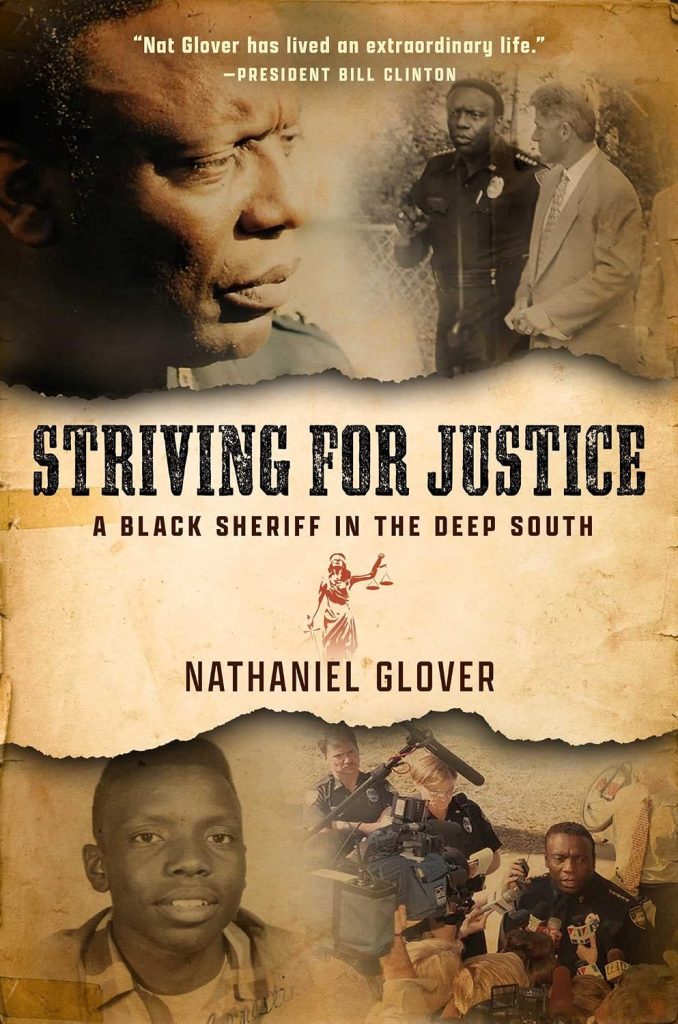
Striving for Justice: A Black Sheriff in the Deep South

Striving for Justice: A Black Sheriff in the Deep South

A Black Sheriff in the Deep South

Author:Nat Glover
Publisher:Forefront Books
Published:August 22, 2023
ISBN:1637631774
Pages:256
ISBN:9781637631775
Language:English
Share:

Buy Now

Description:

TL;DR

Nat Glover’s memoir of growing up in segregated Jacksonville, joining the police department that once refused to protect him, and becoming the first Black sheriff elected in Florida since Reconstruction. It’s also one of the few books written by a Florida sheriff.

On a Saturday in August 1960, a seventeen-year-old dishwasher left his shift at Morrison’s Cafeteria in downtown Jacksonville and walked straight into a riot. A mob of white men, some of them Klansmen, was beating Black sit-in protesters near Hemming Park with ax handles and bats. The teenager went to a white police officer for help. He didn’t get any.

Glover has said in interviews that he was told to get out of town or be killed. He made himself a promise that afternoon: he’d never run from a fight again. Then he did something nobody who saw that day would have predicted. He joined the police.

Striving for Justice: A Black Sheriff in the Deep South is the story of what came after that promise. Forefront Books published it in August 2023, days before the anniversary of the day Jacksonville now calls Ax Handle Saturday.

How did Nat Glover go from dishwasher to sheriff?

Slowly, and against resistance from inside the department as much as outside it. Glover grew up under segregation, played football at Edward Waters College on a scholarship and joined the Jacksonville Police Department in 1966. The book describes the racism he met from fellow officers in those early years.

He made detective in 1969 and sergeant in 1974. He became the city’s first hostage negotiator and was named police officer of the year four times by four different organizations. By 1991 he was director of police services, and in 1995 the voters of Jacksonville and Duval County elected him sheriff. He was re-elected in 1999 and served until 2003.

No Black sheriff had been elected anywhere in Florida since Reconstruction. The book is honest about what that meant, for him and for the people who’d watched him rise.

What did Glover change as sheriff?

He built the office around community policing. He banned choke holds and brought in de-escalation training for officers dealing with people in mental health crises, years before either became a national conversation. The book’s publicity credits his eight years with a 17 percent drop in crime.

He tied all of it back to that day in 1960. A frightened kid had asked a cop for help and been turned away, and Glover spent his career trying to build a department that wouldn’t do that to anybody.

What did he do after law enforcement?

He ran for mayor of Jacksonville in 2003 and lost. Then he went home to Edward Waters, his alma mater, as president, first on an interim basis in 2010 and permanently from 2011 until he retired in 2018. He told one interviewer that handing out diplomas to eight graduating classes felt like a kind of redemption. Florida named him a Great Floridian in 2016.

How has Striving for Justice been received in Jacksonville?

As a piece of the city’s own history. Jacksonville’s television stations covered the launch, the public library and the Jacksonville Historical Society hosted him, and public radio’s In Black America gave him two full episodes.

Glover’s last chapters turn from his own career to the country. He writes about what justice requires of police and of the communities they serve, and about how a divided nation heals. Coming from a man who stood on both sides of that 1960 police line, first as the kid who was turned away and later as the sheriff, those pages carry more weight than they would from almost anyone else.

What Striving for Justice shows a leader planning a book

Because Florida has 67 sheriffs and almost none of them write books. Glover’s shows what one can be.

He structured it the way a good memoir should be structured. One afternoon from his youth sets up every decision that follows, so the reader understands why each choice mattered to him. He also did something generous with it: the proceeds go to a need-based scholarship at Florida State College at Jacksonville. He’d already been funding it from his own pension. He’s credited as the sole author, and he said in interviews that colleagues had urged him for years to tell his story before he finally did.

Any Florida sheriff thinking about writing a book should start with this one.

Keep reading

Hiring a ghostwriter for a sheriff’s or police chief’s book: how law enforcement leaders turn a career into a book, and what has to stay out.

Frequently Asked Questions

What is Striving for Justice by Nat Glover about?
It’s the memoir of Nat Glover, Jacksonville’s first Black sheriff and the first Black sheriff elected in Florida since Reconstruction. It opens with the 1960 Ax Handle Saturday attack he witnessed at seventeen and follows his 37 years in law enforcement, from patrolman and detective to sheriff. It ends with his years as president of Edward Waters University and his thoughts on justice and how a divided country heals.
What was Ax Handle Saturday?
On August 27, 1960, a mob of white men attacked Black sit-in protesters in downtown Jacksonville with ax handles and baseball bats. Glover, then a teenage dishwasher walking home from work, was caught in the middle of it and asked a police officer for help that never came. He has said that afternoon is the reason he became a police officer.
When was Nat Glover sheriff of Jacksonville?
He was elected sheriff of Jacksonville and Duval County in 1995, re-elected in 1999, and served until 2003. Before that he’d spent nearly three decades in the department as a patrolman, detective, sergeant, the city’s first hostage negotiator and director of police services. He was the first Black sheriff elected in Florida since Reconstruction.
Who published Striving for Justice?
Forefront Books published it in August 2023, with distribution by Simon & Schuster. The hardcover runs about 256 pages, and the release was timed for the anniversary of Ax Handle Saturday. Glover is credited as the sole author. Forefront Books is a Nashville publisher that partners with Simon & Schuster on distribution, so the book is widely available in stores and libraries.
Where do the proceeds from Striving for Justice go?
Glover directed the proceeds to a need-based scholarship through the Florida State College at Jacksonville Foundation. He had already been funding the scholarship from his own pension, so the book extends something he’d started on his own. It’s an unusual choice for a memoir and says a lot about the author. Buying the book supports students at the same kind of school that gave Glover his start.
Did Nat Glover use a ghostwriter for Striving for Justice?
No collaborator is credited on the book, and Glover is listed as the sole author. Many law enforcement memoirs do credit a co-writer, so it’s a common question. Glover has said colleagues urged him for years to write his story before he finally did. Whether or not an author has help, the experiences and the judgment in a memoir like this one are the author’s own.
Categories and tags
CategoriesMemoirs

About the author

Back