TL;DR
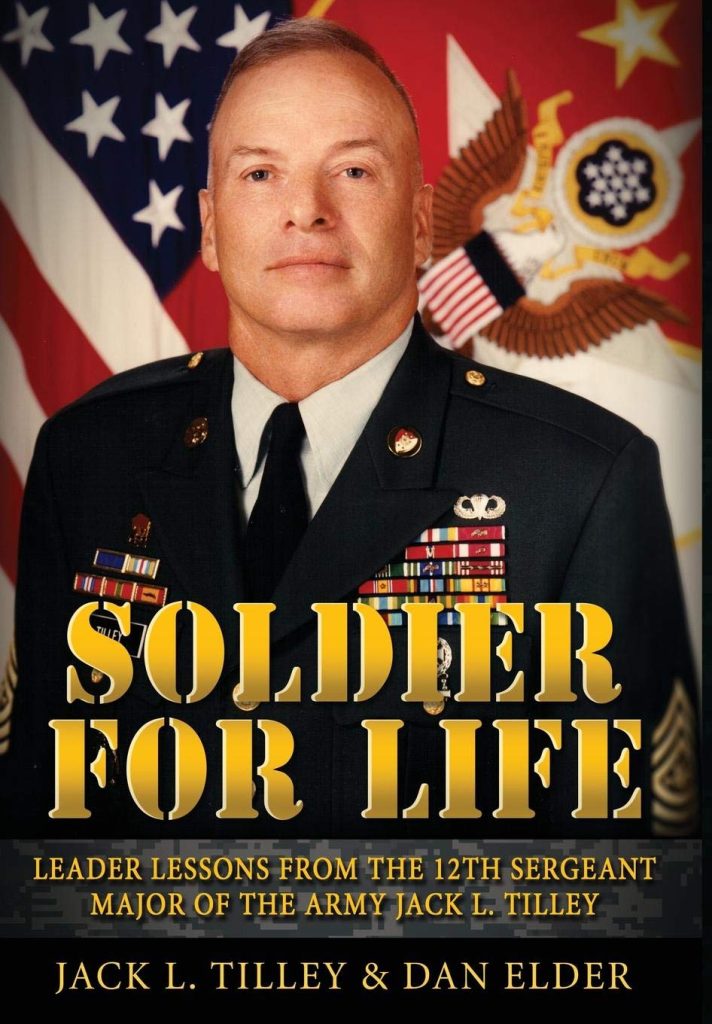
The memoir and leadership book of Jack Tilley, who rose from Vietnam-era private to the 12th Sergeant Major of the Army. Written with Army historian Dan Elder, it ends every chapter with the lesson behind the story.
Command sergeants major spend careers turning frightened eighteen-year-olds into professionals. Jack Tilley was one of those eighteen-year-olds once, and he finished as the senior enlisted soldier in the entire Army.
Soldier for Life is how he did it.
What is Soldier for Life about?
Tilley’s career, start to finish. He enlisted in June 1966 at seventeen, straight out of high school and without much of a plan, joining under the Army’s Buddy Program with his friend Barney Boykin. He trained at Fort Lewis, Fort Knox and Fort Benning, where he went through Airborne School.
In Vietnam he served with A Troop, 1st Squadron, 4th Cavalry, in the 1st Infantry Division. During the Tet Offensive of 1968 he pulled a damaged tank to safety and earned the Bronze Star. Boykin was killed that year, and Tilley left Vietnam as the escort bringing his friend’s body home.
He got out in 1969 and went to work in a paneling factory.
It didn’t take. A recruiter gave him a week to come back at his old rank, and he did. In his words, he got out of the Army, but the Army was still in him.
The rest of the book covers the climb. Drill sergeant at Fort Benning and Fort Polk. Tank commander and platoon sergeant in Germany along the Iron Curtain. Instructor at the Armor School at Fort Knox, where he was among the first tank commanders to train on the M1 Abrams. First sergeant in Korea, then command sergeant major of the 1st Armored Division, including a year in Bosnia with the peacekeeping force, and then of U.S. Central Command.
In June 2000 he was sworn in as the 12th Sergeant Major of the Army, the Army chief of staff’s senior enlisted adviser. He was the last Vietnam veteran to hold the post. He pushed on pay, retirement, health care, barracks and family housing, told Congress that retention was the absolute bedrock of the force, and logged about a hundred thousand miles in a single year visiting soldiers.
He oversaw the Army’s switch to the black beret. He was at the Pentagon on September 11, 2001, and helped in the aftermath. He retired in January 2004.
Every chapter tells a story and then steps back. A section called “Understanding Tilley” closes each one, spelling out the leadership lesson the story was meant to teach. Readers who want the memoir get the memoir. Readers who want the lesson can find it without hunting.
Who helped write Soldier for Life?
Dan Elder, a retired command sergeant major who served from 1981 to 2008 and finished as the senior enlisted leader of Army Materiel Command. He founded and runs the NCO Historical Society, wrote Educating Noncommissioned Officers, and co-wrote the second edition of the Army’s official history of the sergeants major of the Army.
The NCO Historical Society published the hardcover in September 2015, and a paperback followed in 2017. It won a Bronze Medal for memoir from the Military Writers Society of America in 2017.
What did Jack Tilley do after the Army?
He kept serving. He founded the American Freedom Foundation after visiting wounded soldiers at Walter Reed, advised the sergeant major of the Afghan army, sat on a Veterans Affairs advisory board for veterans of Afghanistan and Iraq, and started a Tampa company that places former military leaders in corporate jobs. His own line: he’s a retiree, he’s a soldier, and he’ll never stop serving.
Why do senior enlisted leadership books matter?
Because they run closer to the ground than a general’s book. A sergeant major’s lessons are about training, discipline, caring for families and fixing what’s broken on Monday morning. Business readers respond to that. A senior enlisted leader who ran training for thousands of troops has more to say about building people than most management consultants.
Tilley’s book sits on the shelf next to William Bainbridge’s Top Sergeant, written with Dan Cragg by the 5th Sergeant Major of the Army. More retired senior NCOs should write theirs.
Keep reading
Writing a military leadership book: why senior enlisted leaders have some of the best leadership books in them, and how they get written.
Frequently Asked Questions
Other Books From – Biography and Memoir