TL;DR
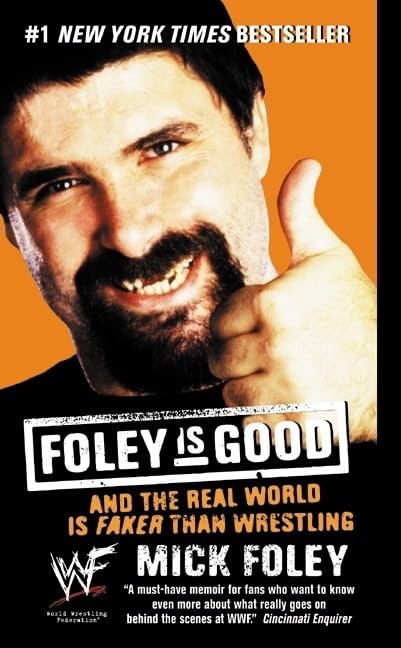
9/10. A wrestling memoir that became a runaway bestseller, written longhand by Foley himself with no ghostwriter. That’s exactly why it works. Read it in a single weekend and it’s stayed with me since.
Foley’s career is the story of a man with no natural advantages who out-worked everybody. He wasn’t the biggest, not the most athletic, and not conventionally marketable. He drove hundreds of miles every weekend to train, took punishment that’s permanently cost him, and kept going until the WWE finally signed him.
What he built was unique, and the book explains how without ever asking for sympathy.
I came to it sideways. My late wife watched wrestling constantly in the years she was ill and largely bedridden, and Foley was one of her favorites, along with the Rock and Steve Austin. She’d cheer when they won and cry when they lost. She died in 2005. Years later I found the book and read it in a single weekend.
Did Mick Foley write Have a Nice Day himself?
Yes, in longhand, and that’s what makes the book what it is. The publisher expected to assign a ghostwriter. That’s standard for a celebrity memoir and was standard then. Foley refused, and wrote the manuscript by hand over several months while still working a full wrestling schedule.
The result is a voice nobody would have produced on his behalf. The digressions, which a professional would have cut. The self-deprecation, which a professional would have moderated because it undercuts the subject. The willingness to be unflattering about his own decisions, which a professional would have softened because the client has to live with the book.
I say this as somebody who writes books for other people. A ghostwritten memoir can be excellent and most of the best ones are, because most people can’t write and their story deserves better than they can give it. But a person who can write and has something to say will produce something a ghostwriter cannot, and this is the clearest example I know.
Watch: Mick Foley Have A Nice Day Audiobook, Red Carpet Ring
What’s in Have a Nice Day?
The early years are the strongest section and the one nobody expects. Foley working the independent circuit for almost nothing, driving overnight between towns, taking bookings in places with no crowd and no money, and learning the business from people who had no reason to teach him.
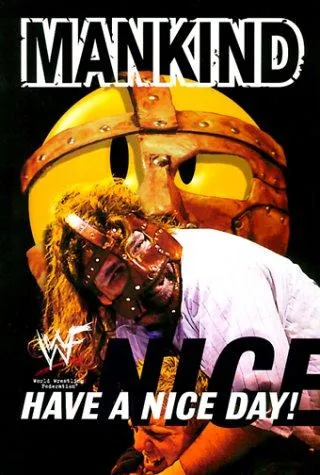
There’s also a great deal about the physical cost, and he’s honest about it in a way that’s uncomfortable. The Hell in a Cell match, the ear, the accumulated concussions, the decisions he made about his own body that he can’t undo.
He doesn’t present these as heroic and he doesn’t present them as regret. They’re what the job cost and he’s reporting the invoice.
The character work transfers to any writer. Foley invented several personas and explains how each was built, what each was for, and how a wrestling character has to be a real thing about the performer amplified and not an invention laid on top. That’s exactly true of a memoir voice.
What can a ghostwriter learn from Have a Nice Day?
Three things. The first is that specificity beats polish. Foley’s prose isn’t good by any technical measure. Sentences run long, tenses wander, and the structure is chronological because he didn’t know another way to do it. It doesn’t matter, because every page contains something only he could report.
The second is that a memoir voice should sound like the person on their best day. When I capture a client’s voice I’m listening for how they tell a story when they’re relaxed, and Foley is relaxed throughout, because there was no intermediary to perform for.
The third is the hardest to act on. If a client can write and wants to, the right advice is sometimes to tell them to write it themselves and hire an editor instead. That costs me a project and it produces a better book, and this one is the proof I point to.
Why does Have a Nice Day hold up?
Because it sold millions of copies to people who had never watched a match. That means the wrestling is the setting and not the subject.
The subject is a man with no advantages deciding what he was willing to spend to build something, and then spending it. That’s legible to anybody, and it’s why the book outlasted the era it documents and outlasted most of the memoirs published alongside it.
Foley is also very funny. That does more work than it gets credit for. A book about physical destruction that’s funny about it is a much harder thing to write than either a solemn version or a jokey one.
Verdict
The best sports memoir I’ve read and one of the strongest arguments available for an author writing their own book when they can. If you’re considering a ghostwriter, read this first and be honest with yourself about which category you fall into. Most people should hire one. A few shouldn’t, and the few who shouldn’t are the ones who can already hear their own voice on the page.
Explore further
The Writing Hub: craft, technique, and the books worth learning from.
Frequently Asked Questions
Other Books From – Biography and Memoir