Latest
What’s New at The Writing King: Week of October 25, 2026Challenger Remembrance Day: The Engineer Who Wouldn’t SignJoel Salomon: The Truth About MoneyReddit Is Putting Up a Login Wall. Wikipedia Won’t Be Far Behind.Victoria Chemko: The Body Is the First TechnologySir Patrick Stewart: A TributeA Yale Economist Says We Won’t Be Missed. He Forgot the Bread Line.Walter Koenig: A TributeAI Has Paid Off Outside Tech. Apollo Is Reading the Wrong Scoreboard.I Don’t Post Bad ARC Reviews. I Send the Author a Note.The Little Red Book of Stuff That Works!Your Kids Are Your Own FaultGrow a PairYou’re Broke Because You Want to BeIt’s Called Work for a Reason!No Time for TactShut Up, Stop Whining, and Get a LifeWilliam Bessette: AI Enablement and Child Welfare TechnologyFree Book Planning ToolsWhat’s New at The Writing King: Week of October 18, 2026Ghostwriting by the Numbers: Timelines, Word Counts and the First CallPromising Young Woman (2020) ReviewBillions for AI, Pennies for the Plumbing: AI Companies Should Pay to Keep PHP AlivePHP2Shell: AI Found a 22-Year-Old Crack Under Your Website in Two DaysPetrov Day: The Officer Who Didn’t Believe the ComputerKindle Unlimited Is Now Kindle+. AI Audiobooks Just Joined the BuffetChina Is Using Bots to Fan the Data Center Backlash. The Backlash Is Still Real.The Society of Authors Signed an Ethical AI Charter, Then Ran From It in Eight DaysMo Gawdat Says the AI Dystopia Starts in 2027. Read the List, Skip the DatesWhen to Quit Writing a Book: I’ve Abandoned Dozens, and I’d Do It AgainGetty Images Filed for Bankruptcy. Can You Prove You Licensed Your Book’s Images?Fluff Words: Cut Them From Your Prose, Keep Them in Your DialogueWhere Can Writers Learn Storytelling From Movies? Richard Lowe Publishes 1,226 Film and TV Reviews With Writing Craft NotesWhere Are the Independent Bookstores and Public Libraries Worth Visiting in Tampa Bay? Author Richard Lowe Profiles 44 of ThemWhere Can You Hear Founders and Executives Tell Their Own Stories? Richard Lowe’s Leaders and Their Stories Publishes Every Unscripted Interview With a Full TranscriptWhat Should You Know Before Hiring a Ghostwriter? The Writing King Publishes 57 New Answers, Including What to Do When It Goes WrongAuthor Richard Lowe Publishes Eight Volumes of Enemies of You, a Researched Series on the Forces Working Against Ordinary AmericansThe Jackal (1997) ReviewThe Day of the Jackal (2024) ReviewYour First Novel Is an Apprentice Piece: What Beta Readers and Editors Can’t FixWhen the Cloud Gets Bombed: What the AWS Data Center Strikes Teach About BackupsHuman-Written Book Labels Are Gatekeeping With a FeeThe Enshittification of Microsoft Office: Why I Switched to a Free CloneGlobal Encryption Day: The Padlock Every Writer Depends OnWriting Your Worst Moments in a Memoir: Show the Evidence, Skip the VerdictHow to Register a Copyright for Your Book (and What Doesn’t Count)Your AI Chats Aren’t Private: Deleted ChatGPT Logs in CourtThe Board Seat Scam: A 419 Letter in a Business SuitI Joined the Science Fiction Book Club 30 TimesCitations in a Memoir: Endnotes, Footnotes and Fair Use

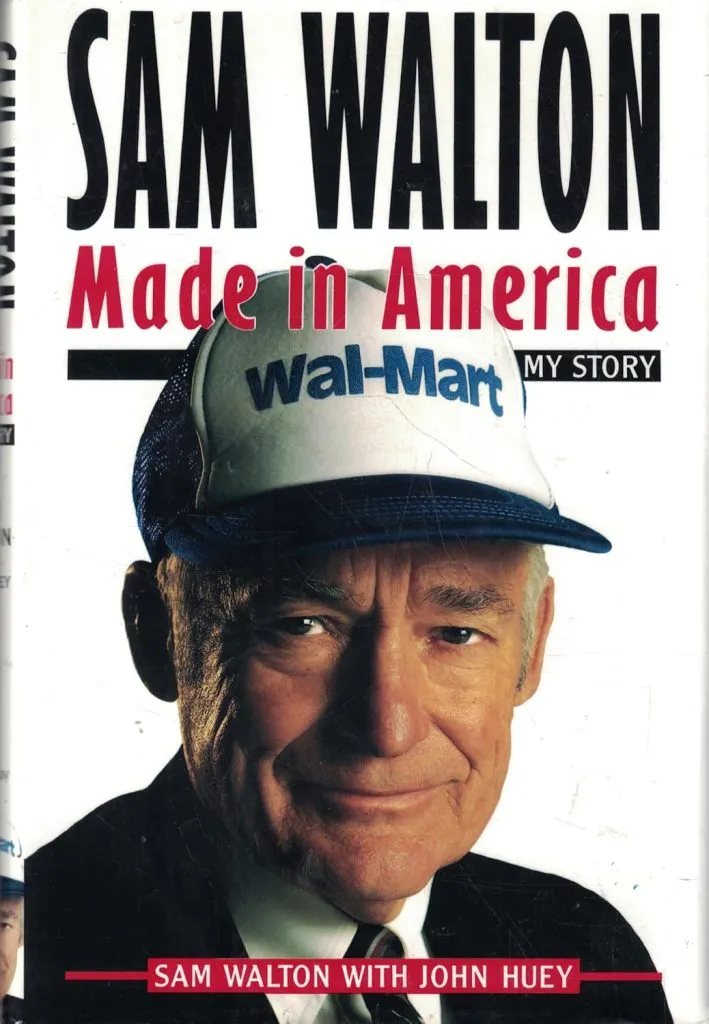
Sam Walton: Made in America: My Story

Sam Walton: Made in America: My Story

My Story

Publisher:Doubleday
ISBN:0385426151
Pages:269
ISBN:9780385426152
Language:English
Share:

Buy Now

Description:

TL;DR

Sam Walton’s own account of building Walmart from a variety store in Arkansas, written with Fortune editor John Huey and published shortly after Walton died in 1992. It’s the founder’s memoir of the biggest family business story in American retail.

Sam Walton ran a variety store in Newport, Arkansas, in 1945. He opened the first Wal-Mart in Rogers, Arkansas, in 1962. By the time he died in April 1992, it was the largest retailer in the world and his family was one of the richest in the country.

He told the story himself, in a book that came out just after he died.

Sam Walton: Made in America was written with John Huey, a senior editor at Fortune, and Doubleday published it in 1992, shortly after Walton’s death.

What does Sam Walton cover in Made in America?

Walton’s life and his business, in his own voice. He covers his childhood in Missouri, his business degree from the University of Missouri, his first Ben Franklin franchise and the five-and-dime he opened in Bentonville in 1950. From there he takes the reader through the first Wal-Mart Discount City in 1962 and the decades of growth that followed, store by store and town by town across the rural South and Midwest.

He also explains how he ran the company: partnership with employees, whom he called associates, relentless thrift, a love of competition and a list of rules for building a business.

He writes about his family, his money and the celebrity he never wanted.

Forbes had named him the richest man in America from 1985 to 1988.

How did John Huey come to write Made in America with Sam Walton?

Huey had landed one of Walton’s rare long interviews in 1989 for Fortune. That relationship turned into the book. Huey later became editor-in-chief of Time Inc.

How was Made in America received?

As a classic almost immediately. The New York Times Book Review called it a sure-fire all-American success story, and it has stayed in print for more than three decades in one edition after another.

What should a founder take from Made in America?

The rules. Walton ends with his ten rules for building a business, and they’re the most quoted pages in the book. They’re short, plain and practical, and every one of them comes out of a story told earlier in the book.

A founder’s memoir works best when the lessons come out of the stories instead of sitting on top of them. Walton tells you what happened for two hundred pages, and only then tells you what he thinks it means.

Why does Made in America belong on this shelf?

It’s the classic founder’s memoir, and it was written just in time.

Walton worked on it in the last years of his life. A professional writer who already knew him and the company made it possible to get the story down while he could still tell it. Without that collaboration, the most famous family business story in American retail would have been told by everyone except the man who lived it. Families waiting for the right moment to record a founder’s story have less time than they think.

Keep reading

Hiring a ghostwriter for a family business history: how families turn the story behind the business into a book before the people who remember it are gone.

Sources

Frequently Asked Questions

Who wrote Sam Walton: Made in America?
Sam Walton wrote it with John Huey, a senior editor at Fortune. Doubleday published it in 1992.
When was Sam Walton’s Made in America published?
In 1992, shortly after Sam Walton died in April of that year.
When was the first Walmart opened?
Sam Walton opened the first Wal-Mart Discount City in Rogers, Arkansas, on July 2, 1962. He had opened his Walton’s five-and-dime in Bentonville in 1950.
What were Sam Walton’s rules for running a business?
Sam Walton’s approach was treating employees as partners, keeping costs low, competing hard and following a set of rules for building a business that he lays out in Made in America.
Who is John Huey?
A former senior editor at Fortune who interviewed Walton in 1989 and later became editor-in-chief of Time Inc.
Is Walmart still a family business?
It’s a public company, but the Walton family remains its largest shareholder, and Sam Walton’s son Rob succeeded him as chairman.
Categories and tags
CategoriesMemoirs

About the author

Sam Walton with John Huey

John Huey

John Huey was a senior editor at Fortune when he landed one of Sam Walton's rare long interviews in 1989. He went on to write Sam Walton: Made in America with Walton and later became editor-in-chief of Time Inc.

More about John Huey

Sam Walton

Sam Walton founded Walmart, opening the first store in Rogers, Arkansas, in 1962, and built it into the largest retailer in the United States. He wrote Sam Walton: Made in America with Fortune editor John Huey in the last months of his life, and it was published in 1992, shortly after his death.

More about Sam Walton

Back