TL;DR
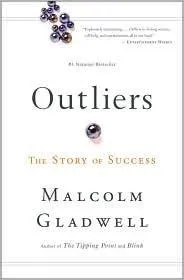
7/10. Success explained by birth date, timing, culture, and accumulated opportunity instead of individual brilliance. The best Gladwell book and the source of the ten thousand hours claim, which the researcher whose work it came from says is a misstatement.
The examples are why it stuck, and they’re unusually well chosen.
Canadian elite hockey players are disproportionately born in the first months of the year. Bill Gates had access to a computer terminal as a teenager in 1968, when perhaps a few dozen people his age in the world did. Jewish lawyers shut out of white-shoe New York firms in the 1950s took the work nobody wanted, which was hostile takeovers, and were the only people who knew how when takeovers became the business of the 1980s.
The argument is that the story of individual merit systematically hides the accumulated advantages that made the merit possible.
What is the hockey example in Outliers?
The cleanest demonstration of a structural effect I’ve read in popular nonfiction. Canadian youth hockey uses a 1 January cutoff for age grouping. A boy born in January is playing against boys born in December of the same year, which at nine years old is a considerable difference in size and coordination.
The bigger boys get selected for the better teams. The better teams get more ice time, better coaching, and more games. A year later the gap is no longer about birth month, it’s about accumulated practice, and by the time anybody is scouting professionally the advantage has compounded into something indistinguishable from talent. Nobody designed a system to advantage January births. The system does it anyway, invisibly, and it produces a professional cohort skewed toward the first quarter of the year in a way that’s been documented repeatedly. That’s the whole book in one example: a small arbitrary advantage, compounded by a selection system, presented afterward as merit.
Watch: Malcolm Gladwell - Outliers, London Business Forum
Why is Outliers the best of Gladwell’s books?
Because the thesis is uncomfortable in a useful direction.
Most success writing flatters the reader by implying the reader earned the outcome. This one says the outcome was considerably assembled from things nobody chose, including when you were born, what your parents happened to have in the house, and which decade you finished school in.
That’s a harder sell and it’s the more honest position. It’s also, applied to yourself, uncomfortable. That’s the test of whether an argument is doing anything.
The chapter on the Korean Air crashes and cockpit communication is the other standout, and it makes an argument about cultural deference and hierarchy that’s more careful than its reputation, though it’s drawn criticism from people who know the aviation record better than Gladwell does.
Is the ten thousand hours rule accurate?
No, and the most quoted idea in the book is the one it gets wrong.
Anders Ericsson, whose research it came from, said repeatedly and publicly that ten thousand hours was an average across one group of violinists at one academy, not a threshold, and that individual variation within that group was enormous. Some reached elite performance in far less; some never did with more. More importantly, Ericsson’s actual finding was about deliberate practice, meaning structured effort at the edge of your current ability, with feedback, on the specific things you can’t yet do. Time spent doing what you can already do doesn’t count and doesn’t accumulate. That simplification is why people have spent twenty years counting hours instead of structuring practice, and counting hours is a dumb way to get better at anything. It’s the clearest single example I know of what happens when a popular writer rounds a finding into a slogan, and the slogan traveled far further than the correction.
What should you read instead on practice?
Ericsson directly. Peak, written with Robert Pool, is his own account and it’s explicitly a correction of the ten thousand hours version.
The distinction that matters for a writer is that deliberate practice requires working at the edge of your ability with feedback. Writing another chapter the way you already write chapters is production and not practice. Rewriting a scene six ways to find out what each does is practice.
Plenty of writers point to a stack of finished drafts as proof they’ve practiced, and the stack proves nothing about improvement. Most writers do a great deal of the first and almost none of the second, and the hours accumulate without the ability moving, which the ten thousand hours version can’t explain and Ericsson’s can.
Verdict
The Gladwell book I’d keep. The argument about hidden advantage is sound and worth internalizing, especially if you’re inclined to explain your own results by your own qualities.
Ignore the ten thousand hours figure and read Ericsson directly if the practice question interests you, because the version in this book has probably wasted more time than any other idea in popular psychology. That’s a lousy legacy for a book this smart.
Explore further
The Psychology of Writing Hub: what drives creative work and what stops it.