TL;DR
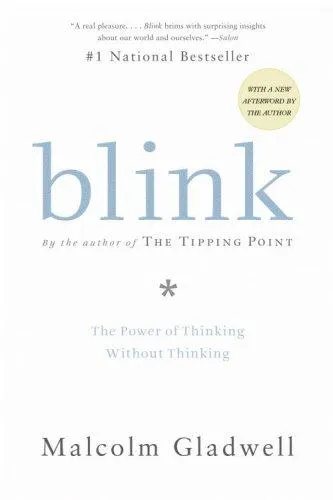
6/10. Rapid unconscious judgment, and the awkward fact that the same mechanism produces both the expert who spots a forgery in two seconds and the officer who shoots an unarmed man. The book knows this and never fully resolves it. That’s the most interesting thing about it.
Gladwell opens with the Getty kouros, a Greek statue the museum bought after fourteen months of scientific analysis concluded it was authentic. Several art experts who saw it knew immediately that something was wrong. One said intuitive repulsion. Another wondered why it looked fresh.
They were right and the analysis was wrong, and none of them could explain how they knew. Blink frustrates me more than a weaker book would. Gladwell stumbles onto a serious problem and writes around it, and the opening story he builds everything on is shakier than he lets on. There’s still a real idea here, and it’s worth an afternoon.
From there he builds outward: a psychologist predicting divorce from a few minutes of recorded conversation, a tennis coach who can call a double fault before the racket moves, marketers, food scientists, musicians auditioning behind screens. His term is thin-slicing, meaning judgment from very small samples.
What is thin-slicing?
The claim that the unconscious mind can reach a reliable conclusion from a very small amount of information, and frequently a better one than deliberate analysis produces. The mechanism, as Gladwell describes it, is pattern recognition built by experience. The art experts had seen thousands of kouroi. The psychologist had coded thousands of hours of couples talking. The knowledge is real and it’s not available to introspection. That’s why the experts couldn’t say how they knew. The corollary is that asking somebody to explain an expert judgment can make it worse. Verbalising forces the reasoning into a channel it didn’t come through, and the explanation frequently ends up being a plausible story instead of an account of the actual process. That point about verbalizing is the part I’d keep. Ask an expert to justify a gut call and you’ll often get a tidy story that has nothing to do with what the gut noticed, and too many workplaces demand exactly that.
Watch: Malcolm Gladwell's Blink // Book Summary in 5 Minutes, Castig
Where does Blink turn on itself?
About halfway, when he reaches the Amadou Diallo shooting and the implicit association literature.
The same fast unconscious process that lets an expert know something in two seconds also produces racial prejudice, and it produces it in people who sincerely reject it and would fail no conscious test of their own beliefs. To his credit he doesn’t paper over this. The Diallo chapter is careful and it’s the most serious writing in the book.
I respected Gladwell most in the Diallo chapter. He could have stayed with the flattering half of his thesis, and he didn’t.
The problem is that the two halves give directly opposing advice. Trust your instant judgment; your instant judgment is prejudice you can’t see. Gladwell argues both and supports both, and the resolution offered, which is roughly that context and training determine which one you get, is thinner than the setup deserves. A more disciplined book would have made that tension the subject instead of a complication.
That’s my main complaint. The contradiction is the most interesting thing he found, and he treats it like a speed bump.
What in Blink survives the criticism?
The blind audition material. That’s the clearest evidence in the book and points away from its own thesis.
When American orchestras began placing a screen between the musician and the hiring panel, the proportion of women hired rose considerably. Some went further and had candidates remove their shoes, because a heel on a wooden floor was enough of a signal.
The panels were experts. Their thin-slicing was confident and it was wrong, and no amount of training or good intention fixed it. A physical barrier did. Take that as the lesson of the book. Snap judgments go unexamined, and the remedy is structural. A screen did what good intentions couldn’t, and I find that more persuasive than anything else Gladwell argues.
What are the criticisms of Blink?
Real, and from people qualified to make them.
The implicit association test material has aged badly. Its predictive validity for individual behavior has been challenged repeatedly and the current position among researchers is considerably more cautious than the book’s.
The Getty kouros case is also less clean than presented. The statue’s status remains disputed and not settled as a forgery. That weakens an opening the whole book rests on. And the general Gladwell objection applies. Cases selected to fit, contrary evidence given little room, and confident conclusions drawn from work the researchers themselves describe more tentatively. Those criticisms matter to me because a lot of readers take Gladwell as settled science. A stylist this persuasive owes his audience clearer warnings about which findings are shaky.
Verdict
The weakest of the three Gladwell books I have entries for, and still worth reading for the screen.
It’s a book that discovers a serious problem with its own thesis halfway through and keeps going. That’s honest and unsatisfying at once. Read Outliers first if you’re reading one.
I’d still hand someone this book for the orchestra chapter alone. I’d just want them to close it trusting their gut a little less.
Explore further
The Psychology of Writing Hub: what drives creative work and what stops it.