TL;DR
Irvin Yalom’s 1989 collection of ten case stories from his psychotherapy practice. It reads like short fiction, it’s unusually honest about the therapist’s own mistakes, and it’s the book I point clinicians to when they ask how to write about patients.
Therapists who want to write a book usually stop at the same question. How do you write about patients without betraying them?
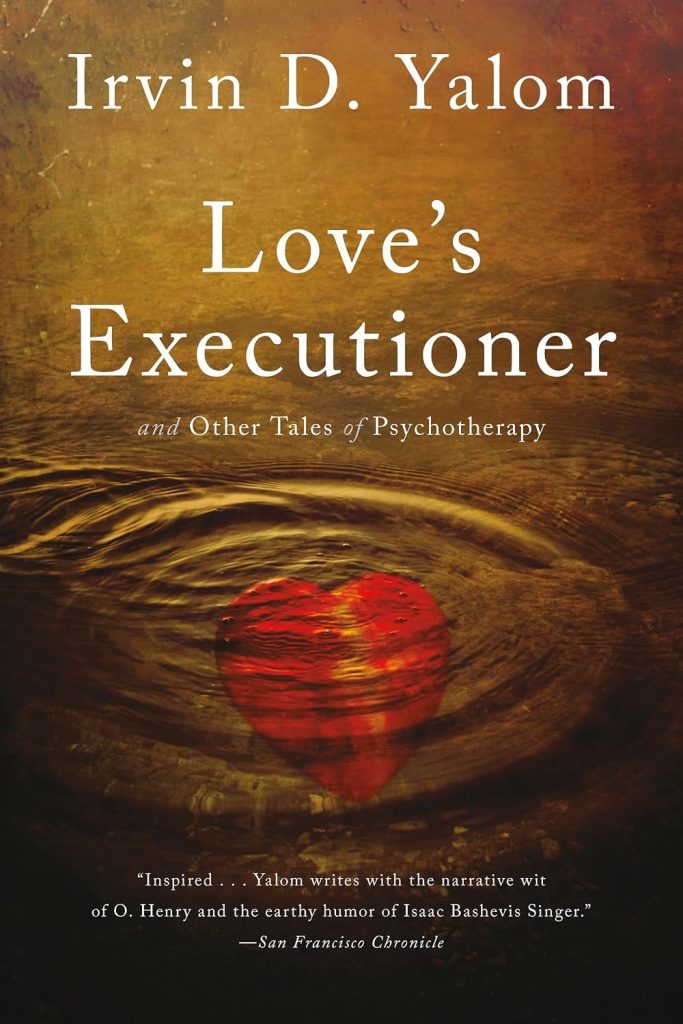
Irvin Yalom answered it in 1989. Love’s Executioner is ten stories from his practice, disguised so thoroughly that the patients can’t be identified and written so well that they read like short fiction.
What is Love’s Executioner about?
Ten patients, ten problems, and one therapist trying to help. In the title story, an elderly woman named Thelma is still obsessed with a younger therapist who had an affair with her years before. In another, a patient carries three unopened letters he can’t bring himself to read. Others deal with grief, a dying man’s fury, a woman haunted by a dead child and a patient who can’t let go of a lover who abandoned her.
Underneath every case are what Yalom calls the four givens of existence: death, freedom, isolation and meaninglessness. His argument, from his years of existential psychotherapy, is that a lot of what brings people into therapy comes from running into one of those four. The stories show him finding the given under the symptom.
Why is Love’s Executioner so candid?
Because Yalom puts himself on the page too, flaws included. He admits when he was bored, when he disliked a patient and when he got it wrong. The story readers argue about most is “Fat Lady,” in which he confesses his revulsion at a patient’s weight and then describes how the therapy changed both of them. Some readers find it hard to take. Others think it’s the most honest thing in the book.
Either way, it isn’t the voice of a professional protecting his image.
Who is Irvin Yalom?
An American psychiatrist, born in Washington, D.C., in 1931, and a professor emeritus at Stanford. He wrote standard textbooks on group therapy and existential psychotherapy before he turned to stories. After this book came novels, including When Nietzsche Wept. It built a fictional friendship between Nietzsche and the physician Josef Breuer.
What should a therapist writing a book take from Love’s Executioner?
That the composite and the disguise are the tools, and they work. Yalom changed names, ages, occupations and circumstances until the patient vanished and the clinical truth stayed. Every therapist writing about practice uses some version of that technique, and his book is the clearest model of it on the shelf.
The other lesson is the honesty. A clinician who writes only about successes produces a brochure. Yalom wrote about where he struggled, and the book is still in print after thirty-five years and still assigned to students who are learning what therapy feels like from the chair across from the patient.
Keep reading
Writing a book as a therapist: how clinicians write about patients without breaking confidentiality, and why the composite case works.