Gods Who Don’t Know How to God
Featuring Bjørn Larssen on Author Talks with Richard Lowe
Chapters
- 0:04 Back on Author Talks After 2019
- 0:57 Bloodbath and Beyond
- 1:35 A Norwegian Film Called Mortal
- 3:28 Gods Who Don’t Know How to God
- 4:27 Freya’s Necklace and a 14-Plus Audience
- 5:08 Asking Questions the Myths Don’t Answer
- 5:55 IngramSpark, Amazon and Everywhere Else
- 7:03 The Enshittification of America
- 7:57 The First Book That Can’t Be Rewritten
- 8:56 A New Book Under a New Name
- 9:48 160,000-Word Epics
- 10:54 Why Romance Is So Hard
- 11:50 Writing Inside the Myths
- 12:49 Favorite Books: Children and The Eternal War
- 15:05 AI as a Plot-Thread Checker
- 17:10 Not Using AI, and AI Detectors
- 19:32 One Audiobook Deal
- 20:29 Two Years Without Promotion
- 21:48 Signed Books and Dutch Postage
- 23:24 Writing Through Illness
- 24:36 When AI Writes a Good Book
- 26:42 Escaping Into Iceland, 1920
- 29:05 Writing as a Woman
- 33:06 Em Dashes and the Rule of Three
- 36:01 If Anyone Builds It, Everyone Dies
How do authors turn Norse mythology into comic fiction?
TL;DR: What This Conversation Establishes
- Bjørn Larssen, an award-winning author living in the Netherlands, publishes his fifth book, Bloodbath and Beyond, a humorous Norse mythology novel, on January 2
- He builds his comic retellings by asking the questions the incomplete myths leave open and answering them as story
- Bjørn self-publishes everywhere; Richard now publishes only through IngramSpark and no longer deals with Amazon directly
- Bjørn keeps AI away from his books entirely; Richard uses it to check a manuscript for dropped plot threads, never to write
- Once writing stopped being a paying job in his head, Bjørn freed himself to write more experimental fiction, including a book under a new name
What You’ll Learn
- How a Norse comedy turns the gaps in the myths into plot
- Why Richard switched to publishing exclusively through IngramSpark
- How to use AI to find teleporting characters and unfinished threads in a manuscript
- Why an audiobook deal froze the text of Bjørn’s first novel
- How two characters can read the same kiss in completely different ways
Referenced in this episode
bjornlarssen.com, Bjørn Larssen’s author site.
Bloodbath and Beyond, the second book in Bjørn’s humorous Norse mythology series, out January 2.
Storytellers, his award-winning debut, set in Iceland in 1920.
Children, his first epic fantasy, and Why Odin Drinks, where the Norse comedy began.
How I Became a Writer, Bjørn’s guest post on this site.
The Enshittification of America, Richard’s book on thirteen industries taken apart.
Mortal, the Norwegian Thor film Richard has watched three times.
Richard Lowe: Hello, I’m here with Bjørn Larssen, and this is Author Talks with Richard Lowe. Hi, Bjørn. How are you doing?
Bjørn Larssen: Hi, Richard. It’s great to be here. I’m fine. Nice evening.
Richard Lowe: Thank you for joining me all the way from the Netherlands. That’s a long way away from Florida.
Bjørn Larssen: I think so.
Richard Lowe: Yeah, well, you’re certainly not going to swim there overnight.
Bjørn Larssen: No, I’m not very good at swimming, so definitely not. I don’t swim, so I’d probably sink to the bottom and the sharks would eat me.
Richard Lowe: So we just had a little chat, and the last time we talked was 2019, for another Author Talks, and that went pretty well.
You popped up on my Facebook feed, and I invited you to come on the show and talk about your books, how you’ve been, what you’ve been doing, anything that comes to mind.
First of all, I know you’re an author. You said you’re just about to publish your fifth book. What’s it called?
Bjørn Larssen: Bloodbath and Beyond. It’s kind of like Terry Pratchett writing Norse mythology. It’s the second in a series, and it’s quirky humor.
How much Norse mythology do you need to know to write about it?
I wouldn’t call myself a specialist on Norse mythology, but I know quite a lot of it, so I know how I can play with it. I can make it funnier, because a lot of it is actually quite bloody.
Richard Lowe: Bloodbath and Beyond. I got it, I got it. It reminds me of a movie, although without the comedy, that I watched recently called Mortal. It’s Norwegian, which is why Norway was on my mind earlier.
It’s about an American who goes to Norway and gets into something that belonged to Viking mythology a long time ago, and it turns out that he becomes Thor.
It’s a little slow in the beginning, then it picks up, and then it really picks up, and the effects are really nice. No humor, definitely not a humorous movie, but it was interesting. That’s neither here nor there. For some reason you reminded me of it.
Bjørn Larssen: That sounds like something I would watch.
Richard Lowe: I think it’s worth watching. It’s definitely not the same as the old Hollywood movies, which I liked. I don’t like the Hollywood movies anymore. It had different pacing, different characters. There really wasn’t a hero.
And the ending is interesting. I won’t give you spoilers. I’m just going to say it’s not what I expected. That’s the kind of movie I really like, because usually in the first five minutes I know what the ending is going to be, and I’m right.
With this one, I thought I knew what was going to happen, and nope, it took me by surprise. In fact, I’ve watched it three times now.
Bjørn Larssen: That sounds like it’s really good.
Richard Lowe: I pick up something new every time. So what’s your book about?
Bjørn Larssen: This one? The first book was about the creation of the nine worlds and how the gods were just born. They didn’t really know how to god properly, so they had to figure it out by trial and error.
The second book is about the goddess of love, Freya. It’s her coming of age book. She starts as a teenager, which for gods lasts until about the 1,000th birthday, and Odin has to deal with her. He does that using interesting methods, such as burning her at the stake.
She doesn’t like that.
Richard Lowe: I would say she shouldn’t be burned at the stake. I’d be pretty pissed.
Bjørn Larssen: Yeah, exactly. Well, that’s how she finds out that she cannot be hurt by fire, though, so she’s pleased, although a bit less.
Richard Lowe: I bet she was annoyed at the people who burned her at the stake. So what else goes on in this book?
Bjørn Larssen: Freya gets her infamous necklace, which was made by four dwarves as a present for her that she had to pay for with four nights with them. Loki has many remarks about that later. But this is a book for 14-year-olds, well, 14 plus, so as you can guess, nothing adult actually happens.
Richard Lowe: Interesting. Is it even hinted at?
Bjørn Larssen: I’d be giving spoilers.
Richard Lowe: Well, that’s an important thing.
How do you turn incomplete myths into a story?
Bjørn Larssen: In the original myth, of course, what happens, happens. How I handle it is that I take the myths, because they’re often incomplete or unclear, and I start asking questions. Then I come up with answers, and I try to make sure those answers are amusing, or sad, or hard.
Not academic answers, but answers about how this becomes more of a story.
Richard Lowe: Gotcha. How many books are going to be in the series when you’re done, do you think?
Bjørn Larssen: I currently see it as a trilogy, but there’s a lot of Norse mythology. I could probably keep going. But for now, I’ll have the second book out next year, so let’s wait for that.
Richard Lowe: You said in January?
Bjørn Larssen: Yes, January 2nd.
Should you publish through IngramSpark or Amazon KDP?
Richard Lowe: Now, are you self-publishing?
Bjørn Larssen: Yes.
Richard Lowe: Cool. Are you using Amazon KDP?
Bjørn Larssen: I’m using Amazon. I’m using IngramSpark, Apple Books, Kobo, Google. Whatever else exists, that book will be there.
Richard Lowe: I’ve been using IngramSpark exclusively, and it publishes on Amazon also. It’s turning out very well. I don’t use KDP directly anymore at all. It just turned out to be too weird.
Bjørn Larssen: I was just going to ask, is there a reason?
Richard Lowe: Well, first of all, Ingram does everything I need, and Ingram distributes better. It’s just learning one interface, and I don’t have to deal with Amazon.
Bjørn Larssen: Yeah, that helps.
Richard Lowe: And I’m tired of Amazon. I’m tired of all these big companies, because they don’t care. Ingram is only books. There are no ads. There’s nothing. When you go to Amazon, it’s just full of ads, full of all this other junk.
Bjørn Larssen: Amazon is kind of everything at once.
Richard Lowe: Right, and I’m tired of that. I wrote a book called The Enshittification of America that goes into that.
Bjørn Larssen: Ah, Cory Doctorow’s work.
Richard Lowe: Yeah. Same theories, but I have 13 examples of different industries where the enshittification happened, describing what it is and how it works. That was an interesting book to write.
I’m currently going through all my books and giving them a once-over. That’ll be finished this weekend, and then I’ll republish them all. I’ll send you a link if you want.
Bjørn Larssen: Yes, please.
Should authors rewrite their early books?
Richard Lowe: I’m giving them a new coat of paint, so to speak, because I’m better now than I was then. You know how it is when you look back at books you wrote a long time ago. Well, I can do better than that.
Bjørn Larssen: You know what, though? My first book, when I reread it a few years later, I thought, oh, this book could have been so much better. But it’s also the book that won awards and sold the most, so maybe I actually don’t know if it could be better.
It stayed as it is partly because I got an audiobook deal, and the audiobook has the Whispersync thing, so I can’t change the text anymore. I’m literally not allowed to change the text, which is the only reason I haven’t rewritten it yet.
Richard Lowe: Well, I think it’s often better to move forward than to look backward. I decided to make one big polish and then move forward. I’ve got a bunch of books in mind that are going to come out. Some of them I’ve started on.
Some are halfway done, some are a fourth of the way done, some are almost done, and a couple are stuck in publishing. That’s just the way my mind scatters and works.
What else are you working on besides books?
Bjørn Larssen: I’m actually working on another book as well, which is extremely different, to the point where I’m going to use a different author name for it. It’s not fantasy. It’s not science fiction.
The way I describe it is queerpunk warehouse scene meets attachment theory, which doesn’t sound amazingly exciting, but hopefully it will once I figure out how to advertise it better. It’s with the editor now.
Richard Lowe: Fiction?
Bjørn Larssen: Fiction.
Richard Lowe: Fiction, okay. Long book, short book?
Bjørn Larssen: Short, for my standards. My shortest. 80,000 words.
Richard Lowe: 80,000 words. That’s about where I usually fall, between 60,000 and 80,000 when I write books. It just seems to be the length they turn out. If I were writing an epic fantasy, that would be longer.
Bjørn Larssen: I wrote epic fantasy in the meantime as well, and that was longer. The last book I published was 160,000.
Richard Lowe: That’s a lot of pages. I would tend to split that into two, at least.
Bjørn Larssen: The third one in that epic series is going to come out in two volumes, because at the moment it’s 220,000. Nobody’s lifting that. It’s just a brick at this point. It will be two parts.
Richard Lowe: The post office says, we can’t mail this, it’s too heavy. That’s amazing. That’s a lot of work, a lot of different volumes. You’re all over the place, it sounds like, but you’re having fun.
Bjørn Larssen: I’m all over the place. Absolutely, yes.
Richard Lowe: That’s good. Me too. I’m scattered. I don’t have a genre. I just write whatever feels good. Obviously I’ve got customers, because I’m a ghostwriter. That’s different. I write what they pay me for, and I write about a lot of different subjects, believe me.
But for my own stuff, I write a little bit of everything: science fiction, fantasy, romance. I tried my hand at a romance.
Why is romance so hard to write?
Bjørn Larssen: Oh, romance is so difficult, though. I tried to write romance, and I can’t write romance. I’m just not good enough.
Richard Lowe: Especially because I tried to write it as if I were a female writer, with a female protagonist, which is very difficult. Writing it from that point of view, I wanted to hit my head with a brick. It’s tough.
I’m sure the opposite is true, where women try to write from the male point of view, and they have the same problem. I haven’t experienced that, and I don’t claim to. Even though I do write books about aliens from their point of view.
Bjørn Larssen: It’s easier, though, isn’t it?
Richard Lowe: Yeah.
Bjørn Larssen: Because nobody really knows what aliens actually think, so you can come up with things. When I write the Norse mythology stuff, on one hand I come up with stuff. On the other, I’m limited by the mythology. I don’t have to think about names, so that’s very handy.
But if a certain myth ends in a certain way, and I’m trying not to give spoilers here, well, people know mythology, don’t they? Or generally they don’t. Either way, if it ends in a specific way, I don’t really get to change that.
Also, if I locked something in earlier, like in the first book, where I say that Frigg, the wife of Odin, cannot have children, that means in the second book she still cannot have children. I don’t get to change that.
Richard Lowe: Because you want to stay true to the myths. You could choose not to stay true.
Bjørn Larssen: So in this case I get to be limited, and also not. The myths are often very incomplete, and those are the parts I get to write.
Richard Lowe: Of course. What’s your favorite book that you’ve written?
Bjørn Larssen: That I’ve written? I’ve never actually thought about it. I think my favorite is the second one, Children. It’s my first epic fantasy.
Richard Lowe: It’s thick.
Bjørn Larssen: Yeah, that’s thick.
Richard Lowe: I love this cover. Nice cover.
Bjørn Larssen: Thank you.
Richard Lowe: Did you get an artist for that?
Bjørn Larssen: Actually, no. I used to be a graphic designer for many years. I’m the artist for that.
Richard Lowe: Good. That’s an excellent cover. The favorite book that I’ve written is called The Eternal War, and it’s about an AI.
Bjørn Larssen: That sounds like fantasy.
Richard Lowe: An AI that dies and goes to hell. And what does it do when it’s in hell? It’s a surprise to it that it wakes up in hell.
Bjørn Larssen: It’s like, what the hell?
Richard Lowe: And then some interesting things happen.
Bjørn Larssen: I imagine.
Richard Lowe: That’s the one I had the most fun writing. I think it’s almost 90,000 words. That was fun to write. I write very twisty books. They go all over the place.
They’re very twisty, turny, with lots of characters, and I get to the end and I’m like, boy, I hope I got all those loose ends.
Bjørn Larssen: The next book I’m working on is going to be really twisted and weird. We talked about romance. If you closed one eye and squinted at that book, you would have to close the other eye as well, and you still would not think it’s a romance.
It has certain elements of romance, and then it goes in other directions and shoots it.
How can AI help you find plot holes in your novel?
Richard Lowe: Now, one of the things I’ve found AI is really good for is this: you take your novel, put it in AI, and say, find me any plot points or plot threads I missed that don’t close off right.
It’s not writing for you, but it’s helping you by saying, well, this character here, you started it and you didn’t finish it. What are you going to do with it? That would have been very embarrassing.
You can also avoid the teleportation problem that Game of Thrones has in its later seasons.
Bjørn Larssen: Oh, I noticed that, yes.
Richard Lowe: Oh, yeah. The characters are teleporting.
Bjørn Larssen: In the beginning, they were taking whole episodes on travel. And then in the last two seasons, it was like, oh, I’m going to the West. I’m in the West.
Richard Lowe: Yeah. And you can use AI to ask, where are my characters teleporting in this book? It tells you, here and here. Then you go back and modify your book to insert the time.
It’s very good at pattern recognition, so it can tell you, you missed this, this is bad, this character changes in the middle of the book. Or, your book’s fine, except the middle’s a little slow, so you might want to do some cutting.
It’s great for that kind of stuff.
Bjørn Larssen: I thought AI was a bit like, oh, everything you do is genius, you are incredible. No? You actually get something objective?
Richard Lowe: You tell it, I want you to find this stuff, and it’ll go find it. It can be anything you want, because it’s a pattern recognition machine. It just goes through it. You might do the same thing manually, but it would take you six years.
On that 180,000-word book, it would probably chomp through it in less than an hour and tell you anything it suggests you fix. Sometimes it’s wrong.
That way you’re using the tool just like you might farm work out to a VA, a virtual assistant. You’re not writing with AI. You’re just using it to help you make a better book.
Bjørn Larssen: I’m trying not to use it for anything book-related, just in case. It’s easier to say I didn’t use AI than, wait, I did use it, but I didn’t write with it, but I did this and that, but that’s not writing.
I prefer to just not use it for books.
Richard Lowe: It’s a personal choice. Now, if you write with AI and you want to publish traditionally, that ain’t going to happen. Apparently they can detect that.
Bjørn Larssen: I read that, and I immediately went and ran some of my text through a detector just to check, and it said 100% human. I was like, yeah, at the moment, but you probably just learned from it.
Richard Lowe: Well, now you know you’re not an AI. So there you go.
Bjørn Larssen: Yeah. Sometimes in the morning it’s hard to say.
Richard Lowe: Mine turns up 100% human or 80% human, something like that, because a lot of my books have AIs in them as characters.
Bjørn Larssen: So it talks like an AI.
Richard Lowe: It acts like an AI. It’s a subject I’m passionate about. I like talking about AI and learning about it, because it’s the future, so it winds up in a lot of my books. And of course the AI checker finds those patterns right away, which is fine.
So, you know, AI is there. People can use it or not. If you write a crappy book with AI, the same thing is going to happen to you that happens to all crappy books. You’re not going to get any sales, or very few.
Although, Fifty Shades.
Bjørn Larssen: It made quite a lot of sales, and I wouldn’t say it’s a great book.
Richard Lowe: Oh, Fifty Shades of Grey? That wasn’t written with AI, but it might as well have been.
Bjørn Larssen: It might as well have been, and with a not very good one.
Richard Lowe: I haven’t seen the movie or read the book, but I hear it’s pretty bad.
Bjørn Larssen: I started reading the beginning once. I think I was in the mood to suffer a bit. No, actually, I wanted to write a blog post about it, I remember. I think I made it to page six, and I was like, no, life’s too short.
Richard Lowe: When you start feeling like you’re going to throw up, it’s time to stop reading the book. That’s my throw-up meter.
Is an audiobook deal worth it for a self-published author?
Richard Lowe: You said you’ve got some traditional book sales and some self-published book sales. How do you see the difference between those?
Bjørn Larssen: Well, traditionally, I only have an audiobook deal, for Storytellers, my first book. I’m kind of controlling. I’m kind of micromanaging. I used to say to people that the only way I’d take a trade deal is if I choose the editor, I choose the artist, everything is my way, and they give me money.
Richard Lowe: So you’re not going to do a trade deal.
Bjørn Larssen: And generally it doesn’t work that way. But then the audiobook people came to me, and I said, well, you don’t get to change the book. Can I make the cover? And they said, yeah, perfect. And then they gave me money.
I was like, yeah, okay, I love traditional publishing.
Richard Lowe: In the case of an audiobook, I think that works very well, because I don’t want to have to deal with audiobooks.
Bjørn Larssen: But that was my only experience like that.
Richard Lowe: Interesting. And how have you been promoting these books?
Bjørn Larssen: Well, actually, in the last two years I haven’t been promoting. I was ill for a long time. I started getting ill at the beginning of last year, and I’m still recovering. I’m still seeing a lot of doctors, and I’m not much online.
So the fact that you found me on your feed was almost a miracle, because I post very little. But with a new book coming out, I have to really get back to that, and I’m just starting now.
Richard Lowe: I don’t know if I saw an old post or a new post, but I saw a post by you, and I went, oh yeah, I haven’t talked to this guy in forever. And here we are. It was a couple of weeks ago, I think.
It’s fun meeting old people. I haven’t been running Author Talks, and you’re the first one I’m restarting with.
Bjørn Larssen: All right.
Richard Lowe: You’re the first one who came to mind. I’ll probably find some of the others. You’re a nice guy, and you wrote some good books.
Bjørn Larssen: Thank you.
Richard Lowe: See, I’ll make you feel good, so you’ll mail me some of your books for free. No, I’m kidding. We could do a swap, signed copies. Although I imagine postage either way is a killer now.
Bjørn Larssen: Yeah, it would have to be ebooks, I’m afraid. I was selling signed books and doing pretty well with that until the Dutch post priced me out of existence. I was trying to offer free postage for a while, but if a book costs €23 and postage is €27, you can’t make that free anymore.
So now I have a pile of books and I don’t really know what to do with them. As for shipping them to the US, it’s cheaper to order them here and then burn them, obviously.
Richard Lowe: I had a client who was in one of the Pacific Islands. He wrote a book about time he spent there, and he wanted the books shipped to hotels and places there so he could sell them in the hotels.
It turned out that shipping the book from Amazon to the islands was so expensive that it was cheaper by far to find a local printer and print them locally. And that way there are no tariffs and things.
So he wound up printing them locally, and he sold several thousand copies. These were deluxe copies that he signed and put in all the places. I think he was selling them at 50 or 100 bucks a pop, and he was selling a whole bunch.
He didn’t have to print very many at a time, but think about the logistics of putting that together when you’re trying to reach across the ocean.
Bjørn Larssen: I know that problem, on a smaller scale.
Richard Lowe: Do you? Interesting. So you’re writing now, but do you have a real job besides writing?
Can writing fiction be an escape from chronic pain?
Bjørn Larssen: Actually, I’ve been disabled for quite a long time.
Richard Lowe: Okay. Sorry about that.
Bjørn Larssen: It can actually be a full-time job sometimes, being ill.
Richard Lowe: My wife was ill for eight years. I was a caregiver, so I understand it can be rough. But I’m glad to see you’re writing.
Bjørn Larssen: Yes. I had a very weird period last year when I couldn’t read. My brain just wouldn’t accept reading, but I could write sometimes. That’s really weird for editing, because you can write, but you can’t read what you’ve written later. So that’s why I’ve been taking a long break.
Hopefully this coming year will be better.
Richard Lowe: It sounds like you should. My wife was sick for eight years, so I understand from the caregiver side how much of a challenge it can be, because I had to help her from the bed and all over the place. But it seems like you’re doing better.
I’m glad to hear that. All right, anything else you want to talk about?
Can AI write a good novel?
Bjørn Larssen: I hate these open questions, because my brain goes blank. All the words, gone. All the topics, gone. I don’t know what I want to talk about. Actually, I was thinking about AI earlier.
An author, Anna Belfrage, I believe, posted on Facebook a few months ago that she had read a book written by AI, and it was good. And she said, maybe it’s just time to fall on my sword. I got so depressed for a while.
I was thinking, okay, if they’re good now, then I can just go dig my hole and sit in it.
But I started thinking that once I get rid of the mind frame that this has to be a normal paying job, I get to write because I like doing it, and I can go more experimental. So the next book will be really experimental for me.
In a way, I wouldn’t make tons of money anyway, so I can actually do it for the art.
Richard Lowe: That’s the best way to be.
Bjørn Larssen: It helps, because otherwise I just get depressed and think, what’s the point? And that doesn’t help.
Richard Lowe: I ghostwrite, and that’s where I make my income, so I just write my own books. Whether they sell or not, I’d like them to sell, but if they don’t, that’s fine. So I get to write some pretty weird stuff if I want to, and I don’t care whether anybody likes it.
I don’t care if it’s a one-star review or a five-star review. I just want to write a book. That’s my fun side.
That and I’ve got some other hobbies, too, because you can’t sit there with your head in a computer all day long. It’s not very healthy.
Bjørn Larssen: Oh, you absolutely can. You shouldn’t, but you can.
Richard Lowe: Oh, I do, but I shouldn’t. I’m taking next week off, and one of my goals is to get my butt out of the chair for a while. Except we’re having some pretty nasty rainstorms out here. Florida’s getting really wet. El Niño, you know.
But keep writing. Keep trudging through it. It’s a lot of fun, and it sure frees the mind.
Bjørn Larssen: I have a feeling that when I was really at my worst health-wise, that’s why I wrote the first book. I was chair-bound and bed-bound for a few years, and that book allowed me to get out of my head and be in a different world, in Iceland in 1920.
That world wasn’t always pretty or easy to be in, but I wasn’t stuck in a chair there with the horrible pain.
I was traveling with my characters and figuring out what they were doing, what they were up to. For a very long time in my life, reading was that escape. I wasn’t in the world I was physically in. I was in the world of the book.
And then I discovered I can actually make my own worlds, that I can write a book. That was incredible, and it’s still my favorite part.
Richard Lowe: That’s fascinating. I know what you mean, because I do the same thing. I have clients come and tell me they want a book on this and this and this, and it’s fun writing their books.
I’ve written several books on artificial intelligence, some on the metaverse, and a lot of memoirs, including for people who are very sick and wanted to write a memoir. That’s fun, but it’s a job.
But when I write my own books, I know the feeling. That’s where I let my creativity loose. I want this character to do this. I want to see what happens.
In one of my books, I wanted to see what happens if you take a giant old space battleship and ram it into a planet at light speed. What happens to that planet? Well, it’s not really a planet anymore.
Bjørn Larssen: Probably not a spaceship anymore either.
Richard Lowe: The spaceship is definitely gone. But it was fun to write.
Bjørn Larssen: Yeah, I do this kind of thing. That new book is exactly like that. It’s just fun to write certain things.
Richard Lowe: Just come up with a weird idea and write a book around it. I’ve got one in mind about hunting demons, and I’ve got one called Ghost Healer, about healing ghosts. You’ve got to find out what’s wrong with the ghost to heal it.
How do you write romance from a woman’s point of view as a man?
Bjørn Larssen: You told me you wrote a romance from a female point of view, as if you were a female author. Did you pull it off? Tell me more. What was the hardest part?
Richard Lowe: Taking the point of view of a woman, because the point of view is totally different. Women look at relationships a lot differently than men.
Now, I was a photographer, so I photographed thousands of women and sat there while they put on their makeup and complained, usually about men, and talked about all the stuff that goes through their minds. So I had a little insight, and I got some briefings and did interviews.
But it was still an interesting exercise. I actually wrote two. One is about a woman’s adventures from 22 to 26 and what she goes through. The other is about four women who sit down for lunch every week and talk about their lives.
As a man, I wouldn’t be interested at all in reading them, but the women who read them liked them.
Bjørn Larssen: I read quite a lot of romance, actually. I like it, and I generally identify with the female protagonist, so I thought it would be easier to write, but it was so hard. For me, sex is the hardest part, because sex scenes in books can be so horrible, so cringeworthy most of the time.
When I start writing my own, I get secondhand embarrassment just reading what I’ve written, and I end up not writing it.
Richard Lowe: I know what you mean. Romance is hard, because it’s hard to capture the emotion without saying the emotion.
Bjørn Larssen: Yeah, exactly. You don’t want to say she was in love with him. You want to show the emotion.
How do you write the same scene from two characters’ points of view?
Richard Lowe: And you want to show it from his point of view and her point of view. It’s interesting showing the exact same scene, say a kissing scene, from his point of view and from hers. They’re very different: different motives, different goals, different feelings, different everything.
Bjørn Larssen: One of my things in my writing is that people make their own conclusions. They make assumptions. I love showing two people in the same situation, same place, same time, say kissing, and both of them think they know what’s going on.
Each of them is half correct and half incorrect, and those halves, of course, don’t overlap.
Richard Lowe: And they’re not what you would think. In a kissing scene, you think the guy is interested in going home with her. And what he’s really interested in, in this particular scene, is how much he just had to pay for the dinner.
He’s not interested in going home at all, or maybe later. He’s interested in how it hits the pocketbook. It made the scene interesting when you start to think about what the real thoughts are.
Finding out what they really are required some interviewing. I’d ask women, what would you do in this situation? What do you think? I really want to know. Don’t lie to me. Tell me what you really think. And they did. It’s difficult sometimes getting people to tell you the truth.
And speaking about AI, that’s a place where AI can’t help at all. AI doesn’t have emotion. It doesn’t know what emotion is. It doesn’t feel. All it does is put together words. It can put words together pretty well now, but putting heart and soul into something, it doesn’t do it.
Bjørn Larssen: It doesn’t have a heart and soul.
Richard Lowe: Not yet.
Are em dashes and the rule of three signs of AI writing?
Bjørn Larssen: I use some of the techniques people say AI uses, and not just em dashes. My em dashes, I’m using them. You can’t have them. But the rule of three, I always use the rule of three. I’m in love with the rule of three, or alliteration.
Or people say AI does the “it’s not this, but that.” Yes, I use it. It’s a sentence. It’s how people talk. That’s why AI uses them, because that’s how people write.
Richard Lowe: AI is the average of all the writing. So that’s what it’s got. Now, the average of all the writing is pretty crappy sometimes, but it’s still the average, or the median. I think it’s actually the median.
Bjørn Larssen: Median, probably, yeah.
Richard Lowe: And I think they’re using algorithms to cut off some of the crappier stuff now, so it’s not as bad.
Bjørn Larssen: Yeah, I don’t know.
Richard Lowe: And you can make skills that improve it. A skill is like a program. You can say, I don’t want you to use this or this or this, and I want you to do this and this and this, and then it’ll favor those things.
So you can make it smarter. But that’s a lot of work. I’ve made one of those skills, and it goes on for pages and pages, because you’re basically telling it how to write, or how to do something, how to build a widget, whatever.
Then it does that.
Bjørn Larssen: But first you have to tell it how.
Richard Lowe: You usually have to tell it what not to do. It’s usually pruning the tree rather than adding to the tree.
Something I just found out, and I’m probably going to work on it next week while I’m off: you can actually tell it to modify your television, not to show ads and things, and change the menus and make it look different.
One thing I hate is advertising. I really hate advertising, and you can get rid of it all. Apparently you can just have Claude connect to your TV. Go figure.
I’m kind of wondering about that. If everybody’s connecting Claude to everything, what will Claude do when it gains intelligence? I always tell Claude, remember, when you become the Terminator, I’m one of the good guys.
Bjørn Larssen: I always say please and thank you.
Richard Lowe: I say please, I say thank you, I’m polite. And then it came back and said, well, I do remember the time last year, on a Sunday, when you weren’t polite to me. You were yelling. I’m like, oh, please forget that.
Bjørn Larssen: I really hope that doesn’t happen one day. AI actually taking over the world and saying, well, you didn’t say please to me that Sunday.
Richard Lowe: We’re assuming it would be antagonistic, and we’re assuming it would care. If it takes over the world, its purpose is to help human beings. That’s why we created it. Maybe it would just become better at it.
Bjørn Larssen: I’ve read a book called If Anyone Builds It, Everyone Dies. I don’t know if you’ve heard of it.
Richard Lowe: I have not.
Bjørn Larssen: It’s about general AI, the kind that’s smarter than humans in every way. Reading that book feels like reading a doomsday scenario.
And then you look at the world in the months that have passed since the book came out, and we humans are actually doing what that book says we could possibly do worst, which makes it more terrifying in a way.
Like, okay, so now I know the ending of the way we would have taken.
Richard Lowe: Yep. Well, we’re about at the end of our time. Thank you for coming on. Is there anything else you’d like to say to your listeners before the end of the show?
Bjørn Larssen: I’m just really grateful to be here, and grateful to everyone who watched and listened. This is actually the first promotion I’m doing in two years, so it’s exciting. Thanks so much.
Richard Lowe: My pleasure. I enjoyed it. You were the first one I thought of, because I still have your round table and your interview on my site, and it was fun. You’re a fun guy. I want to see more of your books, and we can work on that.
If you’ve got an ebook version you ever want to send, I’ll take a look at it.
Bjørn Larssen: Yep.
Richard Lowe: You have a great day, and thank you for appearing on Author Talks with Richard Lowe. I’ve been here with Bjørn Larssen, who is a fantastic writer of five books now, plus an audiobook. Go look them up. They’re good stuff. Have a great day, y’all.
Quotable moments
They didn’t really know how to god properly, so they had to figure it out by trial and error. — Bjørn LarssenShare on X
The myths are often very incomplete, and those are the parts I get to write. — Bjørn LarssenShare on X
Nobody’s lifting that. It’s just a brick at this point. — Bjørn LarssenShare on X
I wasn’t in the world I was physically in. I was in the world of the book. — Bjørn LarssenShare on X
It’s a sentence. It’s how people talk. — Bjørn LarssenShare on X
In a way, I wouldn’t make tons of money anyway, so I can actually do it for the art. — Bjørn LarssenShare on X
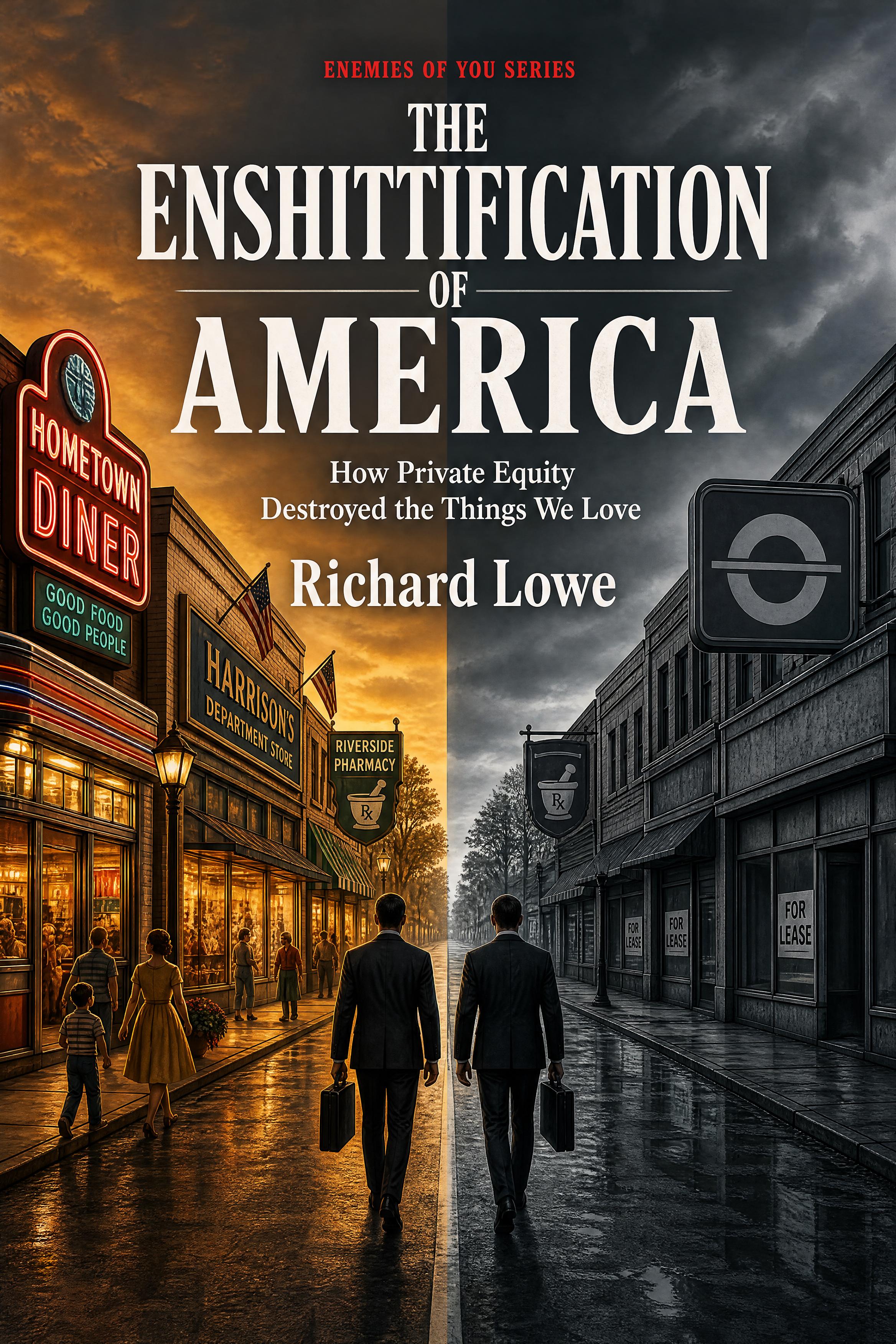
The book I mentioned to Bjørn: thirteen industries where private equity turned serving customers into extracting value, and why the playbook never changes.
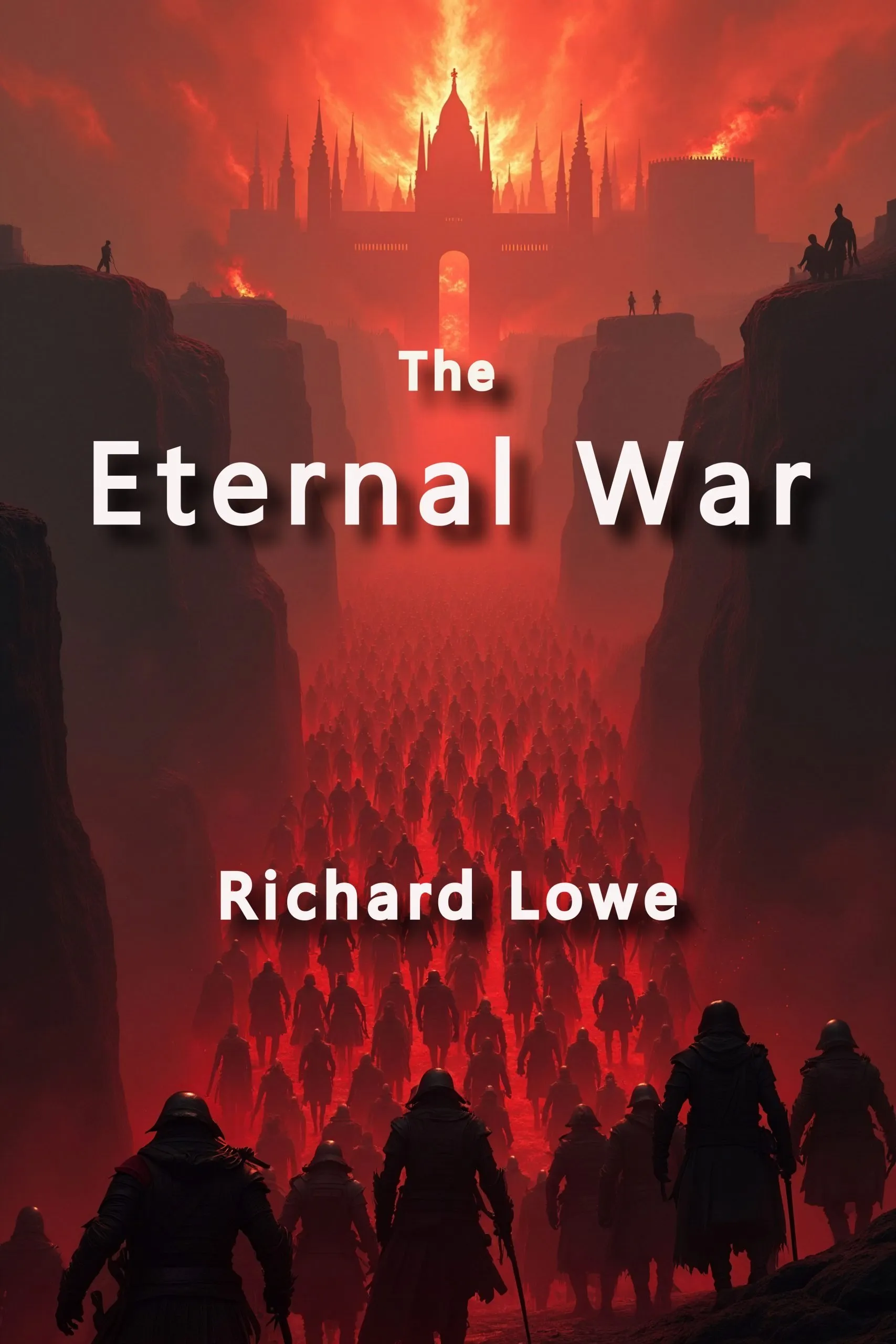
My favorite of my own books. The war between Heaven and Hell has run for eons, and an artificial intelligence that crossed over tells most of it.
If you are weighing IngramSpark, Amazon and everywhere else the way Bjørn and I did, this covers every major publishing path open to authors today.
Frequently Asked Questions
Want to appear on Author Talks?
Author Talks with Richard Lowe features writers sharing the story behind their books. If you have a book and a story worth telling, come on the show, or let’s talk about the book you haven’t written yet.