Latest
Post an AI Image and Unfriend MeShe Asked How to Publish Her Bedtime Story. They Called Her a Thief.The AI Hype Cycle: Why the Crash Is Coming, and Who’s Causing ItSix Claude Prompts That Get You Unstuck, and Why the Order MattersDogpiled Over AI Art at the Renaissance FaireClaude Opus 5.5: What the New Release Means for WritersTrump’s AI Force Is a Fire Department With No Fire CodeWhat It Costs to Fix an AI-Written ManuscriptWhen Your Memoir Should Be a NovelThe Hugging Face AI Agent Attack: An Operations ReadingWhen Your Own Memoir Sounds Like BraggingWhat Belongs on a Copyright PageWhat an AI Detector Score on Your Manuscript Is WorthThe Clients Who Pay and VanishThe Quotation Marks That Get Authors SuedThe Work You Would Never Have StartedMonthly or Milestone: How Ghostwriting Gets BilledWhen a Client Thinks the Ghostwriter Used AIThe One-Hour Call Before I Quote Your BookBehind the Book: The Mysterious Island, Neb’s SideHow to Organize Decades of Memories Into a MemoirWhy Rotten Tomatoes Sucks: The Score Does Not Mean What You ThinkWhy Amazon KDP Sucks: They Terminated My Account OvernightIngramSpark: How I Publish Now and WhyWhy Fiverr Sucks for Ghostwriting: The Buyer’s SideWhy eBay Sucks Now: A Seller’s Numbers and a Buyer’s WarningThe Ghost Story TraditionThe Gothic TraditionThe Christmas Ghost Story TraditionBooks to Give a WriterResurrection as a Narrative StructureThe Beach Read ArgumentWhy It’s a Wonderful Life Failed on ReleaseWhat to Read in SpringWhat to Read in SummerWhat to Read in OctoberHow Warner Bros. Dismantled a $17 Billion Cartoon EmpireThe Imaginary Scarcity TrapThe Graph That Goes Vertical Is Usually Somebody Else’sSubstack Is Not Collapsing. The Promise Was.The Disasters That Happen to Ordinary PeopleToba: The Winter That Almost Ended UsJay Stifflemire: Nothing Ever Gets Written DownGeorgie-Ann Getton: I Forgot I Had Free WillAI Detection Cannot Be Evidence, and Publishing Is Using It That WayAI Consciousness Left Philosophy and Entered the LaboratoryThe Office Block Where the Bedrooms AreBlack Tuesday: The Web Ring War Nobody Outside It NoticedThe Web Got Fenced: What AI Search Costs Small SitesWhat the AI Visibility Industry Sells, and What the Evidence Says

Master the Art of Closing the Sale

Master the Art of Closing the Sale
Published:March 12, 2016
Pages:116
ISBN:9780692660058
Language:English
Share:

Buy Now

Description:

A book I’d a hand in. Instead of score my own work, here’s what it’s and who it serves.

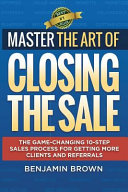
I’d a hand in this one, so instead of score it I’ll tell you what it’s and who it serves. Master the Art of Closing the Sale is a practical sales book by Benjamin Brown, aimed at salespeople and business owners who want a concrete, repeatable process for closing more deals, developing long-term clients, and earning more referrals.

It’s written in the lineage of the great sales-improvement books, the kind associated with Zig Ziglar and Frank Bettger. The focus is tight on the close, the moment where so many sales are won or lost, and it offers a simple method for getting better at it.

The book belongs to Ben Brown and serves a clear purpose. It packages his sales methodology into a teachable system, and it anchors his authority as a sales trainer.

What the book sets out to do

The aim here’s practical improvement. The book targets one specific, high-stakes skill. Closing. It lays out a practical approach a reader can apply to their own sales process for real results, more closed deals, stronger client relationships, and the referrals that come from doing the job well.

It’s pitched at working salespeople and business owners who want something they can use on Monday morning, instead of a sweeping treatise on selling. That focus on a concrete, repeatable method is exactly what makes a sales book useful to its audience. The simple, results-oriented framing is the right approach for the practical reader it serves.

Keep reading

How a focused book turns expertise into a teachable system: the kind of method-driven professional book I help experts create.

A book as a sales asset

This matters because it’s the smart strategy behind a project like this: for a sales trainer or consultant, a book is among the most powerful tools available for building authority and attracting clients. For Ben Brown, a clear, practical book on closing is far more than a product; it’s proof of expertise, a teaching tool for the people he trains, a credibility marker that sets him apart from competitors, and a durable artifact a prospective client can engage with before ever booking him.

A focused, usable method packaged as a book says here’s exactly how I can help you. That’s far more persuasive than any pitch. Used this way, the book does ongoing work for its author well beyond its page count.

Work with me

Turn your method into the book that sells it: I help coaches, trainers, and experts package their expertise into a book that builds authority and brings in clients.

Honest about its scope

I’ll be straight about what this is: a focused, practical book on one specific skill, the close, written to be applied instead of to be comprehensive. A reader looking for a sweeping treatment of the entire sales profession, or deep theory on buyer psychology, will find a targeted, usable guide to getting better at closing.

Judged against that actual purpose instead of against an exhaustive sales encyclopedia, it does its job well, delivering a concrete method a working salesperson can put to use, and giving Ben Brown a strong, practical foundation for his brand. I think it came out well at exactly what it set out to be.

Is Master the Art of Closing the Sale worth reading?

This is a capable, practical sales book that does precisely what it was built to do: give salespeople and business owners a concrete, repeatable method for closing more effectively, while anchoring its author’s authority as a sales trainer. I don’t give it a number, both because I’d a hand in it and because a score would miss the point of what it’s for.

If you want a focused, no-nonsense approach to improving how you close, or you want to understand how Ben Brown trains people to sell, the book delivers a usable method. A purposeful professional book that knows its audience and serves it well.

Explore the hub

The Publishing & Marketing Hub: using a book to build authority and grow a business, gathered in one place.

Frequently Asked Questions

What does Ben Brown’s book teach about closing sales deals?
The book gives salespeople and business owners a concrete, repeatable process for closing more deals, developing long-term clients, and earning more referrals. It stays tightly focused on the close, the moment where sales are often won or lost, instead of trying to cover the entire sales profession. The approach sits in the lineage of the great sales-improvement books, the kind associated with Zig Ziglar and Frank Bettger. It offers a simple, practical method a reader can apply to real deals instead of a sweeping theory of selling.
Who should read Ben Brown’s book on closing sales?
The book is pitched at working salespeople and business owners who want a practical method they can apply to their own sales process for real results. It suits people looking for something usable on Monday morning instead of a broad treatise on selling. It also serves the clients of Ben Brown, since the book packages his sales methodology into a teachable system. Anyone who wants to understand how he trains people to sell will find a targeted, usable guide to closing more effectively.
Is Master the Art of Closing the Sale a comprehensive guide to selling?
No, and it doesn’t aim to be. It’s a focused, practical guide to one specific high-stakes skill, the close, written to be applied. A reader wanting a sweeping treatment of the whole sales profession or deep buyer-psychology theory will need to look elsewhere.
Why does a sales trainer write a book like this?
A book is among the most powerful tools available for a sales trainer or consultant to build authority and attract clients. For Ben Brown, a clear, practical book on closing is proof of expertise, a teaching tool for the people he trains, and a credibility marker that sets him apart from competitors. It also gives a prospective client something durable to engage with before ever booking him. A focused, usable method packaged as a book says here’s exactly how I can help you. That’s far more persuasive than any pitch.
What role did Richard Lowe play in creating Ben Brown’s sales book?
I’d a hand in this book, so instead of scoring it the way I’d review someone else’s work, I laid out what it’s and who it serves. My involvement is why I don’t assign it a numeric rating on this page. I can say it’s a focused, practical book on one specific skill, the close, written to be applied and not to be comprehensive. Judged against that actual purpose, I think it does its job well and gives Ben Brown a strong, practical foundation for his brand.

About the author

Benjamin Brown

Benjamin Brown is an American sales trainer, consultant, and author, the founder and CEO of 360 Sales Consulting, a firm that helps businesses and entrepreneurs improve their sales results. A former United States Marine, he holds a bachelor's degree in business management and built more than two decades of sales experience before turning to coaching and writing. Brown's sales career…

More about Benjamin Brown

Back