Latest
How a Stranger Decides You Are Credible in Nine SecondsWhat You Have to Decide Before Anybody WritesWriting It Before You Need ItCross Training Covered Everything Except the Role That Mattered MostBehind the Book: The Woke VirusBehind the Book: You Don’t Own Anything AnymoreBehind the Book: Galactic InvasionWhat’s New at The Writing King: Week of November 8, 2026Alexander Zhidkov: Decision MakingJessi Szurek: Expand Your RangeYou Don’t Own Anything AnymoreThe Budget Decided How My Department Was ShapedWhy Your Competitor’s Book Is Working and Yours Would NotWhy Are These Guys Smiling? A Business Book That Became a Wrestling MemoirPangram Wants to Decide Who Gets PublishedWhat You Have Enough Material For Right NowWhen a Book Is the Wrong ToolThe Woke VirusGalactic InvasionChatGPT Turns Four: From a Free Research Preview to GPT-6What’s New at The Writing King: Week of November 1, 2026Diwali: The Festival of Lights and the Story Behind the LampsHow Much Water and Power Does Heavy AI Use Take? I Ran My Own NumbersBad Boys: Ride or Die (2024)Vesuvius Day: The Teenager Who Wrote Down Pompeii’s Last DayAnti-Communism Week: Remembering the Writers Communism SilencedVoyager 1 One Light-Day: Fifty Years to Travel One Day of LightVellum Added an Optional AI Feature. A Pile-On Killed It in a Day.Are AI Subscriptions Losing Money? The Gym Membership Math Says NoAI Terms Every Writer Should Know, and Why Each One MattersWorking While Sick: What 24/7 On Call Cost MeHe Banned AI From His Writing Group. His Own Cover Got Called AI Slop.Who Writes the Fake Fan Mail Authors Get? Inside the Scam CompoundsSMS Appointment RemindersFree BooksDarrell Stern: Stop Being Invisible, Become UnmissableJoe Rockey: Ghostwriting His BookHow to Turn Your Expertise Into a Book People Want to Read | The Expert MethodWhat’s New at The Writing King: Week of October 25, 2026Challenger Remembrance Day: The Engineer Who Wouldn’t SignJoel Salomon: The Truth About MoneyReddit Is Putting Up a Login Wall. Wikipedia Won’t Be Far Behind.Victoria Chemko: The Body Is the First TechnologySir Patrick Stewart: A TributeA Year in the Bank: ADHD, Face Blindness and the Freedom to Walk Out | The Impossible Puzzles Show, Episode 326A Yale Economist Says We Won’t Be Missed. He Forgot the Bread Line.Walter Koenig: A TributeAI Has Paid Off Outside Tech. Apollo Is Reading the Wrong Scoreboard.I Don’t Post Bad ARC Reviews. I Send the Author a Note.The Little Red Book of Stuff That Works!
The Writing King Your Ethical Ghostwriter. Your Story, Done Right.

How a Stranger Decides You Are Credible in Nine Seconds

TL;DR: Somebody given your name spends under ten seconds deciding whether to look further, and it is a coherence check, not an assessment of expertise. It fails silently, so most professionals have never had feedback about the thing gating nearly every new relationship. Inconsistency is what a fast check can detect, and third-party material is what ends the check early.

Somebody has been given your name. They are going to spend under ten seconds deciding whether you are worth a longer look.

That decision happens before they read anything you wrote. It happens while a page is loading, while they scan a profile, while they glance at a search result. It is not an assessment of your expertise, which they cannot evaluate, and it is not a judgment about quality.

It is a check for coherence. Does this hold together. Does the description here match the description there. Is there anything here that somebody other than this person said.

That check has a specific failure mode, which is silence. Nobody tells you they looked and moved on. There is no rejection email and no conversation, so the people who fail it never learn they were being considered, and the people who pass it assume nothing unusual happened.

Which means most professionals have never received a single piece of feedback about the thing that gates almost every new relationship they might have had.

Here is what happens in those nine seconds and what survives them.

Open your own name in a private window and give yourself nine seconds, because that is the amount of attention the decision gets.

What are they looking at?

Three things, in roughly this order.

Whether the same description of you appears in more than one place. Whether the timeline makes sense without effort. And whether anything present was written by somebody who is not you.

None of that requires reading. It is pattern recognition, done fast, by somebody who has run the same check on four other names this week and has developed a rough instinct for what a solid record looks like.

Expertise is invisible at this stage. They are not qualified to assess it and they are not trying.

Why does inconsistency cost so much?

Because it is the one thing a fast check can detect.

Somebody scanning cannot tell whether you are good at your work. What they can tell instantly is that your profile says one job title and a conference page says another, or that two sources disagree about when you did something.

That does not read as an administrative oversight. It reads as a reason to be slightly careful, and slightly careful is enough to end the process when there are two other names on the list.

The cost is invisible and the fix is an hour of reading your own material side by side.
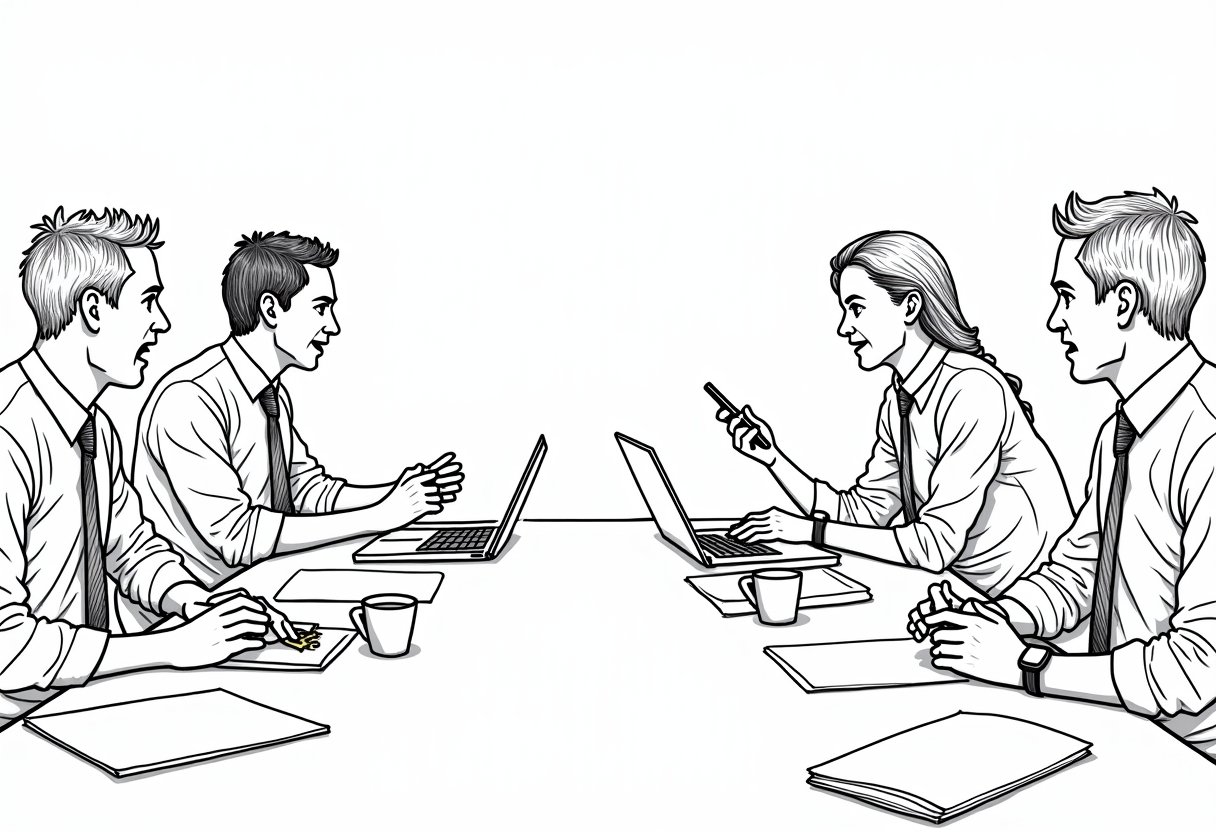
A meeting in progress. One person talks animatedly across the table while the person opposite discreetly checks a phone held low in their lap, eyes flicking down

What does third-party material do?

It ends the evaluation early.

Everything you wrote about yourself is a claim, and a person running a fast check discounts claims automatically because everybody makes them. A catalog entry, a citation, a listing maintained by an organisation with no interest in you is a different kind of object.

Two or three of those and the check stops being an assessment and becomes a confirmation. The person moves from deciding whether you are real to deciding whether you are available.

That transition is the whole point of the exercise, and almost nothing else produces it.

Does a strong recommendation replace an online credibility check?

It gets you into the nine seconds. It does not replace them.

A warm introduction from somebody trusted is the strongest thing that can happen to you, and the recipient still checks. They are not doubting the recommender. They are doing the thing everybody now does before a first conversation, and a referral that fails the check quietly loses momentum.

That is a specific and common way good referrals disappear. The recommender never learns it happened, and neither do you.

So a record is not an alternative to a network. It is what stops the network leaking.

Why do people check you online before meeting you?

Because checking became free and being wrong became expensive.

Twenty years ago the cost of verifying a stranger was a phone call to somebody who might know them, so most people skipped it and relied on the referral. Now it takes seconds and produces something, so everybody does it, including people who would never describe themselves as doing research.

At the same time, the consequences of hiring badly have become more visible inside organisations. Somebody recommending you is putting their own judgment on record.

So the check is not scepticism about you. It is somebody protecting themselves cheaply, and it happens whether or not they had any doubts.

What does a clean record look like in practice?

Boring, which is the point.

One description that agrees with itself. A timeline with no unexplained gaps or overlaps. A couple of things that exist because an organisation other than yours put them there. Nothing surprising, nothing to reconcile, nothing that makes a scanner pause.

People try to make this stage impressive and it is not the stage for impressive. The scanner is not evaluating you against other candidates yet. They are deciding whether to start.

Interesting comes later, once somebody is reading. At nine seconds, coherent beats interesting every time.

What can you fix this week?

Three things, in order of return.

Make the facts identical everywhere you control. Not similar. The same titles, dates and organisation names, spelled the same way, on every profile and every page.

Put one complete description on your own site and point everything else at it instead of paraphrasing, because paraphrases drift and drift is what creates a second version of you.

Then email the organisations carrying an outdated version and ask them to correct it. Most will. Almost nobody asks.

None of that produces third-party material, which is the slow part. All of it stops you failing a check you would otherwise have passed.

Frequently Asked Questions

What does a stranger check in the first few seconds?
Whether the same description of you appears in more than one place, whether the timeline makes sense without effort, and whether anything present was written by somebody other than you.
Why is inconsistency so costly?
Because it is the one thing a fast check can detect. A scanner cannot assess your expertise and can instantly see that two sources disagree, which reads as a reason to be careful.
What does third-party material do?
It ends the evaluation early. Everything you wrote is a claim and gets discounted, and a catalog entry or citation maintained by an organisation with no interest in you is a different kind of object.
Does a referral remove the need to look credible online?
No. A warm introduction gets you into the check and does not replace it. Referrals that fail quietly lose momentum, and neither the recommender nor you ever finds out.
Why do people check now when they did not before?
Because checking became free and hiring badly became more visible. Somebody recommending you is putting their own judgment on record, so the check is self-protection instead of scepticism about you.
What does a clean record look like?
Boring. One description that agrees with itself, a timeline with no unexplained gaps, and a couple of things an organisation other than yours put there. At nine seconds, coherent beats interesting.
What can I fix quickly?
Make the facts identical everywhere you control, put one complete description on your site that everything else points to, and email organisations carrying outdated versions. Most will correct a page and almost nobody asks.

Categories and tags
CategoriesWriting
About the Author
Richard Lowe, professional ghostwriter

Richard Lowe is a professional ghostwriter and author with 113+ books authored and 54+ ghostwritten. Before writing full time he spent 33 years in enterprise technology, including 20 years as Director of Computer Operations and Technical Services at Trader Joe's. He writes nonfiction, fiction and memoir, and works with executives and experts on books that build authority.

More about Richard Lowe →

Disclaimer

The views and opinions expressed in this blog post are solely those of Richard Lowe and are based on personal experience and research. This content is for informational purposes only and should not be construed as professional legal, financial, accounting, or business advice. Always consult with qualified professionals before making important business or legal decisions. Richard Lowe is not a lawyer, accountant, or licensed professional advisor, and this content does not establish any professional relationship.

0 comments

No comments yet. Yours can be the first.

Was this useful?

Leave a comment