TL;DR
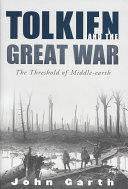
8/10. An exceptional, award-winning biography and an illuminating account of how World War I shaped Tolkien and the creation of Middle-earth, careful in reconstructing his wartime experience and rare in its clarity about his theory of myth and resistance to allegory. Among the best books about Tolkien, it loses only a little for being a focused study of his war years instead of a full biography.
Tolkien and the Great War by John Garth is an acclaimed, award-winning biography that tells, for the first time in full, the story of J.R.R. Tolkien’s experience as a young soldier in the First World War and how that catastrophe shaped the creation of Middle-earth. Garth follows Tolkien as a signals officer through the horror of the Battle of the Somme and the loss of his closest friends. That foundation of tragic experience, he argues, explains Middle-earth’s lasting power.
Praised by Tolkien scholars as filling an important gap and hailed by A.N. Wilson as the best book about Tolkien, it’s a careful, moving, and illuminating work. It gets a high rating as a valuable contribution to understanding one of the great writers.
The central insight reframes how to read Tolkien, and I think Garth is dead right. Middle-earth is a response to reality instead of an escape from it, the work of a man who used myth to reflect and transform the cataclysm of his generation.
The war behind the work
The book’s great achievement is connecting Tolkien’s wartime experience to his life’s work with rigor and feeling. Garth draws on Tolkien’s personal wartime papers and extensive research. He reconstructs the service at the Somme, the brotherhood of brilliant young friends formed at school, the TCBS, and the devastation of losing two of them in the war, and shows how Tolkien, instead of surrendering to the disillusionment that defined so many of his generation, channeled the experience into the creation of his mythology.
This isn’t crude allegory-hunting. Garth is careful to say Tolkien drew no point-to-point map from the trenches to Middle-earth. The war’s tragic foundation shaped the imaginative vision from beneath. Critics who treat Middle-earth as a coded map of the trenches make me roll my eyes, and Garth refuses to play that cheap game. It’s an illuminating account of how life became art.
Keep reading
How Tolkien’s life and war shaped Middle-earth: Garth’s account of the experience behind the work, in the wider lessons of Tolkien’s writing.
Watch: WWI Changed Us Webinar Series: J.R.R. Tolkien and WWI – John Garth, National WWI Museum and Memorial
Understanding Tolkien’s vision
Beyond the biography, the book illuminates Tolkien’s deeper literary ideas better than almost any other. Readers report that Garth clarifies Tolkien’s own theory of myth and his famous insistence that The Lord of the Rings wasn’t allegory, that Sauron wasn’t Hitler in a medieval hat, more clearly than even Carpenter’s standard biography, by showing how Tolkien used mythic imagination not to encode specific events but to reflect and transform experience at a deeper level.
This understanding of why Tolkien wrote as he did, and resisted the allegorical readings critics pressed on him, is a real gift to anyone who loves his work, deepening appreciation of both the man and the mythology, and explaining the relationship between catastrophe and enchantment that gives Middle-earth its weight.
Keep reading
Fantasy as a response to reality, not an escape from it: Garth’s reframing of Tolkien’s mythmaking, in the craft and meaning of writing fantasy.
What are the weaknesses of Tolkien and the Great War?
The caveats are modest and mostly about scope. By design it’s not a full-scale biography but a focused study of Tolkien’s war years and their influence, so a reader wanting his whole life should pair it with a complete biography like Carpenter’s; this volume covers a formative period intensely instead of the whole span. Its tight focus on Tolkien also means it underplays some surrounding context, including, some note, the broader military and political folly of the war. That gap is a small flaw. The idiocy of that war deserves more than a passing glance in a book about a man who survived the Somme.
And it’s a serious, scholarly work, rewarding but demanding more than a casual read. I won’t hold that against it. A book this careful has every right to make you work, and within its purpose it’s exceptional.
Is Tolkien and the Great War worth reading?
It’s an exceptional, award-winning biography and an illuminating account of how the First World War shaped J.R.R. Tolkien and the creation of Middle-earth, valuable for its careful reconstruction of his wartime experience, its moving portrait of the friendships he formed and lost, and its rare clarity about Tolkien’s own theory of myth and his resistance to allegorical readings. It gets a high rating and ranks among the best books about Tolkien, deepening understanding of both the man and the work.
It loses only a little for being a focused study of his war years instead of a full biography, for underplaying some surrounding context, and for its scholarly demands. For anyone who loves Tolkien or wants to understand the experience behind Middle-earth, it’s essential and moving reading. It’s a damn fine piece of scholarship, and my eight leans hard toward a nine.
Explore the hub
The Entertainment Hub: Tolkien, Middle-earth, and the writers who endure, gathered in one place.
Frequently Asked Questions
Other Books From – Biography and Memoir