TL;DR
9/10. Mick Foley’s second memoir and among the best examples of the form I know, a book I use as a memoir model with clients. Its strength is a fully personal, self-written voice, no ghostwriter, plus candid insider access to the wrestling world. A model of how voice and personality carry a memoir, and a far better book than its genre label suggests. I’ve read it half a dozen times.
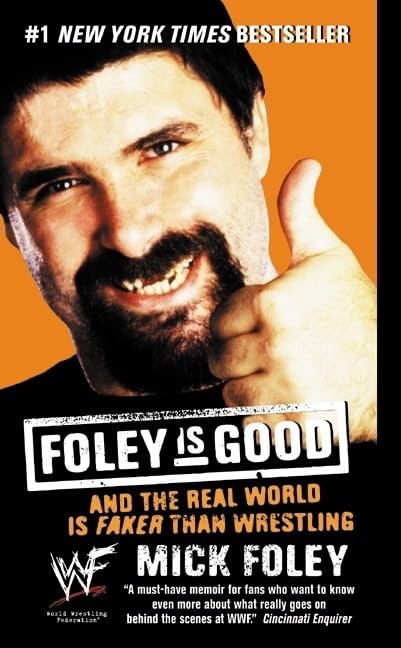
I hand Foley Is Good to clients as an example of how a memoir should be done. When someone asks me for models of the form, I point to both of Mick Foley’s books, because they get right the thing most celebrity memoirs get wrong: a real voice on the page, written by the actual person, not sanded down to nothing by a ghostwriter.
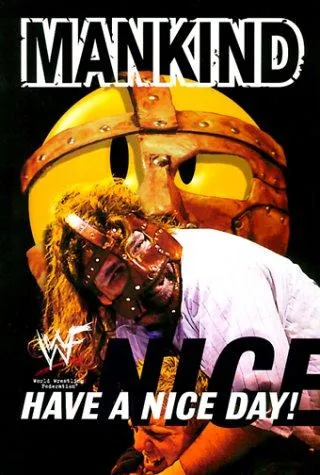
This is his second memoir, the sequel to his surprise number-one bestseller Have a Nice Day, and I’ve read both of them half a dozen times. Foley, who wrestled as Cactus Jack, Dude Love, and Mankind, writes the way he performed: with more energy, humor, and willingness to take a hit than anyone expected. He turned out to be a natural storyteller, and these books are why.
He’s one of those people who has done a great deal and done it well. A wrestler who became a real bestselling author, writing every word himself.
He’s now a working stand-up comedian. That kind of life makes for a memoir worth reading, because the person is interesting before they ever sit down at the keyboard.
The voice is the book
What makes Foley’s memoirs work, and what made the first one a publishing surprise, is the voice.
Conversational, funny, self-deprecating, and unmistakably his own, in a tone that sounds exactly like a smart, candid person telling you stories across a table. That he writes it all himself is the point. There’s no ghostwriter smoothing him into a generic celebrity-book cadence, so what you get is Foley, and that’s far more absorbing than polish.
For any writer working on a memoir, this is the lesson I keep coming back to with clients: personality on the page beats literary refinement nearly every time. A memoir lives or dies on whether the reader wants to keep listening to the narrator, and Foley’s narrator is good company for hundreds of pages.
Keep reading
Memoir voice: why sounding like yourself beats sounding literary, Foley’s self-written voice as the clearest lesson I know in what carries a memoir.
Watch: Mick Foley: WWE Legend | Full Documentary | Biography, Biography
Memoir as a window into a world
The book’s other great strength is access. It takes the reader inside professional wrestling, a world most people know only as televised spectacle, and reveals the craft, the physical cost, and the human reality behind it. The best memoirs offer exactly this kind of entry into a life the reader could never otherwise see. Foley’s candor covers the industry, the real toll on his body, the artifice and the real danger both, gives the book substance well beyond celebrity anecdote.
For a writer studying the form, it shows how insider detail about an unusual life is what holds a reader. The particulars make the book, and Foley has the particulars and the honesty to share them.
Keep reading
How to write a memoir that people want to read, Foley’s insider candor as an example of what makes a life worth reading about.
A personal note
I’ll admit my regard for these books isn’t purely professional. I wanted to meet the man. He does stand-up comedy now, and a show of his was booked close to me, scheduled for April 1, 2020. I had a VIP seat right in front of the stage, the kind where he’d likely have sat down beside me and we would have had a real conversation. Then guess what happened in April of 2020.
The pandemic shut everything down, the organizers canceled the show and refunded the money, and he hasn’t come back through the area since. I still want to meet him, because by every account he’s exactly the sort of person his books suggest: funny, generous, and interesting. The near-miss only deepened my appreciation for the work, the next best thing to the conversation I didn’t get to have.
Is Foley is Good worth reading?
It’s one of my favorite memoirs and one I use as a teaching example, lifted far above the celebrity-cash-in norm by a strong, entirely self-written voice and candid insider access to a world few readers know from the inside. Whether or not you care about wrestling, the voice carries you, and what you learn about the craft of memoir from watching Foley simply be himself on the page is worth the read on its own.
For a wrestling fan it’s required reading; for a writer it’s a lesson in voice and personality; for anyone, it’s a far better book than its genre label would lead you to expect. I’ve read it half a dozen times and I’ll read it again. Highly recommended.
Explore the hub
The Entertainment Hub: memoir, sports, and entertainment writing, gathered in one place.
Frequently Asked Questions
Other Books From – Biography and Memoir