
TL;DR: Most articles on hiring a memoir ghostwriter miss where it differs from hiring for a business book. The interviews need emotional safety, and the voice work is on a personal tone instead of a professional one. You also want a writer with memoir projects behind them instead of one who treats memoir as another genre.
Memoir is the work I take most personally. The person across the table is trusting me with their mother, their marriage and their worst year, and the wrong writer can flatten all of it into something they’d be embarrassed to give their family. If I were hiring someone for my own life story, these are the things I’d check, the red flags I’d walk away from, and the questions I’d ask in the consultation.
Why is memoir ghostwriting different from other ghostwriting?
A memoir isn’t a business book with stories in place of structures. The work is different, in ways that decide who can do it well. Start with whether your life is interesting enough, then read writing about family without a lawsuit. The source material is private and emotionally weighted.
Memoir is the work I take most personally.
The voice has to catch how one person talks about their own life, a tone most professional writers have no practice in. Structural decisions about what to include and what to leave out carry real consequences for relationships with living people. The author needs the writer to be trustworthy in a way business book authors rarely do. (See also the emotional truth problem in memoir)
Most ghostwriters who advertise “we do memoir” are business book ghostwriters who occasionally take memoir projects. That’s fine for some authors and wrong for others. You can read my memoir process for comparison. The specifics below will help you tell which kind of writer you’re talking to in the consultation, and whether the match fits your project.
The ones I’d steer you away from are the agencies.
You talk to a salesperson, the sales talk feels wonderful, and then you’re handed to writers you’ve never met who aren’t the person who sold you. For a book built on your private life, I can’t think of a worse setup. I’d almost always point you to an experienced solo practitioner. One exception I respect is Randy Peyser, who isn’t really an agency; she outsources the work.
What should you check first in a memoir ghostwriter’s portfolio?
Ask to see the memoirs they’ve written. Not business books with personal anecdotes. Not “as told to” projects where they worked as an editor. Memoirs with the writer’s name attached, or ones the author has given them permission to discuss. If the writer has done one or two, ask what they learned. If they’ve done none, your project is their training run on the form. Decide whether you can live with that.
The portfolio question isn’t gatekeeping. It asks whether the writer has done the work of capturing a human voice on emotionally significant material, as in this memoir project.
That’s different work from capturing a professional voice on business material. Both kinds of writing are honest crafts, and the skills don’t transfer automatically. A writer who does business books beautifully can produce a competent, flat memoir, because the professional tone is the one they know.
How does a memoir ghostwriter make interviews emotionally safe?
Memoir interviews go where business book interviews never go: the death of a parent, the marriage that ended, the decision you still regret, the relationship you can’t describe to anyone in your current life, the diagnosis that changed everything. A memoir writer who has done the work knows how to hold those conversations without making them harder than they need to be. They know when to pause, when to circle back later, and how to ask the next question without pushing the author past their comfort.
Clients cry in my interviews all the time. When it happens I ease into easy conversation for a while and come back to the hard part later, and when someone’s embarrassed I tell them the emotion is part of the book. I’ve started bringing tissues. A writer who panics at tears and steers away for good loses the chapter that mattered most.
You can test for this in the consultation. Ask how they approach interviews on hard material. Listen for a working structure instead of improvisation. The answers should be specific. “I usually start with the easier ground and let the author bring up the hard topics in their own time” is a real answer. “We just talk and see where it goes” comes from a writer who hasn’t done enough memoir to have built a process.
Both can produce books, but the first is the writer you want for material that matters. I talked with another author about this in my interview with memoirist Melissa Desveaux.
Can a memoir ghostwriter capture your personal voice?
The voice in a memoir is the author talking about their own life instead of explaining a topic.
The tone is conversational, often with grief or humor or anger in it, sometimes all three inside one paragraph. A writer who has only the professional tone will produce a memoir that sounds like a business book with personal content. The reader will feel the mismatch even if they can’t name it.
Ask for a sample chapter early, or during the consultation if the writer will produce one. The sample is the only honest test of whether they can hit your voice on memoir material. A serious memoir ghostwriter is glad to write a paid sample before the larger commitment, because they know voice decides the project.
Voice is where a memoir lives or dies for the author. One memoir client I’m working with now read the first chapter and told me I’d caught her perfectly, that it was exactly what she wanted, and she said the same about the second. Apart from small things like name changes, she’s loved every chapter so far. That’s the reaction a sample has to earn before you sign anything.
The Book Discovery Intensive handles a formal version of this work, including a two-thousand-word sample. That’s enough material to evaluate voice fit before signing on for a full manuscript.
How does a memoir affect the people in it?
Your memoir will include people who are still alive. Some will read the book. Some will have opinions about how they appear in it. A memoir ghostwriter who has done the work helps you think those decisions through before the writing starts. Which scenes need to include the real names? Can any use composite characters? Which conversations can be reconstructed and which would create problems?
Their experience with those questions counts for more than their prose. You can judge prose from a sample. You can only judge relationship judgment from how they talk about previous projects. Once I’m under contract, I write what the client wants. I also brief them like a trusted advisor on the legal risk in what they’re saying, especially claims about an ex, and I show them how to change details so the story survives without the exposure. A writer who just types whatever you say about living people isn’t protecting you.
Ask how they handled the hardest relationships question on a previous memoir. The answer tells you whether they’ve thought about it or will leave the whole burden on you. An escape memoir I ghostwrote shows how it works in practice, and my interview with Catherine Napoli Bruce covers writing a memoir through grief.
Memoir authors who handle these decisions alone often end up with a book that damaged a relationship they never meant to damage. Part of the writer’s job is helping you avoid that. A piece on the trust question in memoir ghostwriting covers the wider version of this.
What does a memoir ghostwriter cost?
Memoir runs at the same per-word rate as my other ghostwriting, published on my ghostwriting services page.
A memoir of sixty to eighty thousand words comes in at sixty to eighty thousand dollars. AI-assisted memoir runs at half that. The same labor split that works on business books works here: transcripts, research summaries, and connective sections through the machine, and the voice work entirely human.
Length is one place I’ll argue against my own interest. The memoirs I write usually run around 60,000 words, and unless you’re Arnold Schwarzenegger, whose memoir runs over 600 pages, 100,000 words is probably too much. I charge by the word, so I’m cutting my own fee when I say that. If you want your business story in there too, it might work better as two 40,000-word books, one on how you got here and one on what you’ve got.
The book on this: The Ghostwriting Advantage is 48 chapters on hiring one, including how memoir differs from a business book and what to look for in a writer who can carry a life story.
Be skeptical of memoir ghostwriting priced far under market. The interview hours are real, and rushing the voice work produces the flat result memoir readers spot immediately. People who come to me after bad experiences with other ghostwriters describe the same failures over and over: the writer couldn’t meet the schedule, wanted more money mid-project, or never delivered their voice. A price that doesn’t match the labor is where I’d expect that trouble to start.
My take
Hire the memoir writer who talks most carefully about the people in your book. Prose you can judge from a sample. Relationship judgment you only hear in how they describe past projects. Ask how they handled the hardest family question on a previous memoir. A writer who types whatever you say about an ex isn’t protecting you. And be wary of a price far under market, because rushed voice work reads flat.
What are the red flags in a memoir consultation?
Three patterns say the writer is wrong for memoir. First, reluctance to discuss specific previous memoir projects, either because they haven’t done any or because the projects went badly.
Second, vague answers about interview process and emotional handling. A writer who does memoir has a process and can describe it. Third, pricing far below market for the size of the project.
If the numbers don’t work, the project won’t work either, and you’ll discover this in month four.
The positive signals are the reverse. The writer names specific memoir projects and what they learned from them. They walk through their interview process in detail. They talk carefully about the relationships question. They price the work at a level that matches the labor. Get those signals in the consultation and you’re talking to someone who has done this and knows what your project will take.
One client talked to more than a dozen ghostwriters before he hired me, and he said he chose me because I was the first who acted like a person and treated him like a person. That shouldn’t be rare, and it makes me angry that it is. If the writer across the table handles your life story like a line item, walk away, however good the portfolio looks.
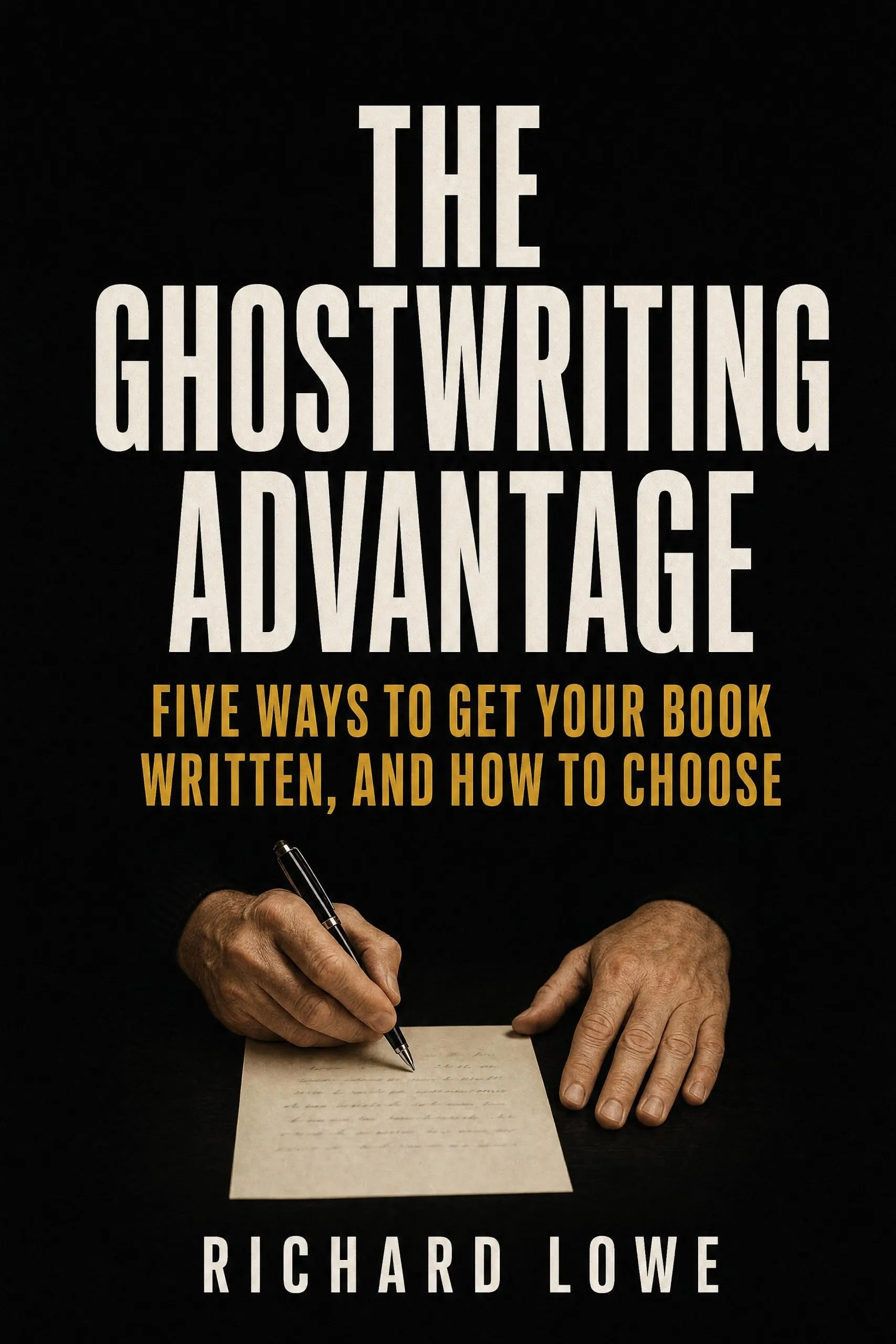
Good memoir hires start with knowing the process. The Ghostwriting Advantage explains how to get your book written for you, from someone with more than 54 ghostwritten books.
