
Craig Leonard put it in a single line on my podcast: use AI as an advisor on your profile, never as the writer, because AI-written profiles are mediocre by design. He didn’t say AI writes badly. It writes fluently and never misspells anything. He said mediocre by design, and that’s a claim about the mechanism. The mechanism is the problem. I agree with Craig, and I’d push it further. I use AI every day as an assistant for transcripts, summaries and first-pass outlines, and I still write every word that goes out under my name. A profile is the one document where your own words matter most, and handing it to a machine throws away the only advantage you had.
Why are AI-written LinkedIn profiles mediocre?
Because a language model produces what’s most probable given everything it’s read, and what it’s read includes several hundred million LinkedIn profiles.
Ask it for a headline and you get the statistically central headline. Ask for an About section and you get the shape those sections most commonly take: results-driven professional, passionate about, proven track record, using cross-functional synergies. Those phrases are the average of a hundred million people describing themselves, and the average is what a profile has to escape.
A profile exists to answer one question for a stranger: why this person and not the forty others who do the same thing. An answer generated by averaging the forty others can’t do that. Better prompting doesn’t fix it. The tool is working correctly and the job is the wrong shape for it.
What does a strong profile do that AI cannot?
It does three things, and each one requires somebody who knows you.
It picks. A career contains hundreds of facts and a profile has room for a dozen. Deciding which twelve, for which audience, toward what you want next, is a judgment call about your future. A model doesn’t know what you want next and will cheerfully include everything you feed it.
It uses the specific. The line that makes somebody stop is almost always a concrete detail: a number, an odd combination, a thing you did that nobody else in your field did. Thirty-three years in enterprise IT followed by writing other people’s books is a strange sentence, and it’s strange because it’s true and specific. An AI won’t invent your specifics, and it’ll smooth them if you supply them, because smoothing toward the familiar is what it does.
It answers what’s in it for the reader. Craig’s central point about profiles is that most of them read like resumes. They’re documents about the writer. A profile that works is about the reader’s problem. That flip is a positioning decision. People get it wrong on their own more than anything else, and a model has no basis to decide it.
I find it maddening when people who are good at their jobs hand this decision to a tool. They spent a career becoming distinctive and then let software sand it off in thirty seconds. The cost falls on them, because the recruiter never meets the person who did the work.
How should you use AI on your profile?
As an advisor. It does four jobs well. Interrogation. Paste your draft and ask what’s unclear, what a hiring manager in your field wouldn’t understand, what claims are unsupported. It’s a good reader even though it’s a poor writer.
The moment you paste its output, your profile becomes the average, and nobody sees the average.
Alternatives. Ask for ten headline options. All ten will be mediocre and two will contain a word or an angle you hadn’t considered, and you take the angle and write the line yourself. Compression. Give it your rambling four hundred word About section and ask what it can be cut to. Cutting is arithmetic, and a machine is fine at it. Then rewrite the cut version in your own voice, because the compressed output will be accurate and flat.
Vocabulary from the target side. Ask what terms people hiring for a specific role search for. That’s knowledge, which a model has, and it beats guessing.
What it never does is write the finished text. The moment you paste its output, your profile becomes the average, and nobody sees the average.
How can you improve your LinkedIn profile in two hours?
If you’re not going to hire anybody, this is the sequence that gets most of the value.
Write down who the profile is for, in one sentence, and pick one audience. Not everybody, and not future employers in general. A hiring manager for a specific kind of role, or a buyer with a specific problem. Everything else follows from that choice.
Then write the single sentence you’d say if that person asked what you do and you had one breath. Say it out loud first and write down what you said, since the spoken version is nearly always better than the typed one. That becomes the headline, adjusted for length.
Then cut. Take the About section and remove every sentence that would be true of somebody else in your field. What survives is short, uneven, and specific. Good. A shorter profile that says one memorable thing beats a complete one nobody finishes.
I tell people the cut is the part that hurts. Every deleted sentence feels like a piece of your history going in the bin. Keep cutting anyway, because the reader was never going to get through those sentences, and they were burying the one line that might have gotten you the call.
The detection problem is beside the point
People worry about whether recruiters can tell. Mostly they can. The tone is unmistakable once you’ve read a few hundred, and the tells are consistent. Perfectly balanced sentences. Abstract nouns. Three-item lists everywhere, and an absence of anything a specific human would say.
Detection is the wrong worry. Nobody rejects you for using AI. They pass over you because the profile said nothing that distinguished you, and that would have been true if you’d written the same words yourself. That’s what makes it cruel: nobody ever tells you. The calls just stop coming and you never learn why. This is the same problem I write about with books, where the stakes are higher because your name is on the cover for years. I set that out in what AI does to writing when nobody is watching.
The part people skip
Craig also said something that costs nothing and almost nobody does. Update your profile every three to six months even when you’re employed, so a layoff never finds you starting from scratch.
I’d put that higher than any wording advice. A profile written in a hurry by somebody who needs a job next month reads like a document written under pressure, because it was. A profile maintained calmly while employed reads like a person who’s good at something, and it’s ready on the day you need it.
It also gets worse because of how the platform now works.
Craig’s other point is that LinkedIn shifted from personality-based distribution to interest-based. Scattered posting across unrelated subjects now suppresses your reach, and that everything you do feeds it: comments, connections, and messages as well as posts. Consistency on a subject is the strategy, and consistency needs the profile underneath it to say what that subject is.
My take
Never let AI write your LinkedIn profile. It writes the average, and an average profile disappears. Use it to critique a draft you wrote yourself. Say clearly what you’re good at, keep posting on that one subject, and update the profile while you’re employed and calm. A profile written in a panic reads like one. Have it ready before the day you need it.
What I have seen across a hundred profiles
I’ve optimized 100+ profiles for executives and professionals, and the pattern is the same nearly every time.
I’ve optimized 100+ profiles for executives and professionals, and the pattern is the same nearly every time.Share on X
People arrive with a resume pasted into a profile.
Job titles, responsibilities, and dates. It’s accurate, it’s complete, and it says nothing about why anybody should care. The work is almost never writing prettier sentences. It’s deciding who the profile is for, what one thing it should make them think, and then removing most of what is on the page.
The best line in a profile is usually already in the person’s head.
They say it out loud in the first ten minutes of a conversation, in an aside, and then apologize for the digression. That aside is the profile. Getting it out requires somebody asking. A machine can’t do that, because it doesn’t know what it doesn’t know about you.
If you want that done properly, it’s part of what I do, and the same principle drives everything from a profile to a book: optimizing a LinkedIn profile and writing a book that establishes authority are the same decision at different scales. Craig’s full conversation is in his episode of Leaders and Their Stories.
I don’t blame people for reaching for the tool when they’re tired and short on time. I blame the vendors who market AI profile writers as a shortcut to standing out, because they’re selling the exact opposite of what the product does. The only profile that gets you remembered is one that sounds like you, and nobody can generate that from the average of everyone else.
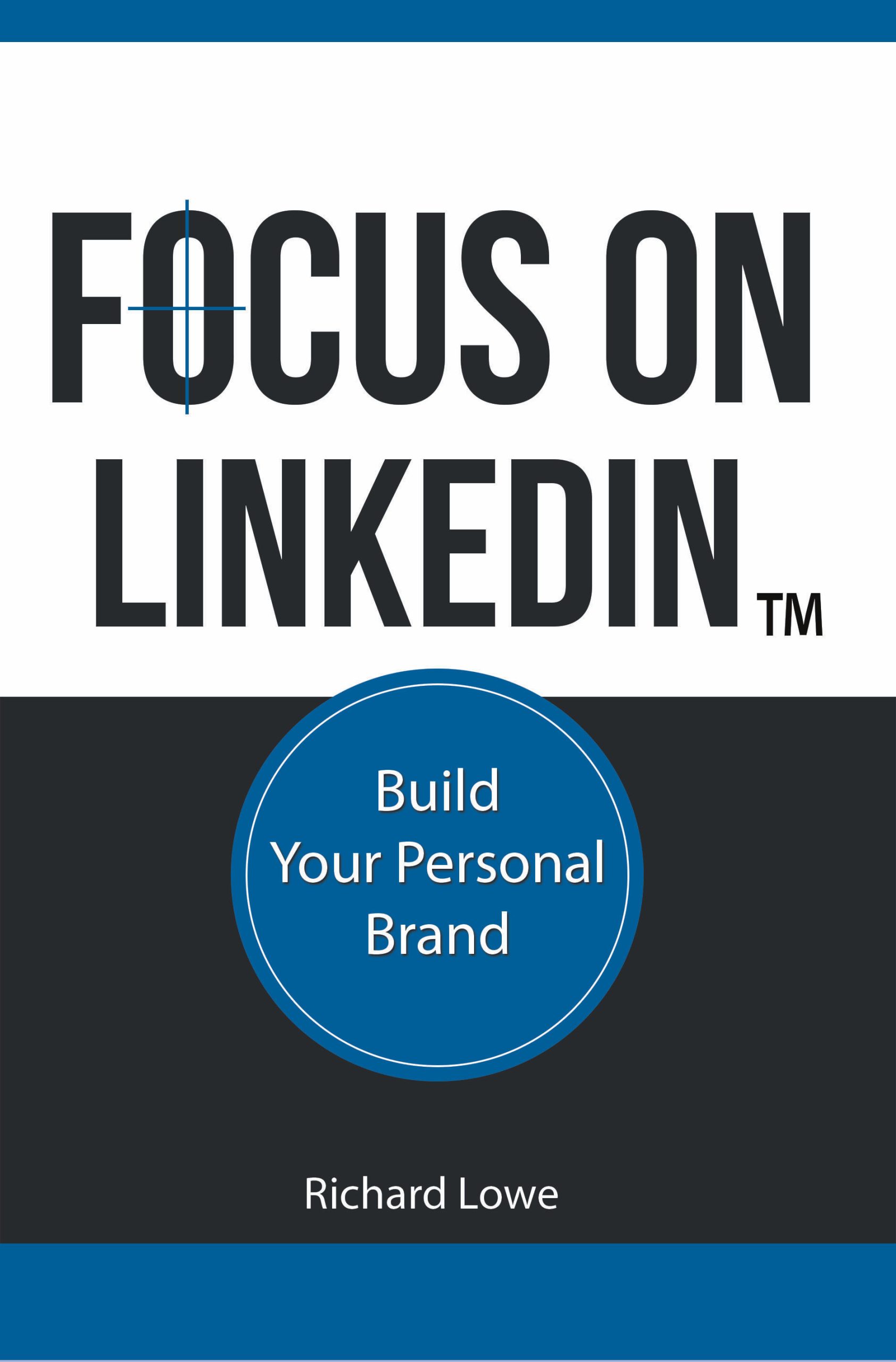
Focus on LinkedIn is the professional playbook I built on the methodology I was trained in at LinkedIn Makeover. Its first edition sold fifteen thousand copies in three days.
Frequently Asked Questions
The book on this: Focus on LinkedIn is 276 pages on writing a profile that reads like a person. That’s the one thing a model trained on everybody else structurally can’t do.
