
Everything in this interview is covered at length in Focus on LinkedIn, the book that came out of writing profiles for C-suite executives and ambassadors.
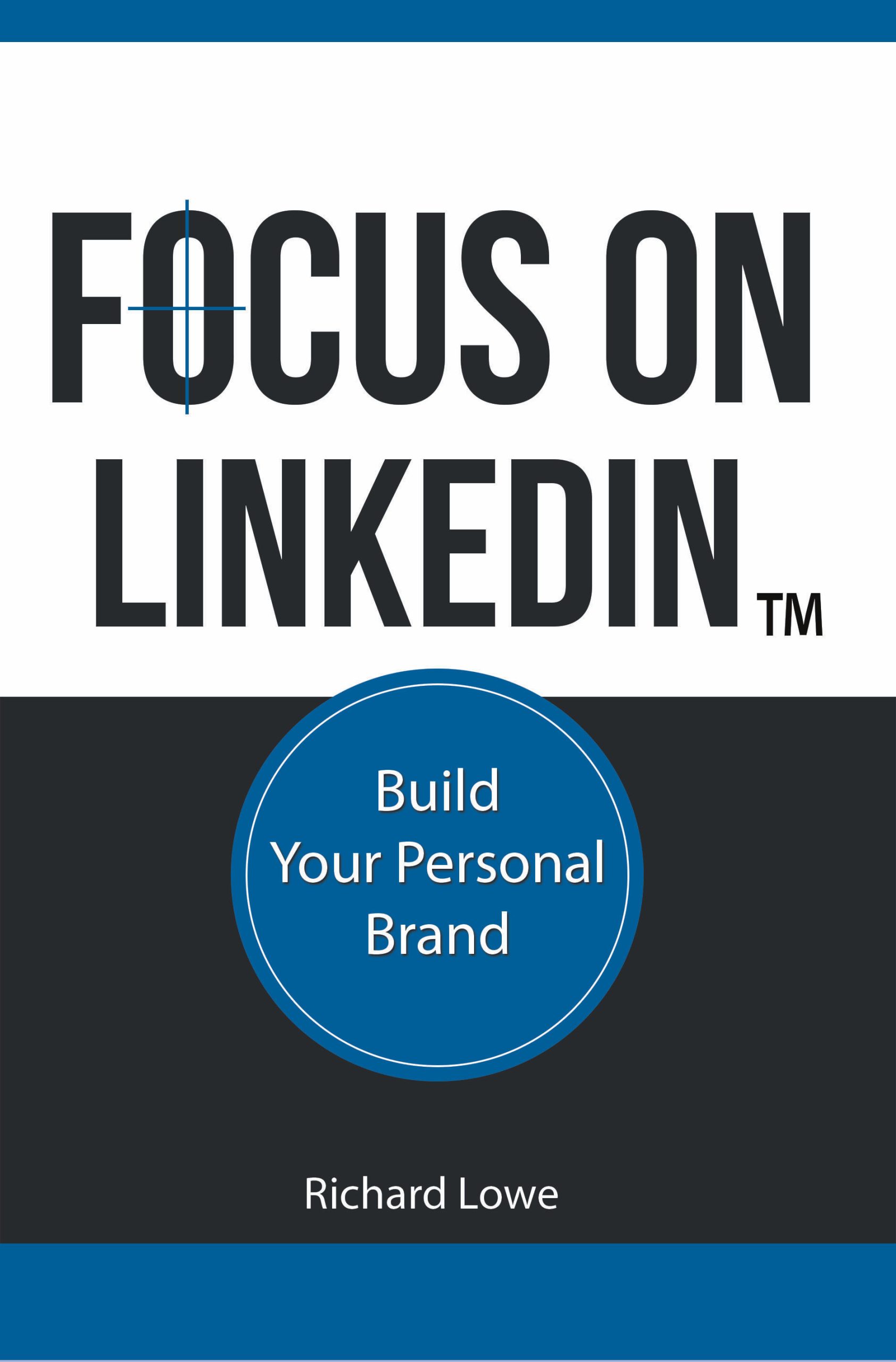
ROCHEL: I’d like to welcome Richard to Blissful Living. For a deeper dive, see The Future of Reputation. Richard is the author of Focus on LinkedIn, a book about how to brand yourself on LinkedIn by optimizing your profile. I’m your host, Rochel Marie Lawson. Welcome to the show, Richard.
RICHARD: Thank you. Good to be here.
ROCHEL: With all the social media out there now beyond Facebook-Twitter, Instagram, Snapchat-LinkedIn stands out in a different context. Why is LinkedIn so important for professionals today?
RICHARD: As a manager and leader, if you give me your name and we connect, the first thing I’ll do when I get to a computer is look you up on LinkedIn. I’m going to see what it says about you. It’s not just the words.
It’s about professionalism and your personal brand. What message are you delivering, and did you do it well? What you’ve written tells me facts about your experience, skills, and value. But other things about your profile say a lot more than you probably intended. A missing profile means something. A bad profile means something else. A polished profile means something too. That’s without even reading the information. Just looking at it, I can tell whether you put effort into it or not. LinkedIn is the first place I look. Always. It’s the professional place to be. That’s where everybody looks.
ROCHEL: What messages do you pick up when you look at a profile?
RICHARD: Not having a profile tells me you don’t understand the power of this communication tool and how it can help you get your message out.
A sparse, resume-style profile tells people a lot about your communication skills. Maybe you haven’t had time to update it. Maybe it’s a work in progress. But it also says you’ve deprioritized getting your message to your audience effectively. Poorly written profiles send the worst message: you don’t know how to communicate. Grammar and spelling errors create a poor image. A wandering summary that never gets to the point causes your audience to tune out.
ROCHEL: Some of that sounds unfair.
RICHARD: Look at it this way: you have complete control over the content on LinkedIn. You can write whatever you want. Why is it unfair to judge your value and skills based on what you’ve written or not written?
ROCHEL: That’s a good point.
RICHARD: Sometimes you have little control over what appears on the internet. A troll can make derogatory remarks about you and you may not be able to fix it. Someone could post unflattering pictures or write a bad review on something you sell. But you completely control what you write on your own social media profiles. So never say anything negative about a past employer, and reread the profile to make sure you haven’t. You could be sued for defamation, and readers figure you’ll talk about their company the same way, so they won’t hire you.
LinkedIn, Facebook, all of them. You control what you post and write.
How Do You Optimize Your LinkedIn Profile?
Get a real headshot, not a cropped vacation photo, then build the whole profile around one clear message. Pasting in your resume tells people you couldn’t be bothered. Make it about the reader. Even if it’s only a couple of sentences at the top, tell them what they’re going to get.
By 2024 my advice had gotten a lot simpler than this interview. I was writing about half a dozen profiles a year. That was more than I wanted, and I’ve since stopped offering the work. Most were easy, though I had a few difficult customers. Only three things count: your picture and banner, your headline, and the first three lines of your About section, because people see those first. Fill out the rest as you like. Nobody’s going to look at it.
A sparse, resume-style profile tells people a lot about your communication skills.Share on X
Pasting in your resume tells people you couldn’t be bothered.
RICHARD: You need an extremely professional LinkedIn profile. Don’t just throw your resume up there, the way a lot of people do. Don’t fill in blanks with random things that don’t contribute to your overall message or present you in the best light. If you’re not going to do it right, don’t do it at all. When I wrote LinkedIn profiles, I built them on achievements and goals met, made measurable where possible, and nobody cared about responsibilities or titles or any of that crap. Give the numbers context, though. A million dollars saved is petty cash to a billion-dollar company and huge to a two-million-dollar one.
ROCHEL: What does a professional LinkedIn profile look like?
RICHARD: Start with a good picture. A professionally taken headshot with good lighting. Not a selfie. Nothing professional about selfies. Not something cropped with somebody’s arm still in the picture.
I do this for a living. You can imagine what I see. A professional is confident and making a good living at their business. Whether that’s true or not, this is the message you want to get across.
An amateur photo looks amateur and makes you look amateur. What, you’re not doing well enough to afford a good photographer? You see how you can unintentionally communicate a message you didn’t intend? If any part of your profile looks amateurish, you look like an amateur. Get a good professional photo.
ROCHEL: I never thought about that before.
RICHARD: Don’t put up a picture with a cemetery or a bar in the background. Whatever’s in the background gets tied to your message and muddles your brand. Your photo is the first thing someone sees when they look for you.
The second thing is the headline. You have 220 characters to hook people into reading the rest of your profile. Include your title and two or three keywords.
My headline includes “ghostwriter.” Whoever sees my profile immediately knows I’m a ghostwriter. My other keywords tell them I’m an author and a computer security person. After the photo and headline, the summary needs to be very well written. Write it in first person, as if you’re talking directly to the reader. Don’t write in third person.
That’s less personal and sounds like a resume. LinkedIn is about you. The best profiles read as if you’re sitting across from me telling me about yourself, your brand, and your message.
The summary should support your headline. If your headline says you’re a ghostwriter, the summary and the rest of your profile should support that. Don’t get into things that don’t support your main thesis.
When I wrote profiles, the About section and the Experience entries both focused on what the person delivered to their audience, backed by statistics. Something like: I installed 25,000 antivirus endpoints and cut infections by 95%. I scan for that, and so does anybody else. We didn’t care about anything but what you delivered and the number behind it. The Skills section matters mostly to recruiters.
You can have multiple themes to a certain extent, but everything should focus on your primary brand. Eliminate anything that doesn’t add to the picture you’re creating. If you don’t, your message comes across as muddled and confusing. That goes double for long Experience entries, a habit from the days when people stuffed profiles with search keywords. Very few readers get that far, and every extra detail hands them another reason to say, “That’s not the person I want,” so I’d cut each role to a couple of paragraphs.
ROCHEL: I’m sure you’ve seen some profiles where you thought, really? You put that up there? Beyond the profile and summary, what should a person do to display their brand on LinkedIn?
RICHARD: You mean when they first get on LinkedIn, or when they’re trying to figure out what to do with it?
ROCHEL: When they’re trying to establish their brand. Using you as an example: ghostwriter. Do you post things on LinkedIn so anyone who sees your profile or your feed knows you’re a ghostwriter?
RICHARD: The first thing to do, before you even touch LinkedIn, is sit down and define your personal brand. The image you want to portray. Keep in mind it’s a personal brand. It’s generally not your company, unless you’re the CEO and very strongly identified with it.
 It’s you. Not your company, not your hobbies, not your Facebook profile. This is about you as a professional.
I’m a writer, a best-selling author of Focus on LinkedIn, a ghostwriter, and a WordPress website designer.
I wanted all of that on my profile, but just saying it all would be a muddled mess. It took some hard thinking to figure out how to tie it together. I decided my brand is: I support your personal brand via writing, design, and WordPress website implementation.
I can help you design and implement your website, write the copy, compose letters and letterhead, help you write or edit your book, ghostwrite your book, and publish your manuscript. That’s my brand: the all-in-one stop helping you define, create, and promote your brand for your business and you as a professional. That’s what you have to do before anything else.
A lot of people come to me and they don’t know what their brand is. They think they know, but they have five or six different things. You can’t do that on LinkedIn easily. LinkedIn supports one brand per person. You can’t have multiple profiles. When I wrote LinkedIn profiles, I would interview the client using the Socratic method, layering question on question without handing them conclusions. They worked out their own goals and audience, and the profile came from that.
Boil it down to: what’s your personal brand? What do you want people to see and understand when they find your profile? Are you a diplomat, a CEO of a robot company, or a computer programmer? Once you’ve got that, boil it down even more to something that applies to your personal audience.
The definition of your personal brand is like real life.
When somebody looks at you, that first impression is critical. You’re wearing a nice tie or business suit, you’re not dirty, you’ve brushed your teeth. Those things relate directly to a personal brand on the internet. That’s what someone sees when they look at your blog, website, LinkedIn, and other social media.
Is this person messy or clean? Is their brand focused? Are they talking about scattered things or are they on-point?
You want your profile to be on-point. Otherwise the reader gets a wishy-washy message. They’ll go somewhere else to find someone focused on what they need. When I wrote profiles, I built the experience section as one consistent story from the bottom up: in charge of this, promoted, trained, then in charge of more. Readers won’t notice that growth consciously, but they absorb it.
ROCHEL: So if your branding message is confusing, you’re not going to capitalize on people who might be interested. They can’t figure out what you really do because you’ve got too much up there.
RICHARD: Correct. You’ve got the concept.
ROCHEL: You mentioned having a good photograph. Can you share why a professional headshot is better than a full-length shot?
RICHARD: Faces are interesting. People notice expressions and smiles. LinkedIn allows a square photo, so you can’t really use a full-length shot. It’s a tiny photo, like a postage stamp. A headshot shows up best.
A full-length photo is harder to make look good because there’s a whole body in the shot. In a headshot you can focus in without flaws showing up. I’m a little overweight. That shows up in a full-length photo, and I don’t want that. In a headshot, it’s not obvious. You should be smiling, unless your brand is reinforced by not smiling. Maybe a clown or horror actor. Otherwise, definitely smile. Here’s something about smiling that a professional photographer will tell you.
I’m also a professional photographer. You think you’re smiling, but the camera doesn’t see it. You have to over-smile.
Stage actors know this. You have to over-act for the audience to understand your expressions. When you take a photo, you think you’re smiling and you’re not. That’s why someone else should take your photo.
Selfies look bad. You don’t get a view of what you’re doing. You want to look at or near the camera. Looking down signifies weakness.
Also, pay attention to lighting. Good lighting is something professional photographers know and amateurs don’t understand at all. Bad lighting can make you look 10 years older. Bright sunlight is especially bad. It can make you look a decade older.
ROCHEL: That’s worth repeating.
RICHARD: Bad lighting can make you look a lot older. Cracks, crevices, crow’s feet all show up. I learned this fast when I was photographing dancers. You need good lighting or they look older. And dancers don’t like that at all.
ROCHEL: Women don’t like that at all anyway.
RICHARD: Most of the dancers I photographed were women, so there you go. If you photograph outdoors, do it toward evening or early morning. Bright sun makes you look old and washed out and haggard. A flash creates bright spots on your cheeks and anywhere with oil. Red eye gives you the demon eye look.
Professional photographers know all this. Pay the hundred bucks for a headshot. It’s not much money if you’re a professional. Don’t cut corners. That headshot will make or break your profile.
Besides the headline, the headshot is the number one thing. Most viewers will see a bad photo and move on. Spend the time and money to get a good photograph. The banner behind your photo is advertising space, so don’t waste it. Skip the picture promoting the company you work for and put up something that advertises you.
ROCHEL: Great information.
RICHARD: Get a lot of photos from your photographer and pick the best ones. You don’t have to keep the same headshot forever. Maybe you get four or five. Pay the extra money and change your photo occasionally so it’s not always the same.
ROCHEL: Make sure you pick the right lighting so you don’t look older. Spend money on a professional picture and get multiples. You can switch them up periodically to keep it fresh. Get really good quality headshots from a professional photographer to represent your true brand. Is there another part of the LinkedIn profile besides the headshot and headline that makes somebody want to keep looking?
RICHARD: You can include graphics, videos, and slideshows on the summary and all your experiences. On my profile, I have several videos of people holding up my book and talking about how good it was. Testimonial videos.
You could have a video of yourself interviewing somebody. I did a profile for somebody with a leather factory under construction, and he did a three-minute tour video. These things are great for helping your brand.
Video and slideshows really help. People like visual content. Videos are big these days. Take a quick video, throw it on YouTube, and add it to the suitable place in your profile.
ROCHEL: What about a video someone takes with their iPhone? Say I’m speaking at an event and someone takes a video of a segment of what I’m talking about. Would that work?
RICHARD: You could post it as: “A fan sent this to me. He was so excited about the show.” You can hype it that way.
A video from a fan’s point of view. Like if you were a rock star. That would work. But for a CEO, I wouldn’t recommend it.
ROCHEL: I’ve got tons of professional videos but never thought of posting any on my LinkedIn profile. How would someone go about doing that?
RICHARD: It’s trivial. LinkedIn now lets you upload video directly to your profile. You can also link to YouTube if you prefer.
When you edit your profile, you’ll see options to add media under summary and experiences. Upload your video or paste a link, add a description, and you’re done. It really is that fast.
ROCHEL: So anyone can do it.
RICHARD: Very simple. Anyone can do it. The only downside is it’s not very configurable. You can’t change the photo it chose or the format. But it’s easy.
ROCHEL: Thank you for sharing that. I didn’t know you could post videos.
RICHARD: One caution on video. Keep it short. Thirty seconds to two minutes at most. Don’t put up your full show. You’re teasing people.
ROCHEL: Don’t put up the hour. Thirty seconds to two minutes.
RICHARD: This is a marketing spot.
ROCHEL: What does a person need to do before they start working on their LinkedIn profile?
RICHARD: First, gather the information you need, like your resume. Many people haven’t updated their resume in years. I was slow to update mine. I’d been at Trader Joe’s for 20 years. Who needs a resume, right?
Get your resume updated. That’s a good place to start because you’ll want it as a reference. I don’t write resumes myself. My recommendation is to hire somebody who does them for a living. Expect to pay $700 to $1,200 to get a good resume done by a professional.
Resume writing is an art. You want it right because it may be the first and only thing a potential employer sees. Your LinkedIn isn’t your resume, but your resume has information you’ll need. Get any other documentation with the information needed to write up your brand. When I wrote LinkedIn profiles, I barely looked at the client’s old one, because our conversations told me far more and the old ones were usually weak. A CEO or CTO reading your profile wants to know one thing: can this person solve my problem? They don’t care about your past responsibilities or who you worked for.
And decide on your personal brand. What audience are you trying to attract? Who are you trying to get? Are you looking for recruiters? I’m looking for customers.
People who want to buy writing services and books. My audience is general managers who will pay enough to buy a ghostwritten book from me. That isn’t cheap.
I’m not looking for someone who doesn’t have money. I’m looking for people who can purchase my services. That’s important when defining your audience.
Also consider: who’s not your audience? There are people you need to exclude. For more on getting leads the right way on LinkedIn, see Richard’s interview with Mike O’Neil.
If you’ve ever been in sales, wasting an hour on somebody who’s not going to buy means you’ve lost a good portion of a day not making income. Your LinkedIn profile can help by attracting the right contacts and disqualifying those who aren’t your target audience. It’s great to discourage unqualified leads because you don’t waste time building relationships that go nowhere. An optimized profile won’t work as a lead generator, though it’ll bring in a few. Its job is to let a CEO see quickly whether you’re what they want, and a fast no is useful too.
You can use how you write to exclude. Define your brand, define your audience, and define your purpose. Are you looking for a new job? Customers? Vendors? What kind of client are you trying to get?
That will help you write your summary. Next to the picture and headline, the summary is the most important thing in the profile. Write it about them. Strip out the “my” and the “I” and say what’s in it for the reader. My marketing person keeps drumming that question into me, and it’s hard, because we don’t think that way.
ROCHEL: Repeat that.
RICHARD: The summary is, besides the picture and headline, the most important thing in your LinkedIn profile by far. Normally it’s the only thing anyone reads. First, they look at your picture and decide if they want to know more. Then the headline, and they decide to look further. If they get this far, they look at your summary.
Or rather, the first paragraph. Then they decide to continue reading. They read the second paragraph, same thing. You’ve only got four or five paragraphs. Hook them or they’re gone. That opening has to punch like the first paragraph of a book. If a book’s opening doesn’t grab them, they put it back on the shelf, and it’s even worse on LinkedIn, where those first lines are all most people see before “see more.”
ROCHEL: Can LinkedIn be used beyond job-seeking? People use it to connect with others in their industry or expand their reach outside their industry. What are the most successful ways people use LinkedIn beyond looking for jobs?
RICHARD: A lot of people are looking for customers and clientele instead of jobs. They’re trying to attract a different class of people. Maybe the vice president of a leather factory is trying to attract people who want to purchase space in his factory to do leather work. His successful action is creating a LinkedIn profile that attracts people who will buy space instead of leather.
Sometimes people just want to brand themselves. They’re the CEO or CFO, and everybody is going to look at them. They want to make sure their profile shows them in a good light. They’re promoting their brand. That’s why it’s important to understand your message, your audience, and what you’re trying to do.
ROCHEL: If you don’t know that, it comes across as confusing and jumbled. People will click off your profile and go to the next one instead of engaging and possibly connecting with you outside LinkedIn. Great information. We’ve talked about what you should do right: your photo, headline, summary, adding videos.
My take
Decide who you’re trying to attract before you touch your LinkedIn profile. A factory VP selling floor space needs a different profile than one selling leather, and a CEO polishing a brand needs something else again. Photo, headline and summary all follow from that decision. Skip it and the profile reads as a jumble. Visitors click away to the next one, and you’ve lost the connection you wanted.
LinkedIn Profile Endorsements and Recommendations
What about endorsements?
RICHARD: There are two things: endorsements and recommendations.
ROCHEL: Talk about each of those.
RICHARD: I’ll start with endorsements. Enter some skills into LinkedIn. For example, I’m a writer, ghostwriter, public speaker, and photographer. Once you’ve entered those, LinkedIn prompts other people to confirm them.
The only purpose is so when I look at your profile, I can see in a couple of seconds that you’re a radio show host and a lot of people agree. That’s all endorsements do. They’re for a quick glance. I can see whether you have the skills I need or you don’t. Recommendations are far more important. If you can get recommended by people, get recommended. As many as possible. Get fifty or sixty recommendations if you can.
The best recommendations come from influencers and people higher than you on the organization chart. As high as you can reach. If you can get the CEO of the company, get the CEO. If you can find somebody well-known in your industry, someone who’s written books and been on TV, get them to write you a recommendation.
There’s a trick though. You don’t get that person to write you a recommendation. You write it for them and send it when you ask. Say, “I’d like a recommendation, and here’s my suggestion.” Write a paragraph you think would be good. I received one of these the other day from somebody who transcribed one of my books. She wanted me to recommend her and said, “Here’s what I recommend.” She wrote a paragraph. I changed a word and added her recommendation with a simple copy and paste.
Why send them the text? You’re asking somebody who’s the CEO of a billion-dollar company or a person who speaks or writes books. They’re very busy.
If you don’t give them the text, they’ll almost always either ignore your request or say, “Sure, I’d be happy to.” Then it sits in their inbox for six months.
If you write it for them, all they do is copy, paste, and click. You’re 50 times more likely to get that recommendation if you write it for them.
This works for books too. When you write a book, it’s best to get somebody influential to write the foreword. But they almost certainly won’t have time, so you’ll never receive it. To get around this, write it for them. Write the foreword and say, “How’s this?” They’ll modify it and send it back, but you’ve done most of the work. You’re more likely to get a foreword.
ROCHEL: I love that. I never thought of writing the recommendation and sending it. You’re right, because people have done that to me.
They want a testimonial or recommendation. I see it and think, “I’ll get back to that later. Let me take care of what’s going to generate revenue.” Then the day ends, I forgot.
Days go by. It pops up when I’m going to bed or driving. I think, “I’ll get to it.” Then life catches up and it never happens.
But if someone sends me an email with “Here’s something I’ve written, feel free to edit it, send it back,” the work is done. I’ll either look at it and click send, or change a couple words. It’s done, out of my hair. I feel good, they feel good.
So ask those influencers and people higher up in the organization. Keep asking and doing what you said. Now hypothetically, I’ve got 75 recommendations. What does that do for me when someone looks at my profile? Does it give me more credibility?
RICHARD: That’s the beauty of recommendations. By the time someone reads down to recommendations, they’ve already looked at your photo, headline, summary, and job experiences. They’ve gone through quite a bit, so they’re already interested. Nothing turned them off.
Then they see you’ve got 75 recommendations and think, holy cow! They start looking and some are names they recognize. Authors, speakers, politicians. They’re impressed. All these people thought this person was worth recommending. They took time to write good words. It probably seals the deal. The reader had to get there. It’s pretty far down on your profile. That person was already interested. This seals the deal. He’s a writer with 45 recommendations from satisfied customers. I want to talk to this guy and see if he’s as hot as everybody says.
ROCHEL: That solidifies the deal.
RICHARD: It gives you credibility. Other people saying he delivered, did this right, I liked him, he was good to work with, personable, got it done on time, under budget. It’s the same as selling on eBay or Amazon.
You look at comments before you buy. This was a good seller. You do the same thing on LinkedIn. You find out if that person has recommendations. The recommendations you don’t need are from people below you on the org chart. People who aren’t known. People who aren’t influencers. It doesn’t hurt, but if somebody works for you, their recommendation is worthless because they work for you.
It doesn’t carry as much weight as somebody with a well-known name. You want names recognized in your industry. It doesn’t hurt to fill in with lesser names or people lower in the organization. But it doesn’t help much.
Just as important is the other way. Recommending people. Recommending people gives you credibility because part of working in teams is helping your team members. If we connected on LinkedIn and I gave you a recommendation that you were a great talk-show host, that gives me credibility as a team player. Someone willing to go the extra mile.
Also, recommending you puts my name in your profile. If somebody’s looking through your profile, they see Richard Lowe, ghostwriter. “I need a ghostwriter!” They click over to my profile.
Search engines love links. If you give out 50 recommendations all over LinkedIn, that’s 50 more ways for Google and LinkedIn to find you. It builds credibility with search engines too.
ROCHEL: So giving recommendations and receiving them are both beneficial.
RICHARD: You should give more than you receive. If you have an action plan for LinkedIn, give two recommendations a week if possible. And ask for one.
ROCHEL: Give more than you receive.
RICHARD: That’s what networking comes down to. Everything you do for others comes back to you.
ROCHEL: Great info. I’m writing this down. I haven’t put much effort into this, but I need to. Great info on what we should do and how to create credibility. What should you avoid on LinkedIn?
RICHARD: Spamming.
LinkedIn is very strict about not spamming. Spamming would be connecting to people you don’t know. Don’t do that unless they’re a lion. I’m a lion, which means I’ll accept a connection request from anybody, even if I don’t know them. At least I won’t mark them as a spammer.
On LinkedIn, when you get a connection request, you can report it as a spammer. If LinkedIn gets more than a few of those, it locks you out from sending more connection requests. Then you have to email LinkedIn support to get them to unlock you. It’s never happened to me. You don’t want to send connection requests to people you don’t have some relationship with, even if that relationship was just a handshake at a trade show.
There are ways to get around spamming. Become very active in groups on LinkedIn. Put a tagline in each comment that says, “Feel free to connect with me.” That gets them to connect with you. They can’t say you’re a spammer if they’re the ones sending the request.
Become known as someone who answers questions and shares valuable content. Post your videos publicly. Part of your daily routine on LinkedIn should be giving updates on your professional life. Post once a day at most. Quality matters more than quantity. When you read an article that interests your audience, write a sentence or two. “I found this great article on how to write a novel, thought it would interest you. Here’s the link.” Make your posts public. People will connect to you because they see you’re giving the community useful information. I get connection requests regularly, partly because my book got published and partly because I’m doing exactly that. “I read your book” or “You post good content, I want to connect with you.”
ROCHEL: I try to stay engaged with what I post. I have LinkedIn on my phone, so if I post a blog article, I can easily open the app and share it with a link. When you share information, you start dialoguing. People engage. It’s a beautiful thing.
I have a question about groups. Any suggestions around that?
RICHARD: LinkedIn is all about networking. Your network consists of the people you’re connected to and extends from there based on your subscription level. Groups used to be a major networking tool on LinkedIn, but they’ve become less active over the years. They still exist, and some industry-specific groups have engaged communities, but they’re not the powerhouse they once were.
The better strategy now is to post valuable content on your own feed and engage with others’ posts. Comment thoughtfully on posts from people in your target audience. That visibility builds your network more effectively than groups do today. All the same, if you find an active group in your industry, join it. Look for groups with recent activity. If the last message was months ago, skip it. An active group with engaged members can still be valuable. Watch your statistics, too. The audience will get stale no matter how good your content is, so when you see you’re losing audience, change something. You might try a little humor in some of your posts.
ROCHEL: How do you leave a group if it’s not working for you?
RICHARD: There’s a screen that lists all your groups. You can remove yourself from any of them. There’s a button to leave. Click it and you’re gone.
Love this information. As often as we get on social media, we want connections. But you want connections that want to engage with you. On Facebook you can max out at 5,000 friends, but you might only actively engage with 100 or 200 of them. How should you manage your LinkedIn connections?
RICHARD: You said connect with as many people as possible. It really depends on your strategy. You don’t necessarily want to connect with as many as possible. A connection has visibility to all your connections.
They might see who your customers or vendors are and steal a customer from you. You wouldn’t give your customer list to competitors. If you accept them as a connection, you just did. Be careful who you connect with regarding competition. Second thing is spam requests. The request comes in and they either don’t have a picture or it’s obviously stolen off the internet. Some beautiful woman with a watermark still on it. Amateur scammer.
Don’t connect to them. You don’t really need that four and a half million dollars the Nigerian prince left, and you’re not going to get it anyway.
ROCHEL: Darn it!
RICHARD: If they’re not helpful to what you’re trying to build, you probably don’t need to connect. One thing about connections: you don’t just accept them. Accept them and return a short message saying “Thanks for connecting. What did you find interesting about my profile?”
Even before you connect, you might send a message: “I appreciate the connection request. What’s up? What did you find interesting about my profile?” Start a dialogue before you connect.
I get plenty of connection requests. I’m not going to bother doing that. But if you don’t recognize the person or picture and it makes no sense, ask them before you connect. Use discretion. But don’t spend all day on it. Other than the competitor caution, it doesn’t really matter. You can always disconnect. Do you need to do any trimming? I don’t bother on LinkedIn. I do on Facebook, where I’ve got 4,000 friends and keep bumping into the 5,000 limit.
Every once in a while I go through. The ones who get into rabid political arguments get deleted. I don’t need that stuff. On LinkedIn, if I see people posting unprofessional things-to me, political discussions if they’re not a politician are unprofessional-and they keep doing it, goodbye.
Also posting inappropriate material or things that belong more on Facebook. If I see that, I either disconnect or hide them so I don’t have to look at what they post.
ROCHEL: Well, we’re out of time. Thank you for being on the show.
Focus on LinkedIn is the full playbook behind this interview. I wrote it after LinkedIn Makeover trained me in their methodology, and it walks you through building a profile that works for you.
Frequently Asked Questions
The book that came out of this method sold 15,000 copies in three days, then went out of date, then got a second edition. That story is in The Book That Sold Fast, Aged, and Got Written Again.

The book on this: Focus on LinkedIn is 276 pages on the platform as a professional system, including what a profile has to do before anybody reads a word of it.
