
My parents raised me to never burn bridges. Be polite. Don’t make enemies. Leave every job on good terms. Keep your contacts. You never know when you’ll need them. So that’s what I did. I once told my long-time employer they’d have to make a plot for me out back, because when I died they’d have to bury me there. They laughed. Within four months I was gone, one month shy of 20 years.
For 33 years in the computer industry, I stayed at jobs I was unhappy with long past the point where I should have left. I put up with toxic bosses, dysfunctional teams, and environments that were making me sick. I didn’t want to offend anyone. I didn’t want to damage relationships. I didn’t want to burn bridges. For more, see how to handle a micromanager.
The problem was that all of that anguish, shame, guilt, unhappiness, anger, and rage had to go somewhere. And since I wasn’t going to direct it outward, I directed it inward. I put it into my body. I made myself sick holding on to situations I should have walked away from years earlier.
The Discovery That Changed Everything
Then I noticed something. When I finally did leave, nobody cared. I ceased to exist to the people I’d been so careful not to offend.
The “friends” at work turned out to be work friends. I tried to stay in contact. I reached out. I made efforts.
But proximity and shared circumstance had defined the relationships. Once the circumstance changed, the connection evaporated.
This happened not once but repeatedly across a 33-year career. Every time I left a position, the same pattern played out. The people I’d worried about upsetting forgot about me within weeks. The bridges I’d been so carefully preserving led to places nobody was standing anymore.
What I Should Have Done
I should have stopped worrying about bridges and started worrying about myself. That doesn’t mean being needlessly antagonistic. I never burned a bridge out of spite, and I’m not suggesting anyone else should either. There’s no value in leaving a trail of hostility behind you. But there’s a massive difference between being gratuitously hostile and simply making decisions based on your own wellbeing without agonizing over whether someone else might be inconvenienced. I did that once early on. At the first company I worked for, in my first management job, a man who reported to me got promoted into a new C-level technology role above me. He was a terrible manager, and I was gone within a year.
The bridges I’d been so carefully preserving led to places nobody was standing anymore.
When I left my long-time employer, my boss offered to pay me for the seven weeks so I could just leave. I said no. I needed to give him seven weeks’ notice, because there was a lot of stuff only I knew, and he’d want to know it. So I spent those seven weeks handing it over. I wanted to make sure my team wouldn’t die after I left. Later he came out and shook my hand and thanked me. That surprised me.
The most effective strategy I eventually developed was simple: when a situation was done, I made it done. Block the emails. Block the social media. Block the phone numbers. Not out of anger. Out of clarity. The relationship served its purpose, and keeping it up added nothing to my life. Cutting the connection freed up mental and emotional bandwidth for things that mattered.
What does it cost to preserve bad bridges in your career?
The “never burn bridges” advice leaves out the cost of maintaining bridges to toxic places. Every connection to a situation that damaged you is a thread pulling you backward, and every time you engage with someone from an environment that made you sick, you’re re-entering that environment emotionally.
I wrote an entire book about this. My Boss is Insane covers 33 years of working for racist, lying, micromanaging, and psychotic bosses. The through line in every chapter is the same: I stayed too long because I didn’t want to burn bridges. Staying too long in a toxic environment affects your confidence, your judgment, and your ability to trust future managers. The recovery process after working for an unethical boss takes time. And the longer you stay, the longer the recovery takes.
Is being prepared the same as keeping a fallback?
The conventional wisdom says to always have a fallback plan. Keep your options open. Maintain your network. Never close a door permanently. There’s truth in being prepared. Financial independence gives you the freedom to make decisions from a position of strength instead of desperation. Transferable skills mean you’re never trapped. These are smart strategies. I’ve always hated non-competes, and I won’t sign one unless the pay is a lot or it’s an industry I’ll never go back to. When an employer forced one on me anyway, I wanted my objection on record that I signed under duress, and sometimes I wrote it right on the document. How courts treat that varies by state, so take it as my experience and nothing more.
But there’s a difference between preparedness and clinging.
Preparedness is having money in the bank and skills that travel. Clinging is staying connected to toxic situations because you’re afraid of what happens if you let go. The distinction matters because one is about facing forward and the other is about facing backward. And the energy you spend looking over your shoulder at bridges you should have let go of is energy you’re not spending on what comes next. If I wrote a book on work, the first thing I’d tell people is to get rid of the fear of losing your job. If you’re afraid of losing your job, you’re already screwed. That fear kept me stuck.
My own reason for staying was simple. I liked having a paycheck every week. That turned out to be silly, because a company won’t spare you when it runs into hard times, and an employee is just a number. I’m much better off now, because at least I can control it. When I finally left, I was terrified. I’d never done it before. I had enough in the bank for a year-long ramp, and I needed every month of it.
What Does Burning Your Bridges Look Like?
Leaving completely. No fallback and no door left open, nothing that can pull you back when the new path gets hard, and it will.
Heard elsewhere
Richard left twenty years of IT leadership at Trader Joe’s and now earns about double as a ghostwriter, a comparison he’s made directly on The Craft and Business of Ghostwriting.
It’s quieter than you think. It’s not a dramatic exit or a profanity-laced resignation letter. It’s not a social media post about how terrible your former employer was. It’s making the decision to leave. Giving suitable notice. Doing your job until your last day.
And then cutting the connection completely. No lingering. No checking in. No scrolling their LinkedIn to see how they’re doing without you. Done. The people who matter will stay in your life without bridges. The people who don’t matter were never on the other side of the bridge to begin with. They were just standing near it because you happened to work in the same building.
On August 9, 2010, JetBlue flight attendant Steven Slater made about as dramatic an exit as a job allows. After a flight from Pittsburgh landed at JFK, he said a passenger had hit him with a bag during a dispute over luggage, though some passengers disputed his account. He made a profanity-laced announcement over the intercom, grabbed beer from the galley, deployed the emergency slide and slid off the plane.
The exit made national headlines. Then came the bill. He was charged with a felony, and according to CNN the case ended with a guilty plea to a misdemeanor charge of attempted criminal mischief, a year of probation and $10,000 in restitution to JetBlue for the slide.
I understand the urge, and I’d bet plenty of people who’ve worked with the public have daydreamed about that slide. But his exit put his worst day on permanent display and cost him ten thousand dollars. I think a plain resignation with proper notice would have cost him nothing.
My take
A reference isn’t worth years in a toxic job. I stayed too long because I liked a weekly paycheck, and a company won’t spare you for a minute when times get hard. Leave cleanly. Give proper notice, do the job to the last day, and then cut the connection completely. Skip the dramatic exit, because a slide down the emergency chute cost one flight attendant ten thousand dollars.
The Lesson
My parents were wrong about this one. Not about being decent to people. They were right about that. Be professional. Do your work. Treat people with respect.
But they were wrong that preserving every relationship and never making anyone uncomfortable was worth the cost. Your health is worth more than a bridge to somewhere you don’t want to go.
Your sanity is worth more than a connection to someone who damaged you. Your future is worth more than the approval of people who will forget your name six months after you leave.
Stop worrying about bridges. Start worrying about where you’re going. For more on dealing with toxic workplaces and protecting your integrity, see The Ethical Workplace and My Boss is Insane.
Schedule a free consultation to discuss your book project.
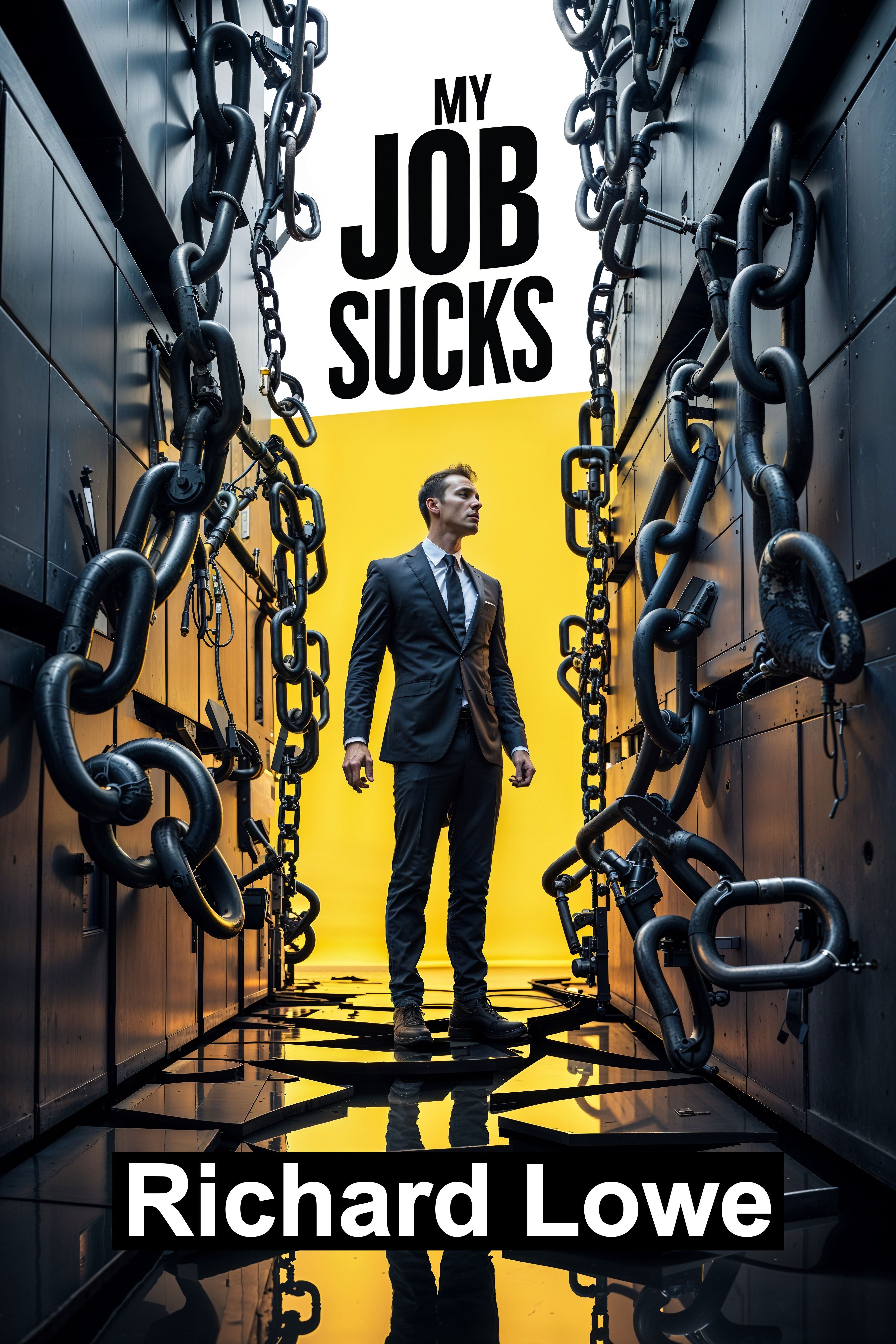
My Job Sucks is the book I wrote about taking back control of your working life. It draws on 33 years inside corporate America and the fear companies use to keep people compliant.



