
What did two cyberbullying novels teach about writing young adult fiction?
I’ve written two young adult novels, both centered on cyberbullying and the internet. The first was a ghostwriting project for a client. The second, Jake and the Bullies: Defeat Online Harassment, is my own book in the Jake’s Internet Adventures series. For more, see persuasive writing.
Both books are about cyberbullying, but you can’t lecture teenagers about cyberbullying and expect them to keep reading.Share on X
The ghostwritten project came from a client who wanted a YA novel about a kid who gets sucked into the internet through a portal and has to battle digital threats from the inside. That book was never published.
The client got busy and ran short of funding before reaching the publication stage. But it was sent to several schools for feedback, and both kids and teachers loved it. That validation confirmed the approach worked. For more, see national ghostwriters week.
Jake and the Bullies is my own take on the same territory, written with everything I learned from the first project and from studying R.L. Stine’s MasterClass on writing for young audiences. I don’t reinvent the wheel: when I started the client’s book, I first read a short how-to by a bestselling young adult author and wrote the book that way. If I wanted to write horror, I’d go get Stephen King’s book on writing.
Jake Martinez gets pulled into the internet after a humiliating dodgeball video goes viral. Inside, he wanders into Social Media City. He fights through the Troll Caves. He confronts the Hate Engine, an AI that feeds on every act of online cruelty and is planning to weaponize the collected pain of billions of people.
The book is 25 chapters of a kid learning that the best way to fight bullying is to be the person who stands up for others. Writing for a young adult audience requires a different set of craft decisions than adult fiction. The pacing is faster. The emotional stakes are more immediate. The voice has to feel true to how teenagers think, not how adults remember thinking as teenagers.
I care about this subject more than most of what I write about.
Online cruelty follows a kid home, into the bedroom and onto the phone under the pillow, and no bell at three o’clock ends it. Adults who wave it off as kids being kids have never watched a group chat turn on somebody. A good book can make a kid feel less alone, and that’s worth doing well.
What Makes Young Adult Fiction Different?
Young adult fiction is its own form with its own rules, and writers who treat it as “adult lite” produce books that teenagers see through immediately.
Adults who wave it off as kids being kids have never watched a group chat turn on somebody.
The protagonist drives everything. In adult fiction, you can build a novel around a situation, a theme, or an ensemble. In YA, the story lives or dies on the protagonist. Young adult readers need a character they can inhabit. Jake Martinez works because he’s not a hero at the start. He’s a kid who gets destroyed by a viral dodgeball video and wants to disappear. His first instinct is to hide. That vulnerability makes teenagers trust him as a character.
If he’d started brave and capable, readers would have disconnected on page one. Adults writing YA love to hand their hero courage on page one. I think it’s one of the fastest ways these books lose their readers. A teenager who’s just been humiliated doesn’t feel brave, and a character who does feel brave in that moment reads like a lie told by a grownup.
Pacing is relentless. R.L. Stine’s approach to chapter structure influenced both projects. Every chapter ends on a hook. Every scene moves the story forward. In Jake and the Bullies, Chapter 1 ends with a group chat notification containing four words: “Welcome to the Club…” Chapter 4 ends with Jake being pulled through a portal into the internet. Young adult readers aren’t patient with setup. They need to be inside the story immediately, and the story needs to keep pulling them forward.
Themes have to be lived through on the page.
Both books are about cyberbullying, but you can’t lecture teenagers about cyberbullying and expect them to keep reading. The theme has to emerge from what happens to the character. Jake experiences the Hate Engine and sees what it’s built from: collected screenshots of crying faces, recordings of desperate pleas, databases of stolen secrets. The reader draws their own conclusions about online cruelty because they’re living through it with Jake.
This is what R.L. Stine means when he says entertainment comes first: if the story isn’t engaging, the message never gets through. I think well-meaning adults forget this all the time.
Schools and parents want anti-bullying books, and too many of the ones written for them read like a pamphlet from the guidance office. Kids can smell a lesson coming a mile off, and a preachy book about cruelty does nothing for the kid who’s living it.
The world has to be one they want to live inside. Stine’s insight that “children have a deep desire to live inside the books they read” shaped the world-building for both projects. In Jake and the Bullies, the internet is a physical place: Social Media City with its floating profile pictures, the Troll Caves where digital trolls swing massive delete keys, Game World with its avatar-populated consoles, and the Deep Web where the Hate Engine hides in a fortress built from collected pain.
That world makes teenagers want to keep turning pages because they’re exploring territory that feels both fantastical and familiar.
Why Is Voice the Hardest Part of Writing YA?
From Author Talks
Debbie Zaken writes award-winning young adult science fiction and drafts slowly and cleanly from a flexible three-act outline. She walked through her process on Author Talks.
In the ghostwritten project, I had a double voice problem: capturing the client’s vision while writing in a voice that rings true to teenage readers.
Those two requirements can pull in different directions. The client had the concept, the themes, and the message. My job was to translate all of that into prose that a 12-to-16-year-old would find natural and impossible to put down.
In Jake and the Bullies, I only had to solve one voice problem: sounding like a teenager instead of an adult writing about teenagers. That meant shorter sentences than my business book default. More dialogue. More internal monologue from Jake’s perspective. Less exposition. More showing through action and reaction.
I also had to resist the adult writer’s instinct to explain. When Jake confronts the Hate Engine’s fortress and sees that it’s built from collected pain (screenshots of crying faces, recordings of desperate pleas, databases of every cruel message ever sent), the reader doesn’t need a paragraph about why cyberbullying is harmful. They’re standing inside the evidence. Trust the reader.
The character arc required the same restraint. Jake starts as a kid who wants to disappear. His bully Kyle starts as a one-dimensional antagonist. But by the end, Kyle has transformed into one of the story’s most effective advocates against bullying, running a support group for kids dealing with their own anger. That transformation doesn’t happen through a lecture. It happens through 25 chapters of experience inside the internet that changes both characters.
The ending, where Jake’s little sister Sofia faces her own cyberbullying crisis and Jake teaches her what he learned, brings the theme full circle without ever stating it directly.
What can R.L. Stine teach a young adult ghostwriter?
Stine’s MasterClass covers principles that apply far beyond horror writing. The ones that most directly shaped my approach:
Know your ending before you start. Stine outlines extensively before writing, building 15-to-20-page outlines so the drafting flows without structural uncertainty. For Jake and the Bullies, knowing the ending (Jake returning to his physical body, the Digital Kindness Club spreading to 200+ schools, and Sofia’s cyberbullying crisis bringing the theme full circle) allowed me to build every chapter as a step toward that resolution.
Don’t include real-life terror in middle grade fiction. Stine draws a clear line between fantasy threats (which are exciting) and real-world threats (which are traumatizing). Cyberbullying is a real-world issue, but in both books the treatment is fantastical: the threats are digital trolls swinging delete keys, the villain is an AI built from collected pain, and the protagonist fights them inside a physical version of the internet. This makes the danger thrilling instead of distressing while still communicating the real emotional impact of online cruelty.
I agree with Stine here, and I’d hold anyone writing about bullying to it. Bullies are targeting some of the kids reading these books right now. A graphic, realistic account of a child being torn apart online gives that reader nothing to hold onto, and the fantasy frame gives them a place to stand while they think about their own life.
Make the setting a character. The internet-as-physical-world in Jake and the Bullies is no backdrop. Social Media City has floating profile pictures and buzzing notification sounds. The Troll Caves are dark and mechanical. Game World is bright and populated with avatars. The Deep Web is hostile territory where the worst content lives. Each location amplifies the story’s tension and themes instead of just containing them.
Entertainment first, message second. If the book isn’t fun to read, the message doesn’t matter. This principle kept me honest throughout both projects. Every scene had to work as entertainment before it could work as commentary on cyberbullying. The kids who read the first project at those schools were thinking about fighting digital trolls. The anti-cyberbullying message landed because the story was engaging.
My take
Entertainment first, or the message dies. Kids being bullied right now don’t need a graphic account of a child torn apart online. They need a story that gives them somewhere to stand. Both of my cyberbullying books put the fight with the trolls inside a fantasy internet for that reason. Know your ending before you start, make the setting do work, and never lecture. If a scene isn’t fun to read, it won’t teach anybody anything.
How is ghostwriting YA different from adult nonfiction?
Most of my ghostwriting is business nonfiction for executives and entrepreneurs. Writing YA (both ghostwritten and my own) required different skills in several specific ways.
Research is experiential. For a business book, research means studying the client’s industry, reading their existing content, and understanding their market. For YA, research means understanding how teenagers talk, what they care about, what platforms they use, and what makes them feel seen or dismissed. Jake’s dodgeball video goes viral on TikTok. The group chat dynamics mirror real middle school social structures. Getting these details wrong produces a book that feels like someone’s parent wrote it trying to be cool.
Teenagers are ruthless about this, and they’ve earned the right to be. They spend all day being talked down to by adults who don’t understand their world, and a book that gets the platform wrong or the slang a year stale tells them the author is one more of those adults. Once they decide that, they stop reading.
Structure is tighter. Business books can have standalone chapters that work independently. A YA novel needs every chapter to pull the reader into the next one. Jake and the Bullies has 25 chapters, and every single one ends on a hook that makes putting the book down feel like a sacrifice. The narrative structure is more demanding because the reader’s patience is shorter and their alternatives (phones, games, social media) are more immediately available.
Emotion is more direct. Business books persuade through logic, data, and structures. YA novels persuade through emotional experience. When Jake sees the cafeteria full of kids staring at their phones and giggling at his video, the reader needs to feel that stomach-dropping humiliation. If the reader doesn’t feel what Jake feels, the book fails. This requires writing that’s more sensory, more immediate, more grounded in the character’s moment-to-moment experience.
Writing both YA projects made me a better writer for every audience, because teenagers have zero tolerance for fakery. I wish more adults writing for them took that seriously. Kids dealing with online cruelty deserve books that respect them enough to be fun, honest and free of lectures, and a writer who hands them a sermon in paperback has wasted the one chance to reach them.
For more on voice capture in ghostwriting, see Capturing the Client’s Voice. For fiction craft principles including character development, pacing, and structure, explore my writing courses.
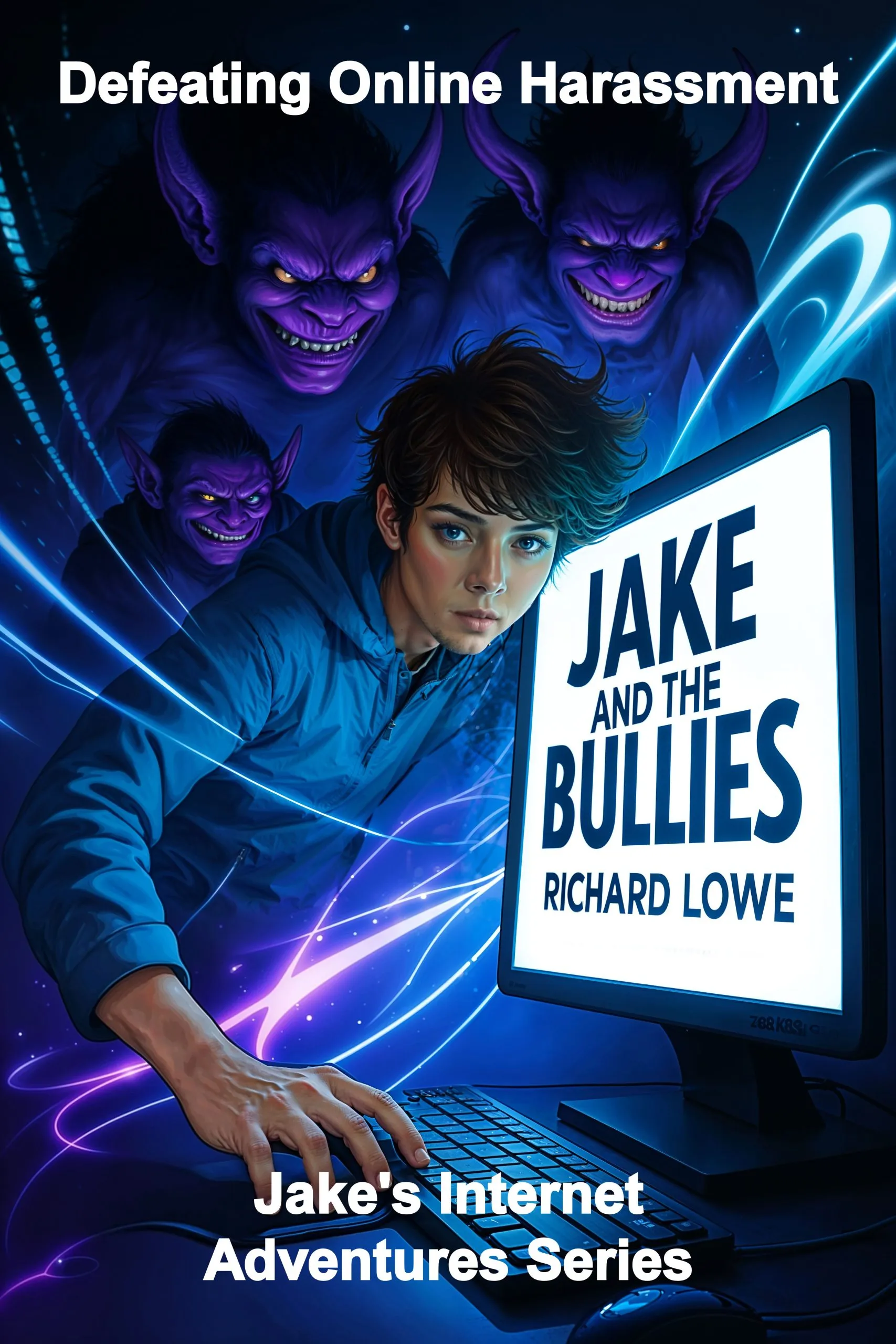
Jake and the Bullies is the cyberbullying novel this post describes. One dodgeball video goes up, the comments start, and Jake ends up inside the internet itself, in Social Media City.
Frequently Asked Questions
Work With a Fiction Ghostwriter
Have a novel of your own that needs a professional behind it? I ghostwrite fiction across genres, from concept to finished manuscript. Explore Fiction Ghostwriting Services.



