
I wrote Jake and the Bullies for a teacher to hand to a student. That was the whole design.
A kid being tormented online isn’t going to walk into a bookstore and ask for help, and a lecture from an adult bounces off. A novel a teacher slides across the desk has a chance. That book taught me something every educator who wants to write should hear. A book for a classroom has two readers at once: the adult who chooses it and the person it’s meant to reach. Miss either one and the book sits on a shelf.
Teachers have more usable material than almost any profession I know, and they’re the least likely to do anything with it. They grade until nine at night and spend summers in training. The stories pile up for twenty years and go nowhere. That loss is a waste, because the next generation of teachers needed them.
About 3.8 million people teach in American elementary and secondary schools, and every one of them builds up working knowledge nobody wrote down for them. They learn how to settle a room after lunch and how to reach the kid who’s decided school is for other people, and none of it came from a textbook. Colleges of education teach the theory. The rest gets passed along one mentor at a time, down one hallway, and it walks out the door every June with each retirement.
Plenty of teachers never get the chance to pass it on at all. A large share leave the profession within their first five years, and the ones who stay spend every ounce of energy on the room in front of them. So each experienced teacher who retires without writing anything down takes thirty years of solutions along, and the new hire down the hall starts from zero with the same problems and none of the answers.
Can a ghostwriter help a teacher write a book?
Yes. A ghostwriter turns what you know about teaching into a finished manuscript while you keep teaching. You talk and the ghostwriter writes.
You review each chapter to make sure it sounds like you and gets the classroom right. You don’t need to be a writer. You need to be able to explain what you do and tell me what happened in your classroom. Teachers explain things for a living, so they make strong interview subjects. You’re used to breaking an idea down for somebody who doesn’t get it yet.
So why hasn’t the book happened yet? For most teachers it’s time. You can’t draft a chapter at ten at night after grading, and summer disappears into training and a second job. A ghostwriter solves the time problem, because an hour of talking produces what a week of staring at a blank document won’t.
The book carries your name, ideas and stories. The ghostwriter supplies structure and prose, so it reads as well as you teach.
What kinds of books do teachers hire a ghostwriter to write?
Three kinds come up, and each one has a different reader.
A ghostwriter solves the time problem, because an hour of talking produces what a week of staring at a blank document won’t.
The classroom memoir tells the story of your years teaching: the students who changed you and the year you almost quit, and why you stayed. The reader is a general audience, parents and anyone who remembers the teacher who got them through. The method book teaches other educators how you do what you do. Your approach to classroom management, reading intervention, project-based learning, special education, or turning around a failing school. The reader is another teacher or administrator who wants results and has limited patience for theory.
The book for students is written for young readers and designed so teachers can use it. I did exactly that with my cyberbullying novels. It works as fiction built around a real problem or as nonfiction that helps a student through something hard, and it has to work for the kid first.
Principals, superintendents and education consultants hire ghostwriters too, for leadership books or books that support their speaking and workshops. Only the reader changes.
How does a ghostwriter write a teaching memoir without exposing students?
By changing names and identifying details from the start, and by keeping anything from a student record out of the book entirely. Your former students didn’t agree to appear in your memoir, and a parent who recognizes their child’s worst year on the page has every right to be furious.
Change the name, the grade, the year, the physical description and any detail that would let a classmate identify the kid. Combine two students into one when a single story would give somebody away. Grades, disciplinary records, special education files and anything else from school records stay out, full stop. Federal privacy law protects those records, and so does basic decency.
Before you publish about a school where you work, ask your district or union rep about its publication policy. Your principal will read chapter four.
Teachers carry the students they couldn’t save, and those stories come out hard. Clients cry in interviews all the time, and it’s fine. When it happens, I steer us into something easy and unrelated for a while and come back to the hard story later, across several sessions if we need them. You don’t have to get it all out in one sitting. And if I offer to leave a painful story out, the client nearly always insists it goes in.
I probe for your failures on purpose. Every teacher has a student they couldn’t reach and a parent conference that went sideways. Clients drift toward writing themselves as the hero or beating themselves up, and I talk them toward the middle. A memoir where every student is saved reads like a movie, and teachers reading it know better. For the wider legal picture on real people in a memoir, see my article on writing about living people without getting sued.
How does a ghostwriter turn a teaching method into a book for educators?
By writing for the tired teacher on a Sunday night who wants to know what to do Monday morning, and whether it’ll work.
A method book has to explain the problem your method solves and why the standard approach falls short. Then it lays out the method in steps a teacher can try without attending your workshop, and backs every step with your classroom: the students it reached and the mistakes you made while you worked it out.
Most method books drown in theory. Citations to research are fine where they support you, but a teacher who has to read forty pages of framework before reaching a single classroom example will put the book down. We open chapters on your classroom and bring in the research after the reader already cares.
I also push you to include the version of your method that failed. Why did you change it? What did you try first? A teacher who sees your early mistakes trusts your final answer, and they avoid repeating the mistakes in their own room.
The book should sound like you in front of a class, and nothing like an education journal. If you’re funny with your students, you’re funny on the page. If you’re blunt with a colleague who’s burning out, the chapter on burnout is blunt. Teachers can tell in a paragraph whether the author has stood in a classroom, and your voice is what tells them.
Sample lessons and reproducible handouts fit at the ends of chapters or in an appendix, where they don’t interrupt the argument.
A teacher’s stories pile up for twenty years and help nobody. A book puts them in the hands of the next teacher who needs them. – Richard LoweShare on X
Can a ghostwriter write a book for students that teachers use in class?
Yes, and it’s harder than it looks, because young readers can smell a lesson coming a mile away. I learned that writing my own young adult novels about cyberbullying. My article on what two cyberbullying novels taught me covers the craft, and the behind-the-book piece on Jake and the Bullies covers why I wrote it.
The story has to work as a story first. If the characters exist only to deliver a message, the kids will know by page ten and the teacher will be handing out a book nobody finishes. The message rides inside the plot, and the student reaches the conclusion on their own.
The reading level has to fit the students you’re targeting, and the voice has to sound like people their age without chasing slang that’ll be dated in two years.
You know how your students talk, so tell me and I’ll write it.
If the book deals with bullying, grief, abuse or anything a student in crisis could be reading, have a school counselor read the manuscript before it goes to print. You’re writing for kids who are hurting, and a counselor will spot a scene that could do harm in a way neither of us would.
Serve the teacher, too. A short discussion guide or a lesson plan written to go with the book gives a teacher a reason to choose yours over the ten others on the same subject. That material is for the adult, so it goes in the back or in a separate guide, never in the story.
Who owns a ghostwritten book about a teaching method developed on the job?
Your district could claim part of it, so find out before you publish. Some districts treat curriculum and materials employees create on the job as district property. A classroom memoir about your own experiences is almost never a problem. A method book that reproduces lesson plans you wrote on district time could be. Did you build those materials on a district laptop during contract hours? Your district’s lawyer will ask.
Read your employment contract and your district’s intellectual property policy, and if either one is unclear, have an education or employment lawyer read them before you sign a ghostwriting contract. Write the book around your approach and your experience, and create new sample materials for the book instead of reproducing the ones you built for the district.
The ghostwriting contract should say you own the finished book and everything created for it. My article on ghostwriting confidentiality covers what stays private.
How much time does a teacher need to give a ghostwriter?
Plan on regular interviews for the length of the project and time to review each chapter as it arrives. You don’t write a word, but you do have to show up. Most teachers schedule sessions around the school year, with heavier work in the summer and lighter check-ins during the busy months.
Every session is recorded, and you get a summary document afterward. A lot of my clients dislike Zoom and prefer the phone or meeting in person. Local clients meet me at the Safety Harbor library, and remote clients call. Teachers who’ve spent all day talking to a room of kids like a phone call they can take lying on the couch.
I deliver the book chapter by chapter, so you’re never waiting months to find out whether I got it right. You read each chapter as it arrives and tell me what’s off. A current client cried reading chapter one because she said I’d caught her perfectly. That early read keeps a whole book from drifting away from the author.
If full ghostwriting doesn’t fit your budget, book coaching is the other route I offer. You write while I guide structure and revisions.
My take
Protect the kids first and the book second. Change names and identifying details, and read your district’s policy on intellectual property before a method book goes out. Plan the heavy interview work for summer and lighter calls during the school year. Read each chapter the week it arrives, because that early read keeps the book from drifting. If the budget won’t stretch, book coaching lets you do the writing with a guide.
Will a ghostwritten education book pay for itself?
Not through book sales. You’re very unlikely to earn the fee back that way, and I tell every client so up front.
The return comes from what the book opens up: speaking at conferences and district training days, consulting contracts, workshops, and courses built from the chapters.
In the first session I encourage clients to become keynote speakers if they aren’t already, and to use the book. You can order author copies at cost plus shipping from Amazon, Ingram or whatever printer you use, and have them shipped to the hotel wherever you’re speaking. When a district hires you for a training day and buys a copy for every teacher in the room, the book has paid for itself. My article on turning a ghostwritten book into courses and talks covers how that works.
Before you call anyone, write down what you want the reader to do differently after reading your book. The Ghostwriting Hub covers the rest of the process, The Ghostwriting Advantage explains what working with a ghostwriter involves, and my ghostwriting services page shows how a project runs. Somewhere there’s a teacher who needs your book, or a student whose teacher is about to hand it across the desk.
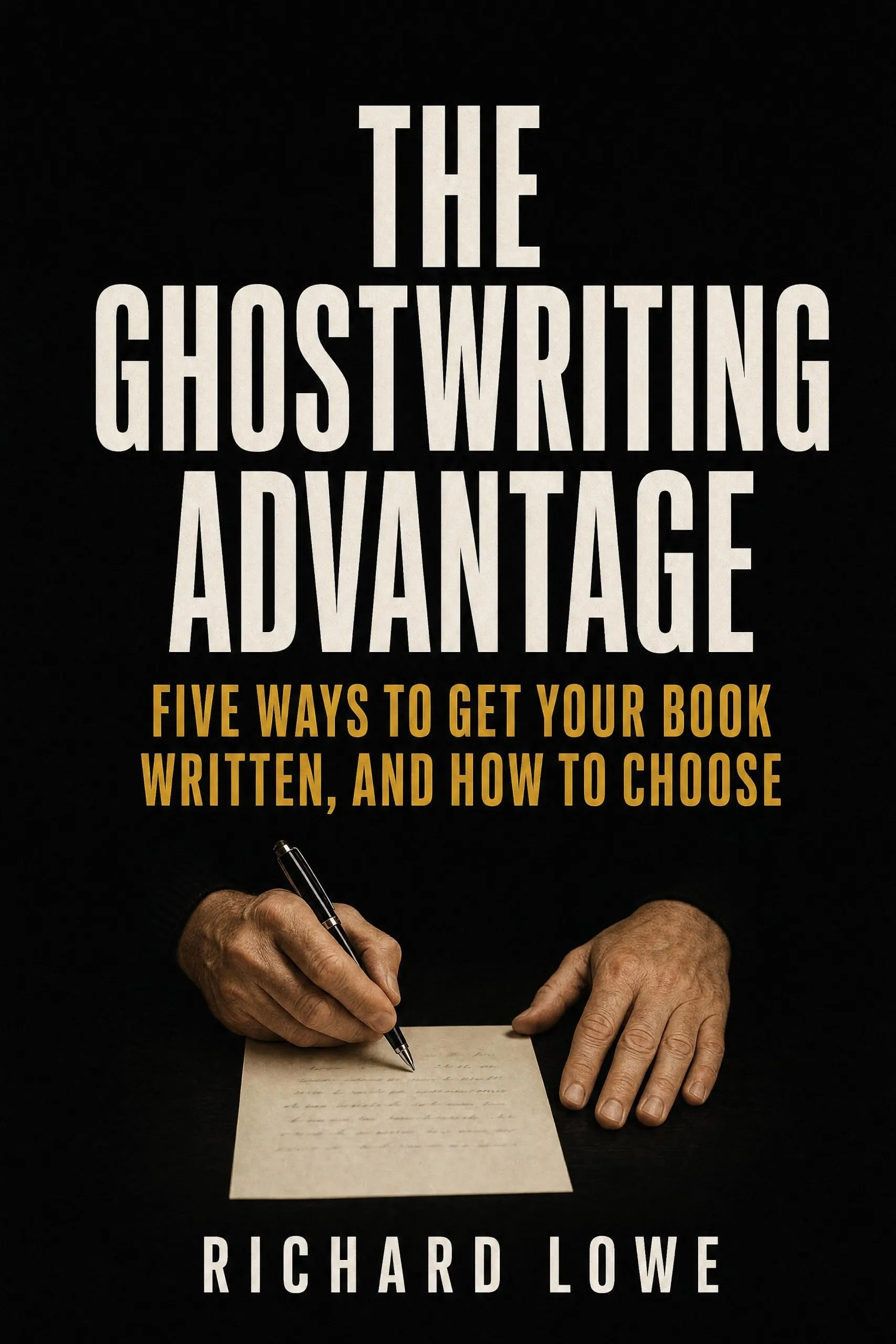
Educators have classroom stories and no spare hours. The Ghostwriting Advantage explains how to get your book written for you, from a classroom memoir to a method book.
