TL;DR
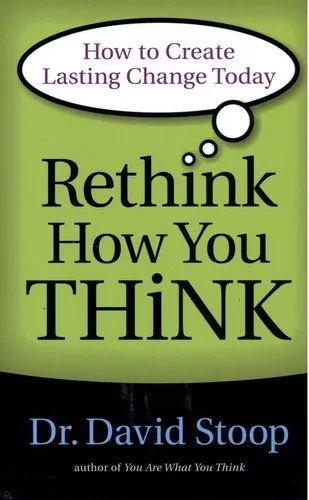
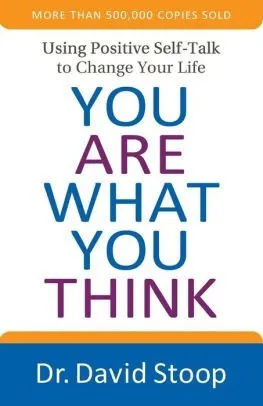
7/10. Self-talk, meaning the running commentary you never notice, and the argument that changing it changes the emotion downstream. Standard cognitive behavioral ground delivered through a Christian frame. Originally published as Self-Talk and reissued under this title.
David Stoop was a clinical psychologist with a doctorate from the University of Southern California and a theology degree from Fuller Seminary, and that combination is what the book runs on. He founded the Center for Family Therapy in Newport Beach, co-hosted the syndicated New Life Live program, and wrote more than thirty books before his death in 2021.
The organizing quotation is Epictetus: men are disturbed not by things but by the views they take of them. Everything else follows from it. Thoughts create emotions, emotions drive behavior, and the thoughts are frequently irrational and almost always unexamined.
The core of this book is sound, and I’ve got reservations about how it’s packaged. The Epictetus line is ancient advice I’d put in front of anyone, and Stoop builds on it sensibly through the first half before the book changes character on him.
What is self-talk?
The commentary running underneath your experience, which Stoop defines broadly to include private speech, unspoken thoughts, and the things you say out loud about yourself. His point is that most of it is invisible because it’s constant. You don’t notice a sound that never stops. A person who has told themselves for thirty years that they’re not good with money won’t experience that as a thought, they’ll experience it as a fact about the world. The intervention is to make it audible. That usually means writing it down. Once a sentence is on paper you can examine it, and a startling proportion of what people are telling themselves doesn’t survive being looked at directly.
The advice to write it down is the best in the book. Plenty of writers carry a sentence like “I’m not a real writer” for decades without once examining it, and on paper it looks as flimsy as it is. He lists five principles at the front: thoughts create emotions, we frequently think irrationally, gaining control of the thoughts can break the cycle, changed thinking changes behavior, and this is a learnable skill and not a temperament.
Watch: You Are What You Think by Dr. David Stoop | Full Audiobook, Free Audiobooks
What is the locus of control material?
The section I’d keep and the one that transfers cleanly outside the book’s frame.
An internal locus of control means believing your own actions considerably produce your outcomes. An external one means believing circumstances, other people, or luck produce them. The research on this predates the book by decades and Stoop presents it clearly.
His illustration is the twelve spies Moses sent into Canaan, who saw the same land and came back with opposite reports. Ten described a place that would destroy them; two described a place they could take. The situation was identical and the interpretation was the variable. The point works without needing the theology. That’s the test of whether an example is doing work or decorating. This one is doing work.
I wish more authors held their examples to that standard. Too many self-help books decorate every page with a story that proves nothing, and this one’s example proves its point.
How religious is You Are What You Think?
Considerably, and increasingly so as the book goes on. That’s where readers divide sharply.
The first half is close to secular cognitive behavioral material with occasional scriptural illustration. The second half leans heavily on scripture, and reviewers who came for the psychology consistently describe the shift as abrupt and, for some, as annoying. Readers who came for the faith generally consider that half the best part of the book. My reading is that the book doesn’t fully integrate its two halves. The cognitive material stands on its own, and the scriptural material applies it inside a particular structure. A reader who wants only one of those will end up skimming, and the book doesn’t warn you which half you’re about to get.
That lack of warning bothers me more than the theology does. A reader deserves to know what kind of book they’re holding, and a first half that reads as psychology sets up the wrong expectation for the second. A clear signal at the start would serve readers on both sides of that divide better.
Is there a better book than You Are What You Think?
For the psychology alone, yes.
David Burns’s Feeling Good covers the same cognitive ground more thoroughly, with more clinical grounding, more worksheets, and considerably more evidence behind it. Aaron Beck’s own writing is the source. Neither carries a theological frame.
What Stoop offers that they don’t is the integration for a reader who wants both, and its shortness and lack of pretension. Burns is a commitment. This is two hundred pages that a person will finish.
That’s a real advantage and it’s worth naming, because the best book nobody reads helps nobody.
Verdict
Solid and unoriginal. That’s fine for what it is. If you want cognitive behavioral principles inside a Christian frame, this is a clear and unpretentious version of it.
If you want the psychology without the theology, read Burns or Beck instead and lose nothing. If you want both and will finish a short book but not a long one, this is the right choice.
I respect this book for knowing its size. It doesn’t pretend to be the last word on cognitive therapy, and I’d happily recommend it to the reader it was written for while steering everyone else to Burns.
Explore further
The Psychology of Writing Hub: what drives creative work and what stops it.