TL;DR
General Frank McKenzie’s account of commanding U.S. Central Command from MacDill between 2019 and 2022, a stretch that included the Soleimani strike, the fight against ISIS and the withdrawal from Afghanistan. He now leads a national security institute at the University of South Florida.
Between March 2019 and April 2022, one office at MacDill Air Force Base handled the American military’s hardest problems in the Middle East and Central Asia. General Kenneth F. McKenzie Jr., known to nearly everyone as Frank, sat in it.
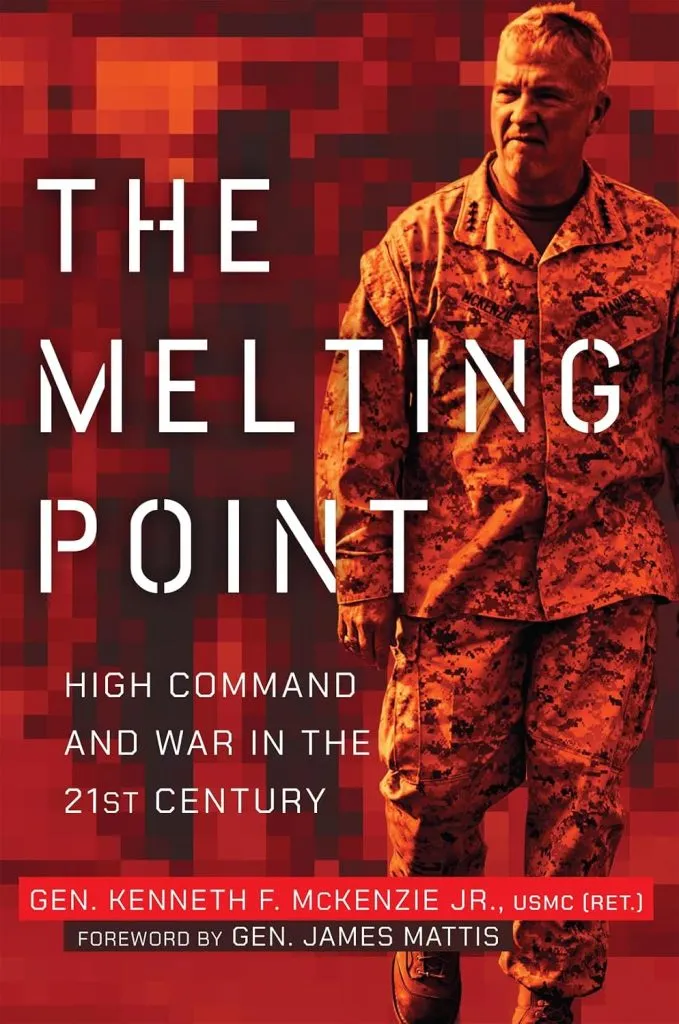
The Melting Point is his account of those three years. The Naval Institute Press published it in May 2024, with a foreword by General James Mattis.
What is The Melting Point about?
His three years commanding U.S. Central Command. That period covered the strike that killed Iranian general Qassem Soleimani, operations against ISIS, deterring Iran and its proxies, the drawdown in Iraq and the evacuation and final withdrawal from Afghanistan in August 2021. Any one of those would fill a book on its own. McKenzie handled all of them inside three years, and the book shows how often they landed on his desk at the same time, with the same small staff and the same few hours in a day.
McKenzie organizes the book around three ideas: civilian control of the military, the combatant commander’s position between policy and execution, and how individual leaders shape what happens in war. He gives candid assessments of decisions made under two administrations.
Reviewers noticed that he owns his mistakes, including the Kabul drone strike he later called a mistake.
The book also covers the October 2019 raid that killed ISIS leader Abu Bakr al-Baghdadi, run under his command.
It runs about 360 pages, with eight maps and twenty photographs. McKenzie launched it at the Middle East Institute in Washington in June 2024, and one early review recommended it as candid and fair.
Who is Frank McKenzie?
McKenzie graduated from The Citadel and was commissioned in the Marine Corps in 1979. He commanded a Marine Expeditionary Unit, led Marine forces in the Central Command region and served as Director of the Joint Staff before taking over Central Command.
Before that, he had deployed to both Iraq and Afghanistan, and between 2014 and 2019 he led Marine forces in the Central Command region and then ran strategy and policy on the Joint Staff before becoming its director. He came to MacDill knowing the job from the Pentagon side. He retired in April 2022 after more than 42 years. He stayed in Tampa Bay. He leads the Global and National Security Institute at the University of South Florida and the state’s Cyber Florida center.
Why does The Melting Point belong on this shelf?
It’s the newest MacDill book, and it was written by someone who still lives here.
It’s also the strategy kind of military book. It doesn’t try to cover a whole life. It takes one hard job and explains how it was done, for readers who want to understand high command. McKenzie wrote it without a credited collaborator, and the frankness that reviewers praised comes through on every page.
Strategy books like this one are harder to write than memoirs. The author has to explain institutions, laws and chains of command to readers who have never sat in a Pentagon meeting, without burying the human decisions under organization charts. McKenzie keeps returning to the moment someone had to decide.
For a reader in Tampa Bay, it’s also a rare look inside the headquarters across the bay. Central Command sits a short drive from most of us, and very few people who live here know what goes on there.
Keep reading
Hiring a ghostwriter for a retired general’s or admiral’s leadership book: how senior military leaders turn a career into a book, and what has to stay out.
Frequently Asked Questions
Other Books From – Biography and Memoir